
Basic counting skills Extra Challenge Math Worksheets for Ages 3-6
4 filtered results
Difficulty Level
Grade
Age
-
From - To
Subject
Activity
Standards
Looking to challenge and develop your child's counting skills? Dive into our "Basic Counting Skills Extra Challenge Math Worksheets for Ages 3-6!". Crafted for young learners, these worksheets elevate counting practice by incorporating fun themes, vibrant illustrations, and engaging activities. Your child can improve their numeracy and fine motor skills while enjoying math. Perfect for classroom use or at-home practice, these worksheets succeed in making learning enjoyable and effective. Ideal for ages 3-6, they offer just the right level of challenge to support early mathematical development. Unlock your child's potential with our exciting counting resources today!
Favorites
With answer key
Interactive
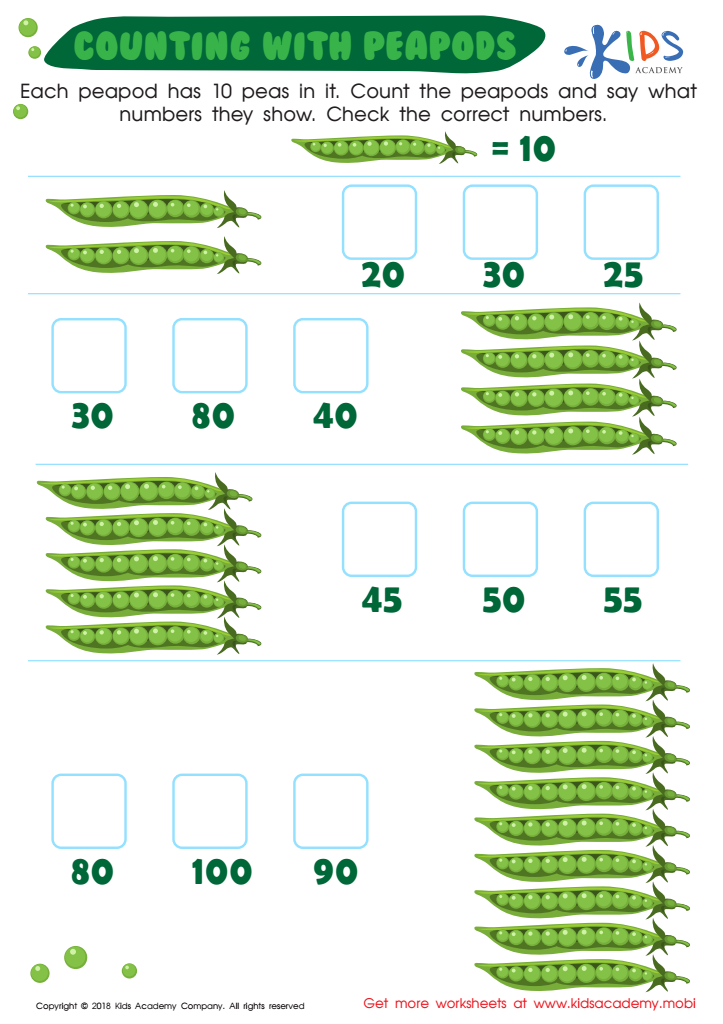
Number Worksheet: Counting With Peapods
Help your child learn multiplication and develop their place value skills in a fun way with this number worksheet: Counting with Peapods! Each pod has 10 peas, and kids can simply count each one and add a zero to the ones place to get the answer. It's a great, colorful way to learn!
 Assign to My Students
Number Worksheet: Counting With Peapods
Worksheet
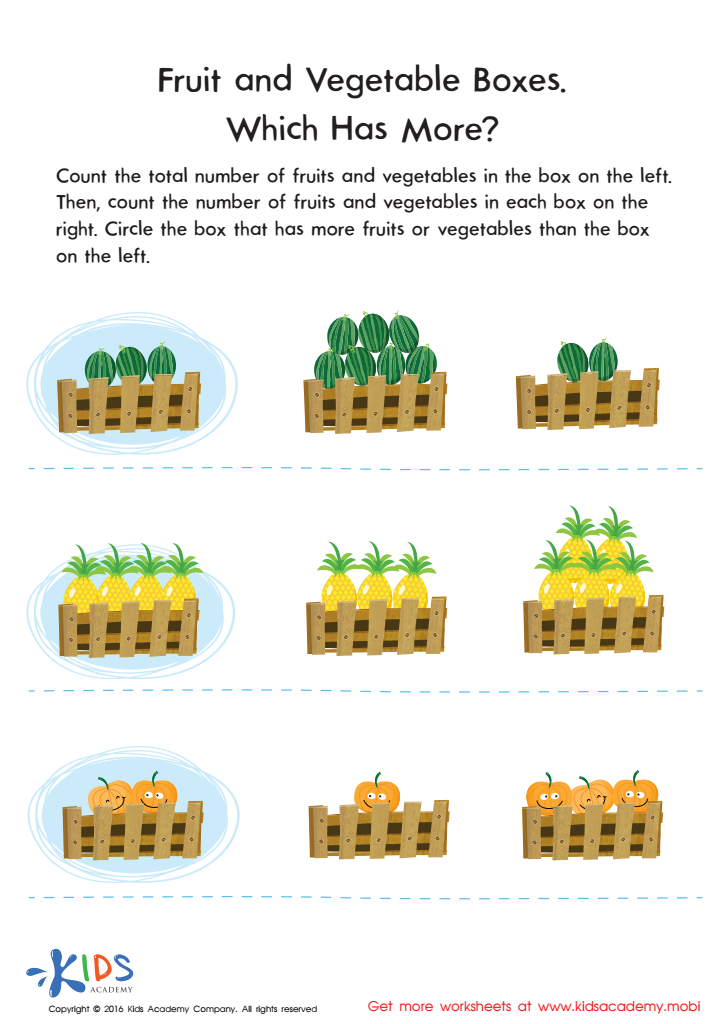
Which Has More? Size Worksheet
This worksheet is perfect for your child to practice critical thinking and logical reasoning. Your child will count and compare the fruits and veggies in the crates to decide which one has more. They will use complex cognitive skills and practice following precise rules. Guide them through the directions and help keep their focus, while enjoying the images.
Which Has More? Size Worksheet
Worksheet
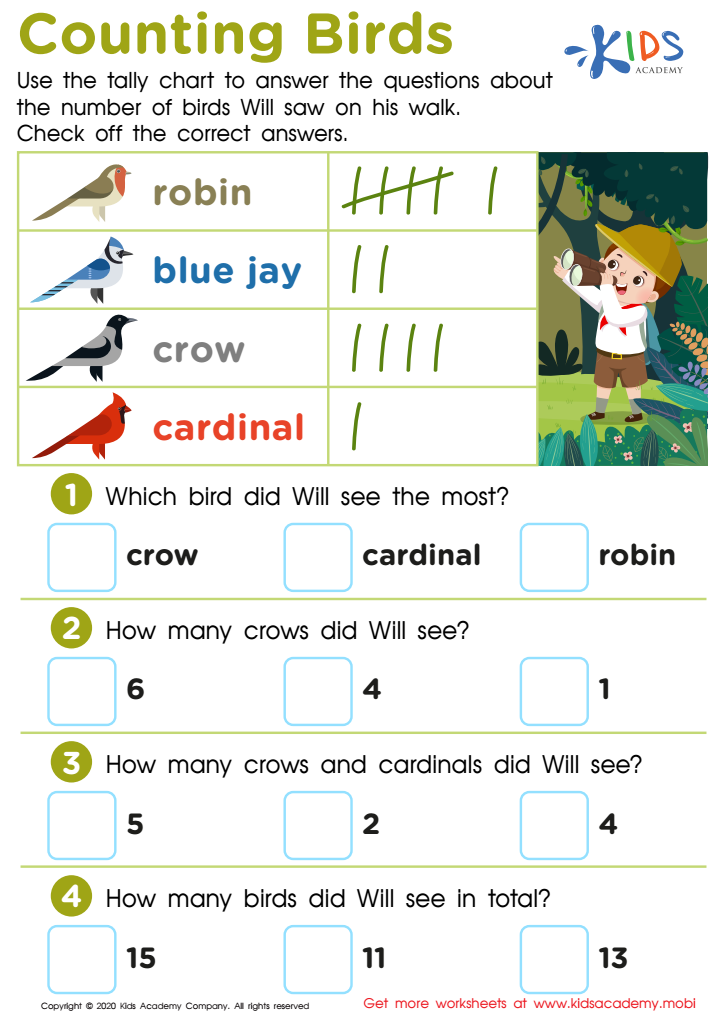
Counting Birds Worksheet
Introduce your child to the exciting activity of bird watching! This PDF worksheet features a tally chart of the different types of birds Will saw on his walk. Have your kid use the tally chart to organize information and use it to answer the questions that follow, thus boosting early science and math skills.
Counting Birds Worksheet
Worksheet
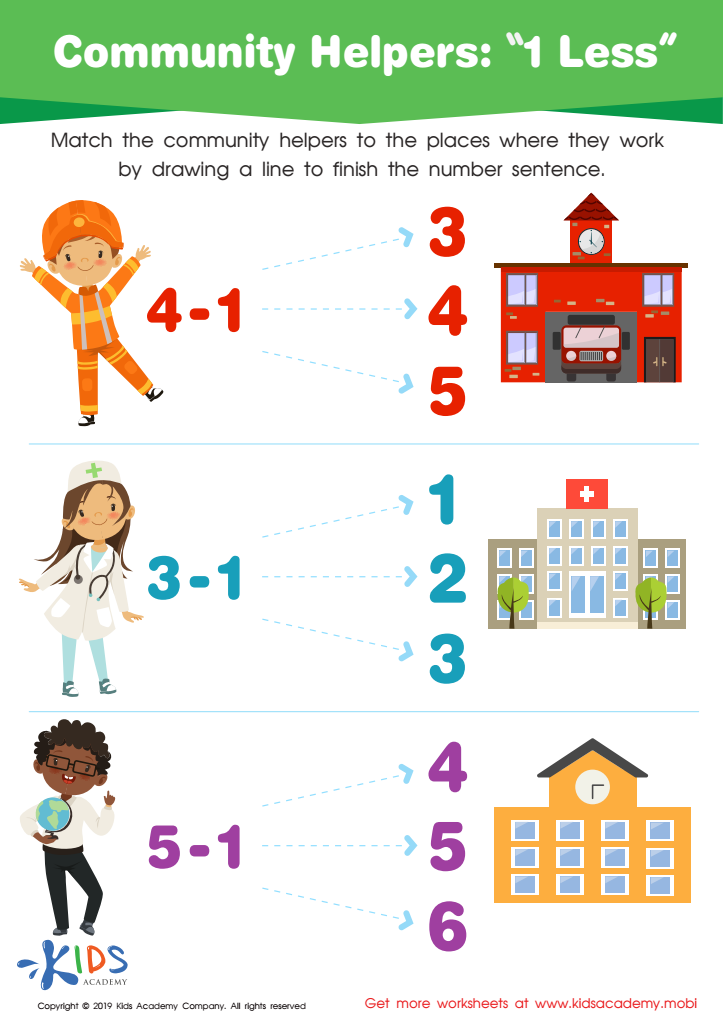
Community Helpers: 1 less Worksheet
Look at this worksheet with your child and ask them to identify the different community helpers. Match them to the places where they work by drawing a line to finish the number sentence. This helps them identify the people that help keep the community organized and running smoothly. Examples of community helpers include doctors, police officers, firefighters, teachers, etc.
Community Helpers: 1 less Worksheet
Worksheet
Join Kids Academy for Free
Who is primarily going to use this learning content?







Developing basic counting skills at an early age is crucial for fostering a strong mathematical foundation in young children. These skills are not only essential for future academic success but also for everyday problem-solving and analytical thinking. For ages 3-6, “Basic Counting Skills Extra Challenge Math” activities can significantly enhance cognitive development and provide a head start in mastering math concepts.
Parents and teachers should prioritize these activities because early exposure to counting helps children understand numbers and their relationships, nurturing their ability to sequence, estimate, and eventually perform complex arithmetic operations. These foundational skills are interlinked with other academic areas, including reading and science, where comprehension of patterns and logical reasoning is essential.
Moreover, counting exercises that present extra challenges can stimulate a child’s curiosity and encourage a positive attitude toward learning. They promote fine motor skills, concentration, and memory, alongside a sense of achievement. Engaging, hands-on counting activities create a fun learning environment that keeps children motivated and less likely to develop math anxiety later in life.
Incorporating materials tailored for 3-6-year-olds ensures concepts are age-appropriate and engaging, nurturing confidence and instilling a lifelong love of learning. Ultimately, by supporting basic counting skills with extra challenges, parents and teachers equip children with the critical thinking tools they need for future success, both academically and in their everyday lives.








