Subtraction practice Extra Challenge Math Worksheets for Ages 3-6 - Page 2
26 filtered results
-
From - To
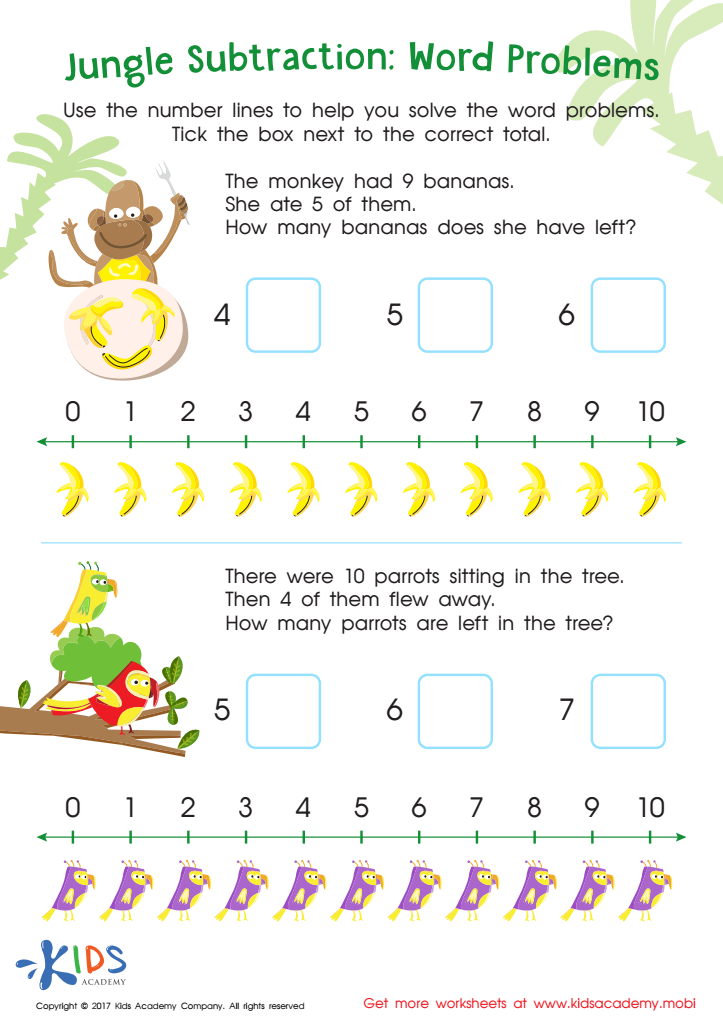
Jungle Subtraction Word Problems Substraction Worksheet
 Assign to My Students
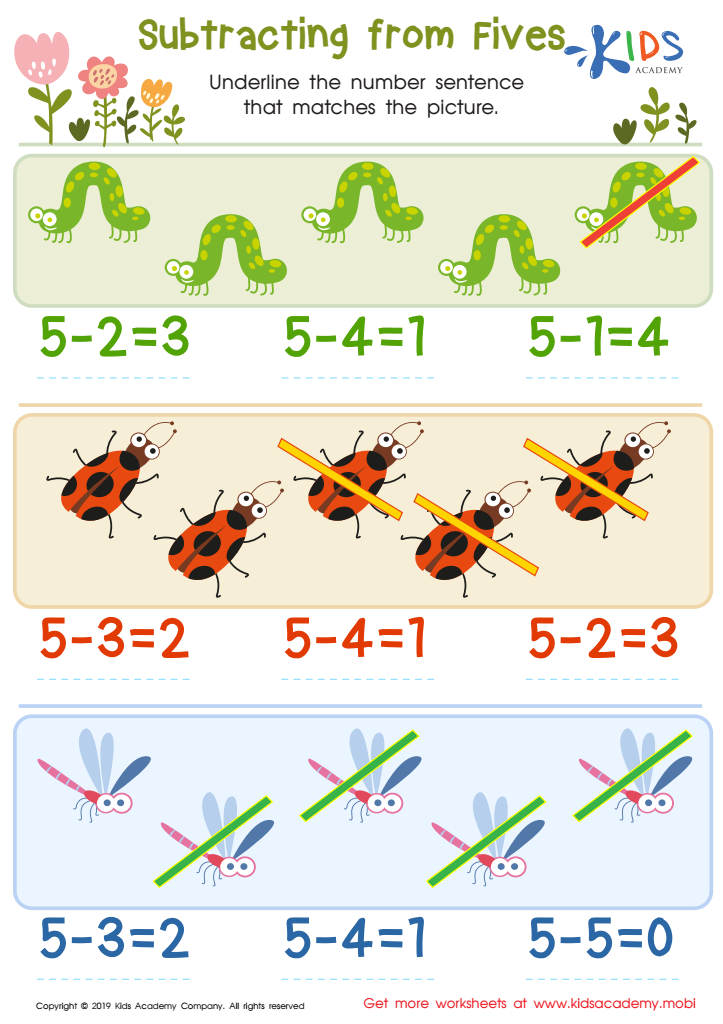
Subtracting From Fives Worksheet




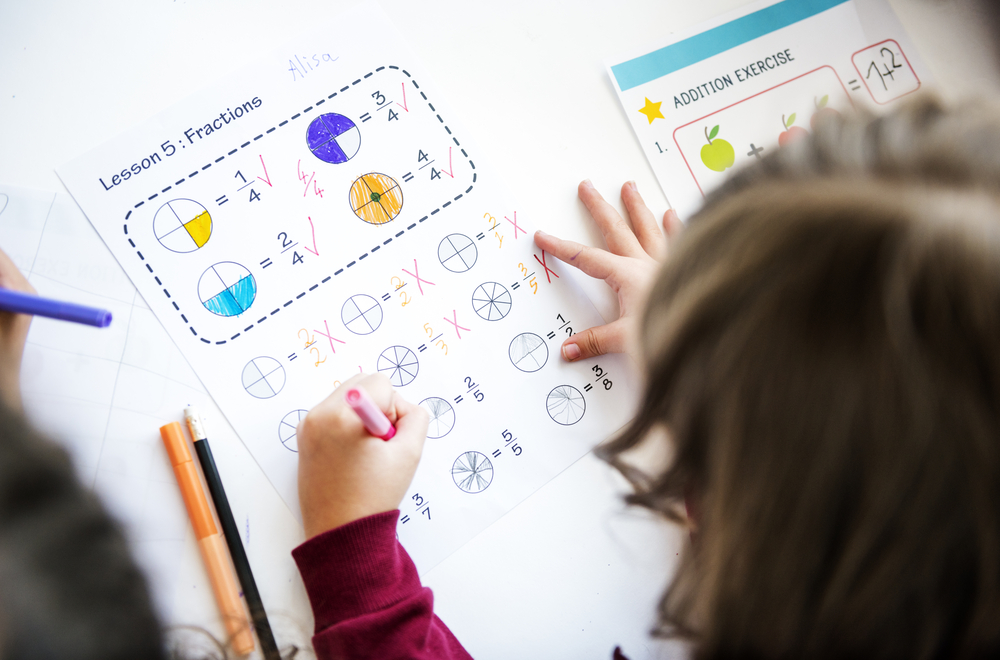



Introducing children ages 3-6 to subtraction through extra challenge math exercises is essential for several reasons. First, these early years are a critical period for cognitive development. Engaging in subtraction activities not only strengthens mathematical skills but also enhances problem-solving abilities, logical thinking, and mental agility. By encountering challenges, children learn perseverance and develop a growth mindset, which is crucial for lifelong learning.
Parents and teachers should note that subtraction practice helps young learners grasp the concept of taking away, which is foundational for more advanced mathematical operations. By providing extra challenges, adults can cater to a child’s individual pace and offer just the right level of difficulty to keep them engaged and motivated without causing frustration.
Moreover, early math skills are linked to future academic success. When children are confident in their subtraction abilities, they are more likely to excel in school and enjoy learning. Practicing subtraction in fun, interactive ways, such as using visual aids or hands-on activities, can make math enjoyable and less intimidating.
Thus, prioritizing subtraction practice in early childhood helps build a strong mathematical foundation, fosters intellectual growth, and instills a positive attitude towards learning that benefits children throughout their educational journey.