
Understanding currency Extra Challenge Math Worksheets for Ages 3-6
3 filtered results
Difficulty Level
Grade
Age
-
From - To
Subject
Activity
Standards
Explore our "Understanding Currency Extra Challenge Math Worksheets" designed for children ages 3-6! Perfect for enhancing young learners’ math skills, these worksheets introduce essential concepts related to money, counting, and value recognition. Engaging and interactive, they provide a variety of challenges that will captivate your child's interest while promoting critical thinking and arithmetic skills. Ideal for both classroom settings and at-home learning, these worksheets build a strong foundation in financial literacy through fun activities and real-life applications. Help your child become confident in understanding currency today! Access our printable resources and watch your little ones thrive in their early math journeys!
Favorites
With answer key
Interactive
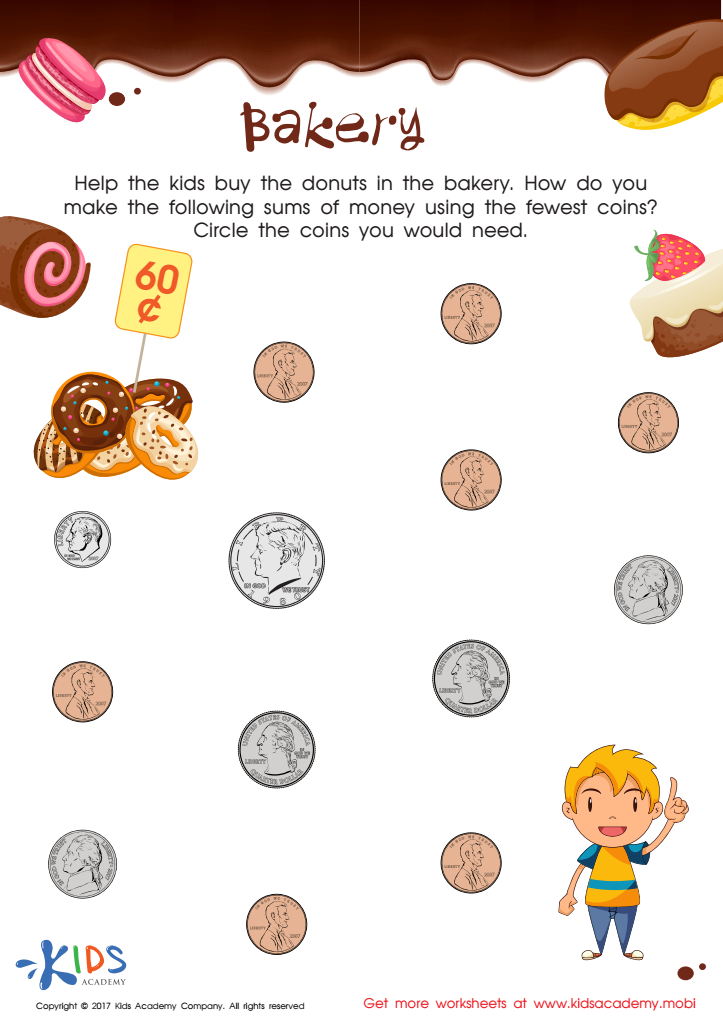
Counting Coins Worksheet
It will challenge them to spend a given amount using the least coins possible. Perfect for 2nd grade.
Help your child learn to count coins with this fun bakery-themed worksheet. It's perfect for 2nd graders and will challenge them to use the least coins possible to spend a set amount. Develop a valuable life skill and have fun while doing it!
 Assign to My Students
Counting Coins Worksheet
Worksheet
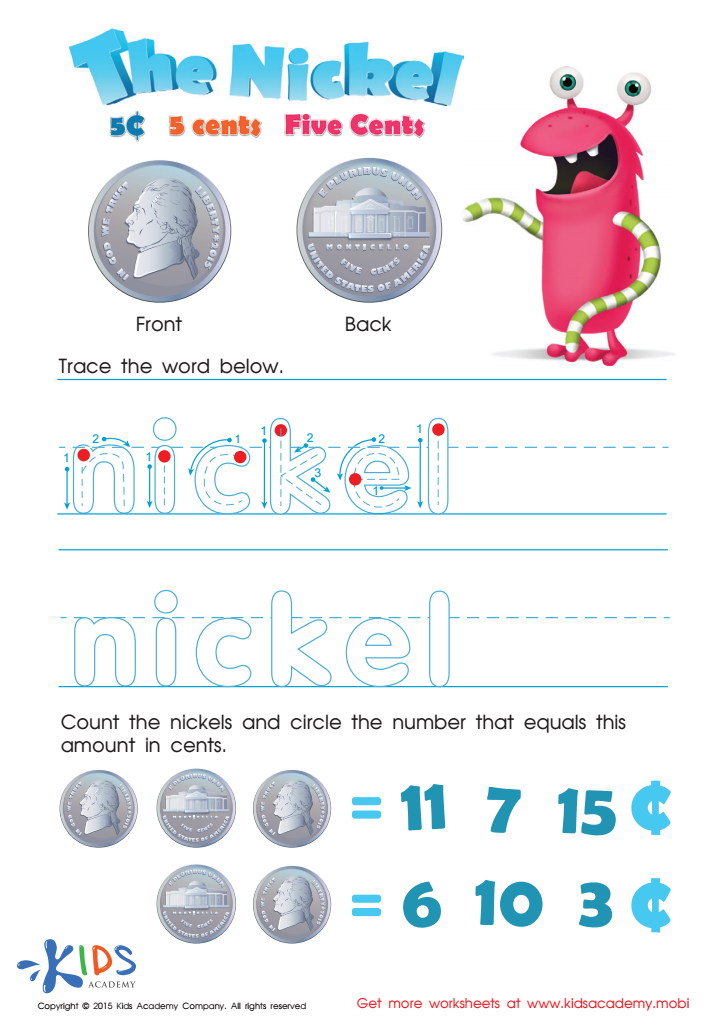
Five Cents or the Nickel Money Worksheet
Counting money games help kids make learning money fun and easy. Next up: the 5 cent coin, or nickel. Look at both sides and remember them. Then, trace the word "nickel" to help you remember. Finally, count the nickels and work out amounts in cents. Let's do this! Kids Academy helps make money learning easy and fun!
Five Cents or the Nickel Money Worksheet
Worksheet
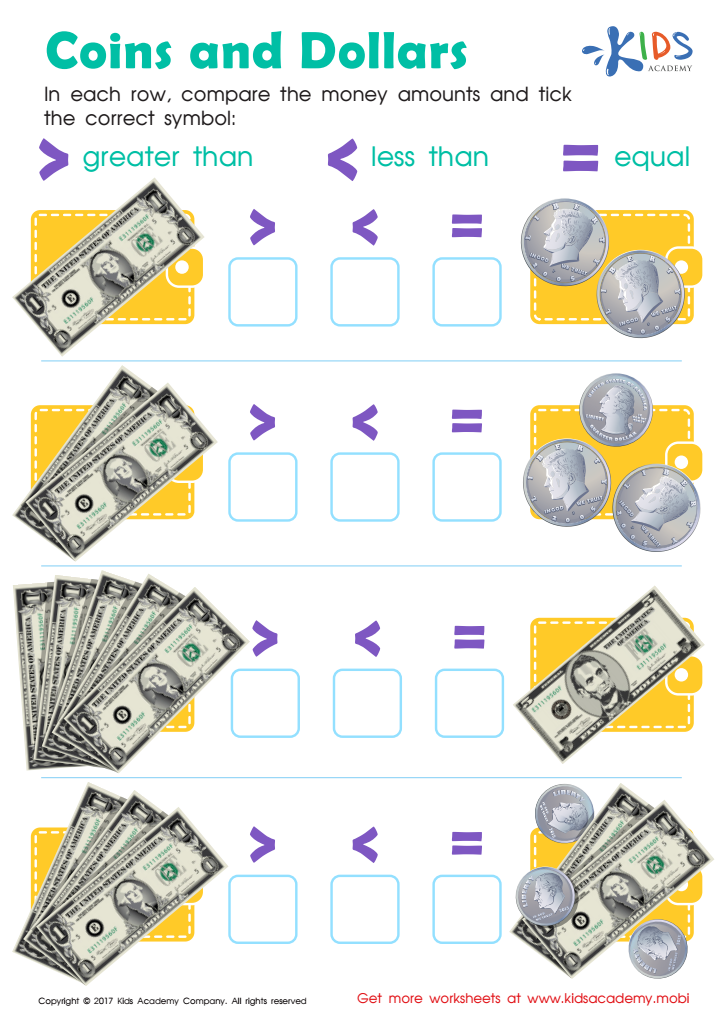
Money: Coins Dollars Printable
Motivate your kid to learn and practise essential math skills, like 'greater than' and 'less than', by introducing the importance of money! The money worksheet "Coins and Dollars" will give them a hands-on experience of counting coins and dollars, making math symbols more memorable.
Money: Coins Dollars Printable
Worksheet
Join Kids Academy for Free
Who is primarily going to use this learning content?








Understanding currency is a foundational skill that extends beyond mere numbers; it forms the bedrock of financial literacy. For parents and teachers of children aged 3-6, incorporating Extra Challenge Math focused on currency can offer significant benefits.
Early exposure to currency concepts helps young learners develop critical thinking and problem-solving skills as they begin to grasp the idea of value and exchange. Engaging with activities that involve counting coins, comparing values, or making simple transactions fosters a hands-on experience that can enhance cognitive development. This play-based learning approach not only makes financial concepts accessible but also enjoyable.
Additionally, teaching currency can improve fine motor skills through hands-on activities like sorting coins or using play money. It creates opportunities for meaningful discussions about saving, spending, and sharing—essential life skills that promote responsible financial behavior later on.
Moreover, as global citizens in an increasingly complex economy, children who learn about currency at a young age are better prepared to navigate real-world financial situations in the future. Ultimately, by investing time and resources into Extra Challenge Math related to currency, parents and teachers significantly contribute to both academic growth and lifelong economic competencies for children.








