Comparing sizes Extra Challenge Measurement Worksheets for Ages 3-6
4 filtered results
-
From - To
Elevate your child's measurement skills with our "Comparing Sizes Extra Challenge" worksheets designed for ages 3-6. These engaging, printable exercises offer a fun yet educational approach to understanding different sizes. Perfect for early learners, each worksheet features vibrant visuals and simple tasks to promote critical thinking and compare objects. By mastering these challenges, children can boost their confidence and prepare for more advanced measurement concepts. Ideal for parents and teachers seeking quality educational resources, these worksheets provide a solid foundation for lifelong learning. Foster your child's curiosity and skill with our expertly crafted measurement activities!
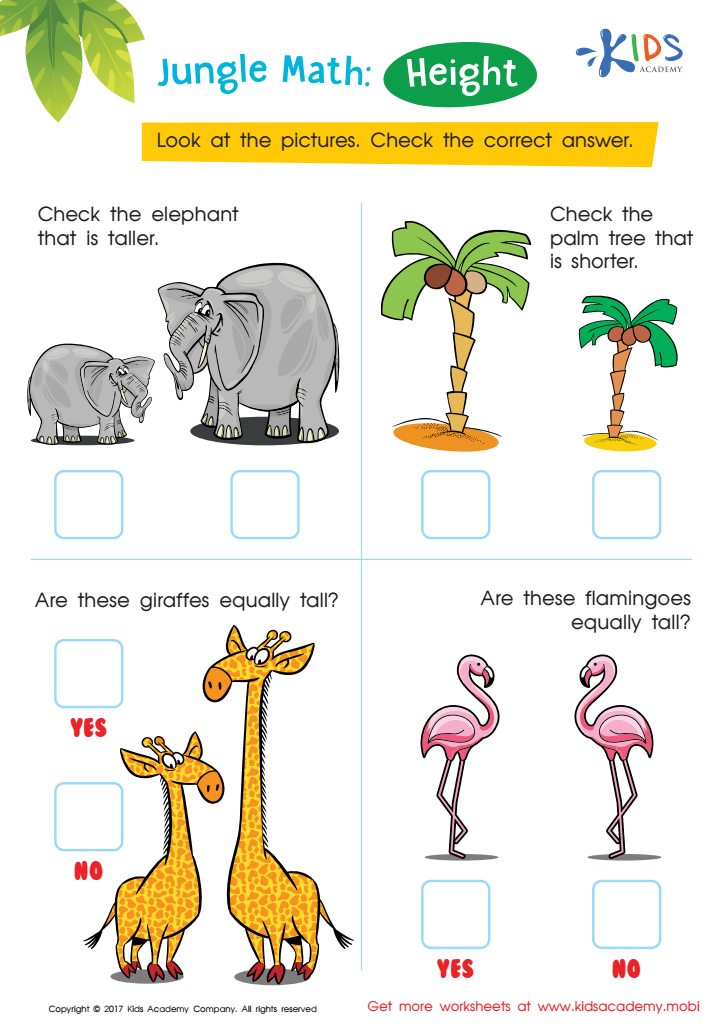
Which Is Taller Worksheet
 Assign to My Students
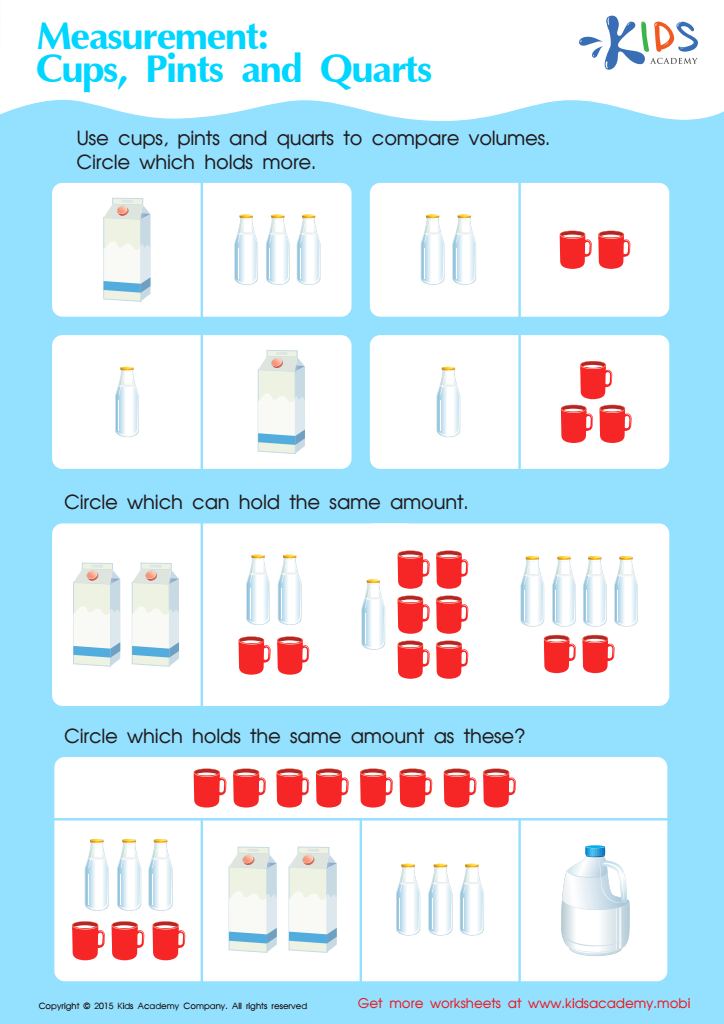
Measurement: Compare Volumes Worksheet
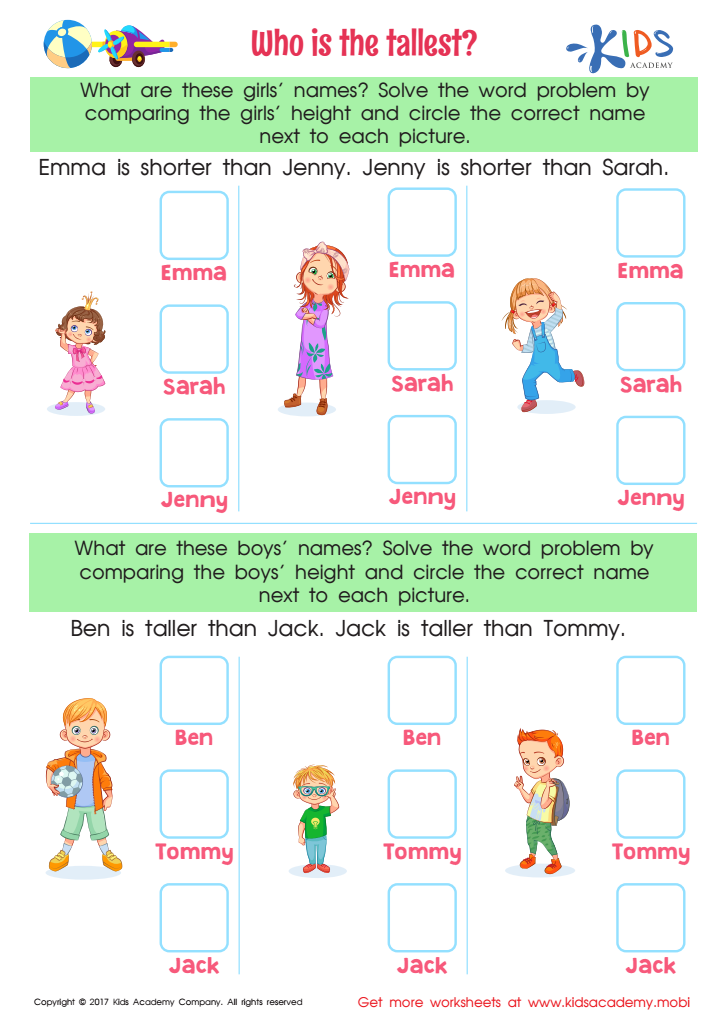
Who Tallest Printable
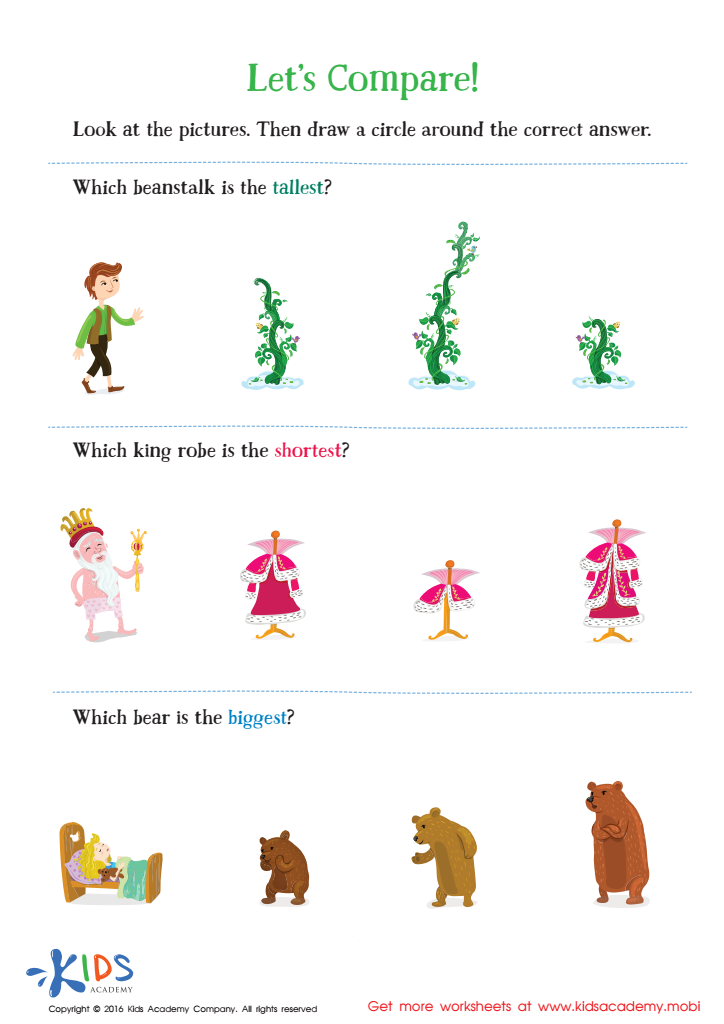
Fairy Tale Worksheet: Let's Compare








Introducing the concept of comparing sizes through extra challenge measurements for children aged 3-6 fosters essential cognitive and social development skills. At this critical stage, young children are naturally curious and keen to explore the world around them. Engaging them in activities that involve measuring, such as comparing lengths of different objects or determining which is heavier or lighter, promotes foundational mathematical concepts.
By grasping these basic measurement skills, children enhance their ability to observe, analyze, and categorize objects, leading to better problem-solving abilities. For example, recognizing the difference between a short pencil and a long one teaches them to quantify and compare in a meaningful way, a skill transferable to more complex math tasks as they grow older.
Additionally, activities involving measurement improve fine motor skills and hand-eye coordination. When children physically manipulate objects to compare sizes, they develop better control and coordination, which are crucial for writing and other detailed tasks.
Socially, these exercises promote collaboration and communication when done in groups. Children learn to describe their observations and negotiate solutions, which build their language skills and confidence. Educators and parents should care because these early developmental benefits lay a solid foundation for future academic and life success.








