Filters

29 filtered results

Clear all filters
Favorites
With answer key
Interactive

29 filtered results

Difficulty Level

Grade


Check out this FREE Trial Lesson on Grammar for age 3-6!

Verbs in the Past, Present and Future

Favorites
With answer key
Interactive
  • 3-6
  • Grammar
  • Extra Challenge
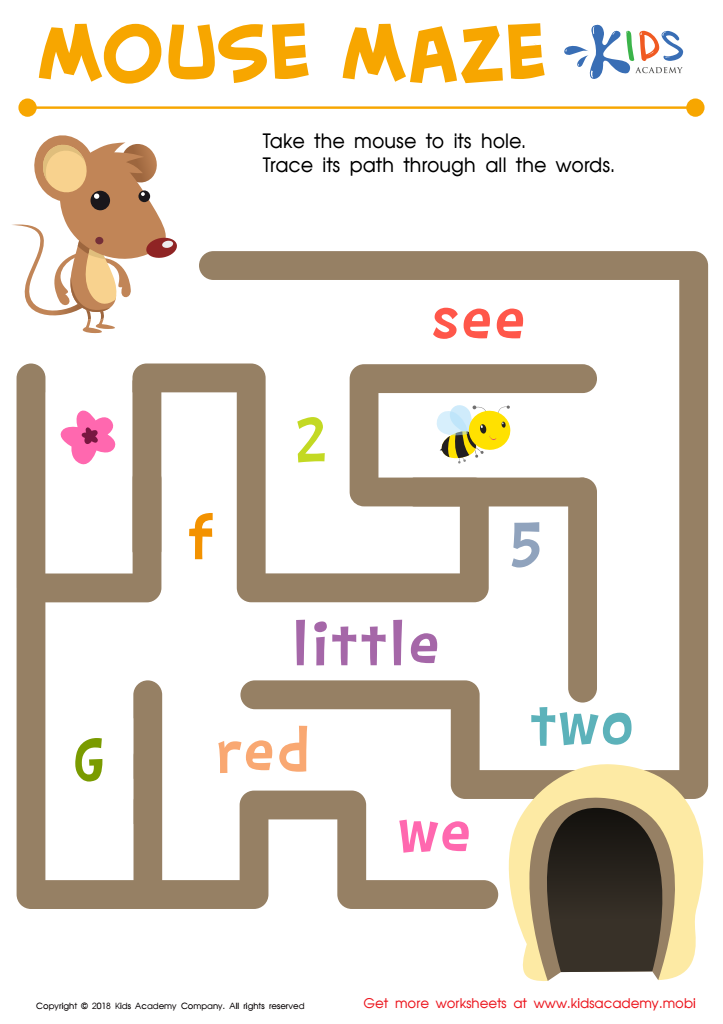
Find Words Mouse Maze Worksheet

Find Words Mouse Maze Worksheet

Help your child identify words and guide the mouse home! Ask them to point out the colorful animal on the worksheet, then take their hand and show them how to trace the path, going through all the words in the maze to get the mouse back to its hole.
Find Words Mouse Maze Worksheet
Worksheet
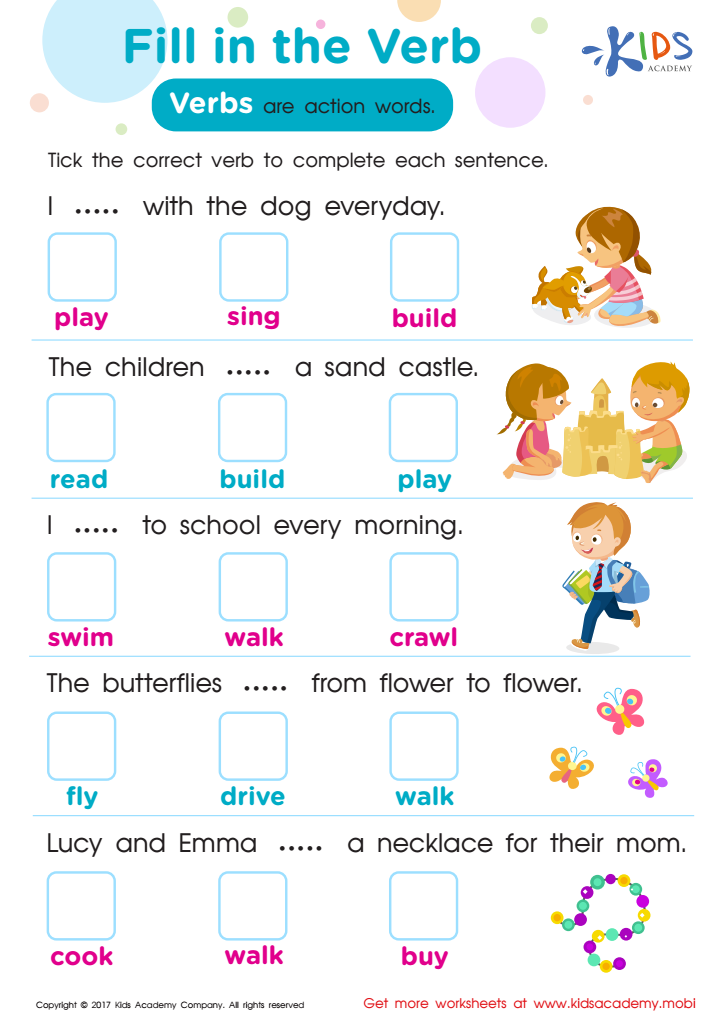
Worksheet: Fill in the Verb

Fill in the Verb Printable

Help your child learn about verbs with this fun worksheet! Colorful images prompt them to fill in the verb, helping build their writing skills. It's a great way to make learning enjoyable.
Fill in the Verb Printable
Worksheet
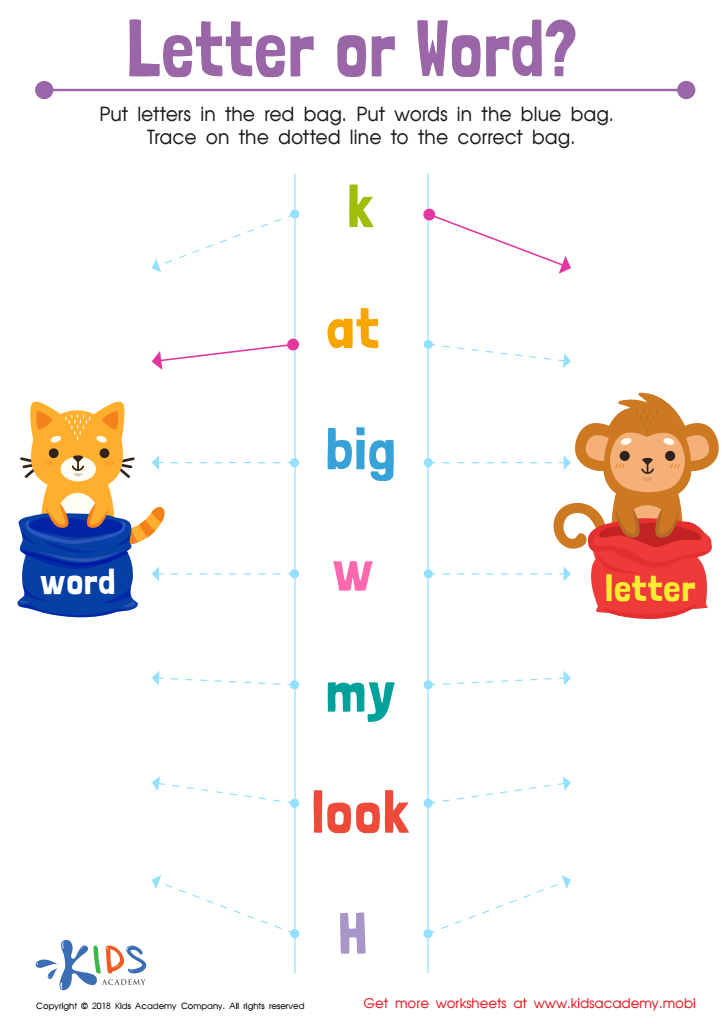
Letter or Word? Worksheet

Letter or Word? Worksheet

Help your kids differentiate between words and letters. If they can recite their alphabets and identify common words, this tracing sheet will be a breeze. Have them trace on the dotted lines to place the letters in the red bag with the kitten, and the words in the blue bag with the monkey.
Letter or Word? Worksheet
Worksheet
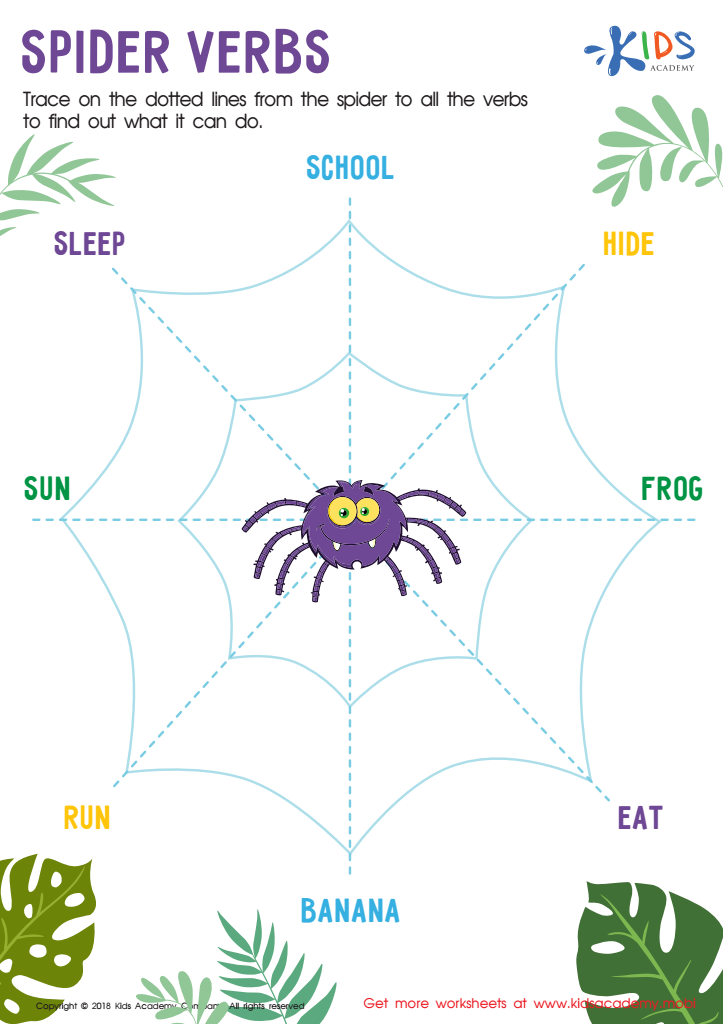
Spider Verbs Worksheet

Spider Verbs Worksheet

Verbs are action words. Examples: run, play, talk. Show your child this tracing sheet for them to learn about verbs. Ask them to trace the dotted lines from the spider to the words that are verbs. These words are what the spider can do.
Spider Verbs Worksheet
Worksheet
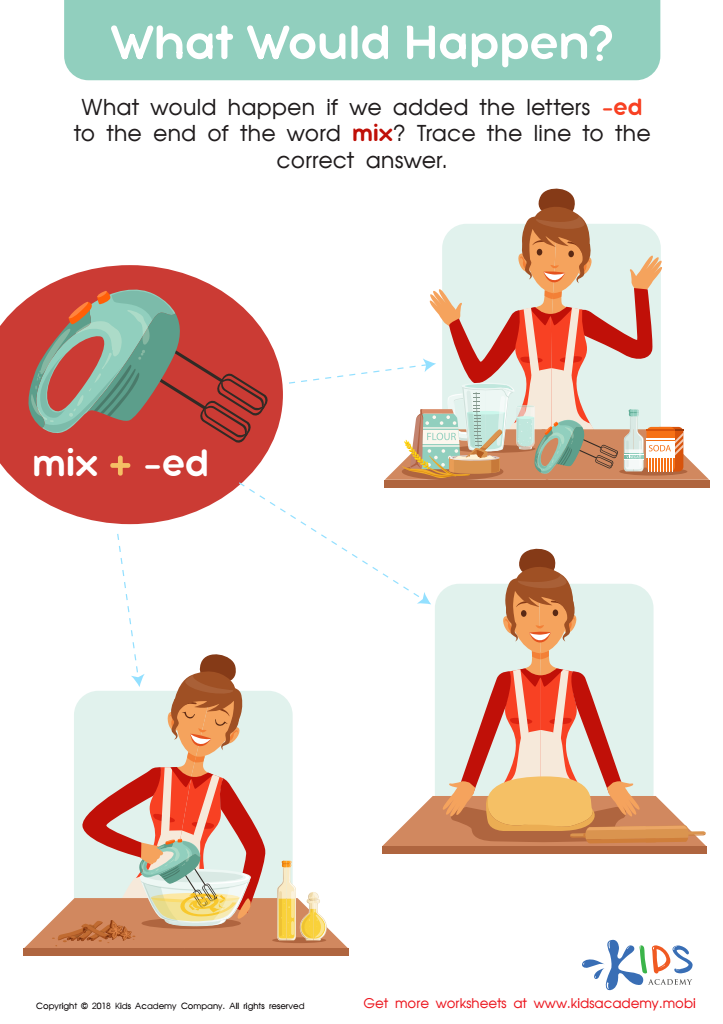
What Would Happen? Worksheet


What Would Happen? Worksheet
Are your kids struggling with tenses? Use this worksheet to help them. See what they know by asking them to add '-ed' to the end of 'mix'. Guide them through the tracing sheet as they look for the correct answer.
What Would Happen? Worksheet
Worksheet


Parents and teachers should care about Extra Challenge Grammar for ages 3-6 because these early years are critical for language development. During this stage, children are naturally curious and absorb information quickly, making it the perfect opportunity to introduce foundational grammar concepts in a fun and engaging way. By using activities designed to challenge and stimulate their cognitive abilities, children not only develop a strong understanding of basic grammar but also enhance their overall communication skills.

Moreover, early mastery of grammar supports literacy development, as children learn to express their thoughts and ideas clearly and coherently. This can lead to improved reading and writing skills as they progress through their education. Additionally, understanding grammar helps children build confidence when interacting with others and contributing to group discussions.

Extra Challenge Grammar activities can also foster a love for language and learning, preparing children for academic success later on. By emphasizing the importance of these skills early in life, we encourage critical thinking and problem-solving abilities that are essential in today's world. Ultimately, focusing on grammar at this young age lays the groundwork for effective communication, which is crucial for personal and academic growth.