Fine Motor Skills Extra Challenge ABC Letters Worksheets for Ages 3-7
7 filtered results
Difficulty Level
Grade
Age
-
From - To
Subject
Activity
Standards
Boost your child's fine motor skills with our engaging "Fine Motor Skills Extra Challenge ABC Letters Worksheets for Ages 3-7." These specially designed worksheets offer a fun yet challenging way to master the alphabet and hone fine motor skills essential for writing. Each worksheet provides unique exercises that encourage precise hand movements, developing strength and coordination in young learners. Perfect for preschool to early elementary stages, our worksheets make learning letters an enjoyable and rewarding experience. Download now for a hands-on approach to alphabet mastery that sets the foundation for future academic success.
Favorites
With answer key
Interactive
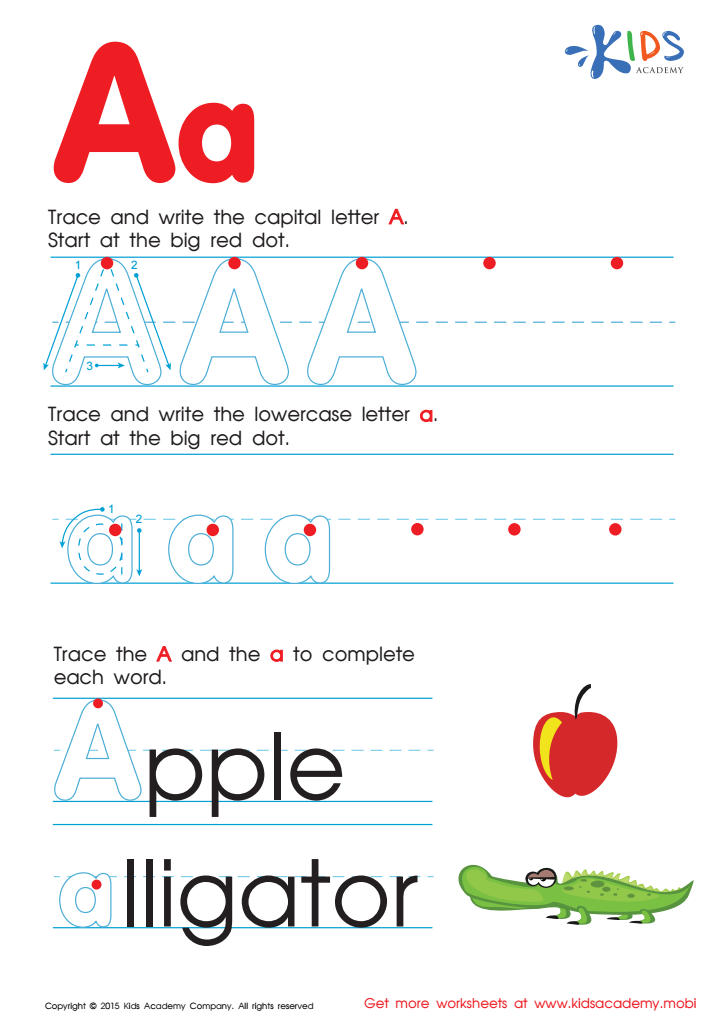
Letter A Tracing Page
Trace and write the letter "A"! Start with the big red dot, then do the capital and lowercase versions. Then write it again with two words - apple and alligator. Download more tracing worksheets at Kids Academy.
 Assign to My Students
Letter A Tracing Page
Worksheet





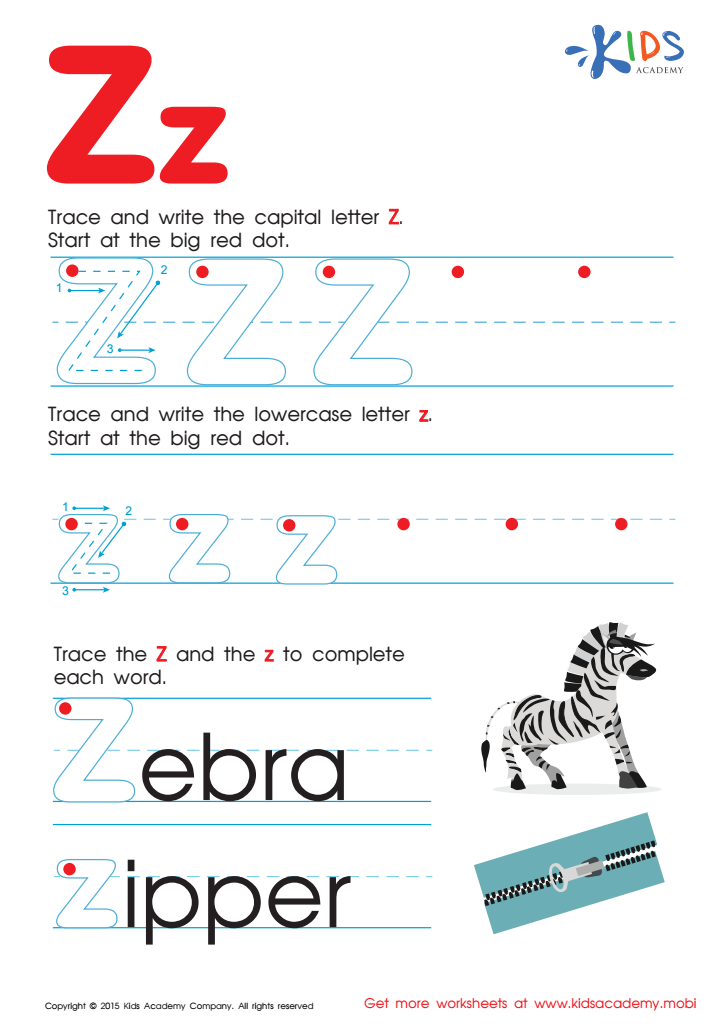
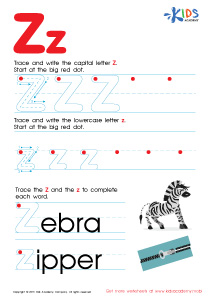
Letter Z Tracing Page
Trace and write capital "Z" and lowercase "z". Complete words "zebra" and "zipper". Be attentive and have fun! (80 words)
Letter Z Tracing Page
Worksheet
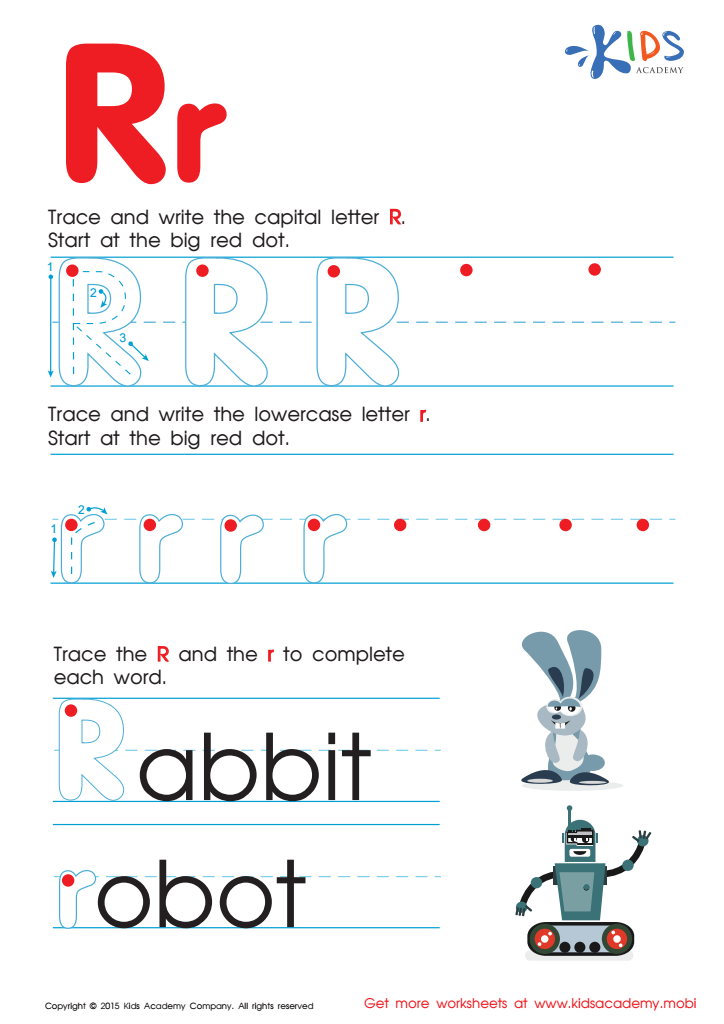
Letter R Tracing Page
Trace and write the letter "R" with this worksheet for kindergarten. Start with the uppercase, then move on to the lowercase. Write the letters several times for practice. Then help complete the words for the rabbit and robot, spelling carefully. More ABC worksheets can be found at Kids Academy.
Letter R Tracing Page
Worksheet
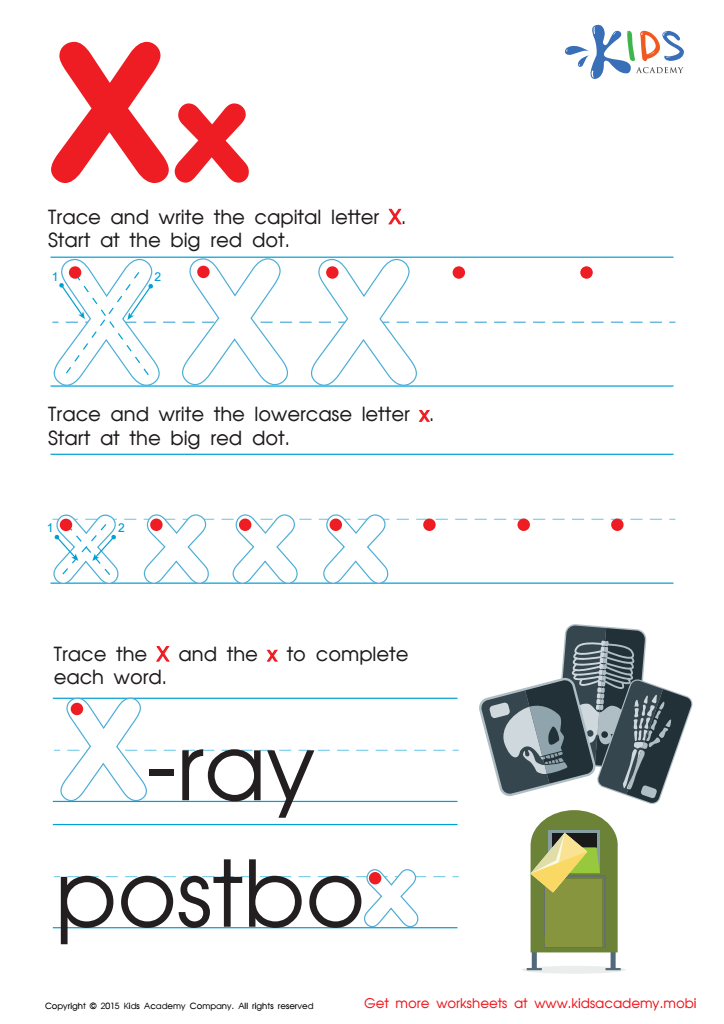
Letter X Tracing Page
Trace the uppercase letter "X" to learn, then write it yourself and practice. Then do the same with the lowercase "x" before completing the words "X-ray" and "postbox". Enjoy our alphabet printables!
Letter X Tracing Page
Worksheet
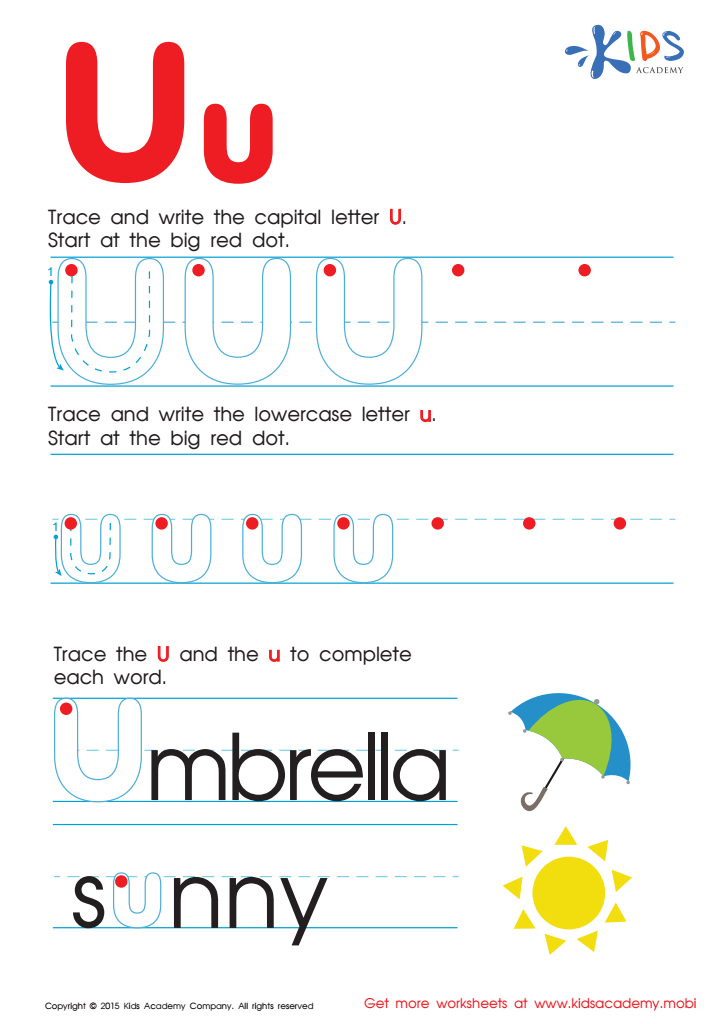
Letter U Tracing Page
Ready to trace and write the letter "U"? Use our worksheet and practice tracing both uppercase and lowercase letters. Complete the words "umbrella" and "sunny" with a capital "U". Check our full collection of alphabet printables for more activities.
Letter U Tracing Page
Worksheet
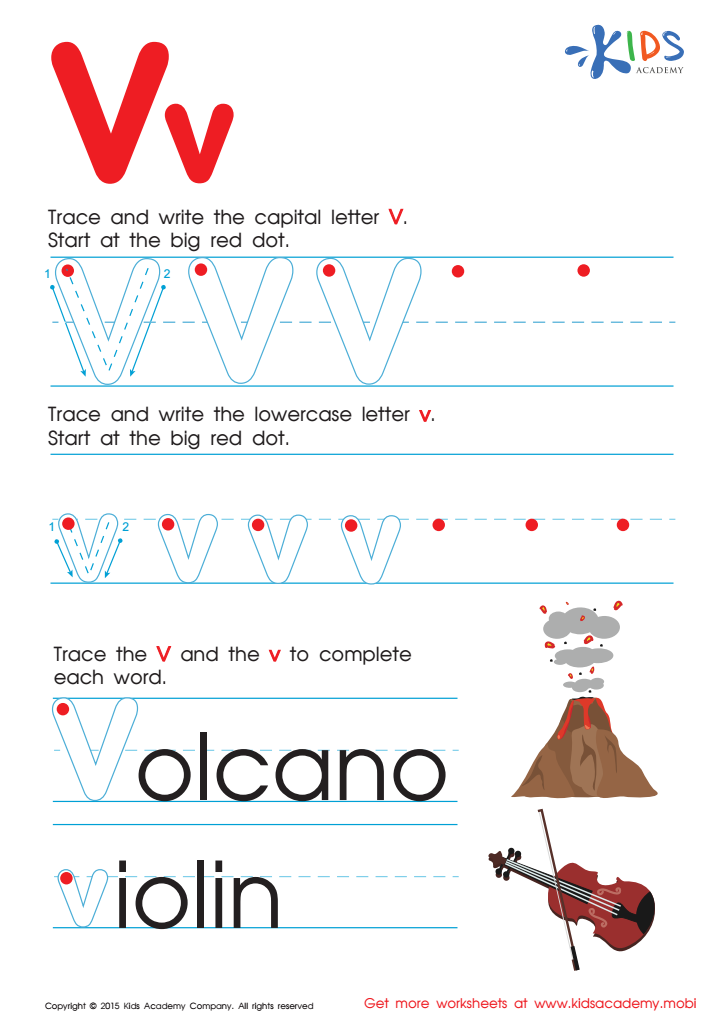
Letter V Tracing Page
Trace the uppercase and lowercase letter "V" with our kindergarten tracing worksheet. Begin at the red dot and follow the lines. Write it several times. Complete the words "Volcano" and "violin". Get more alphabet activities at Kids Academy.
Letter V Tracing Page
Worksheet
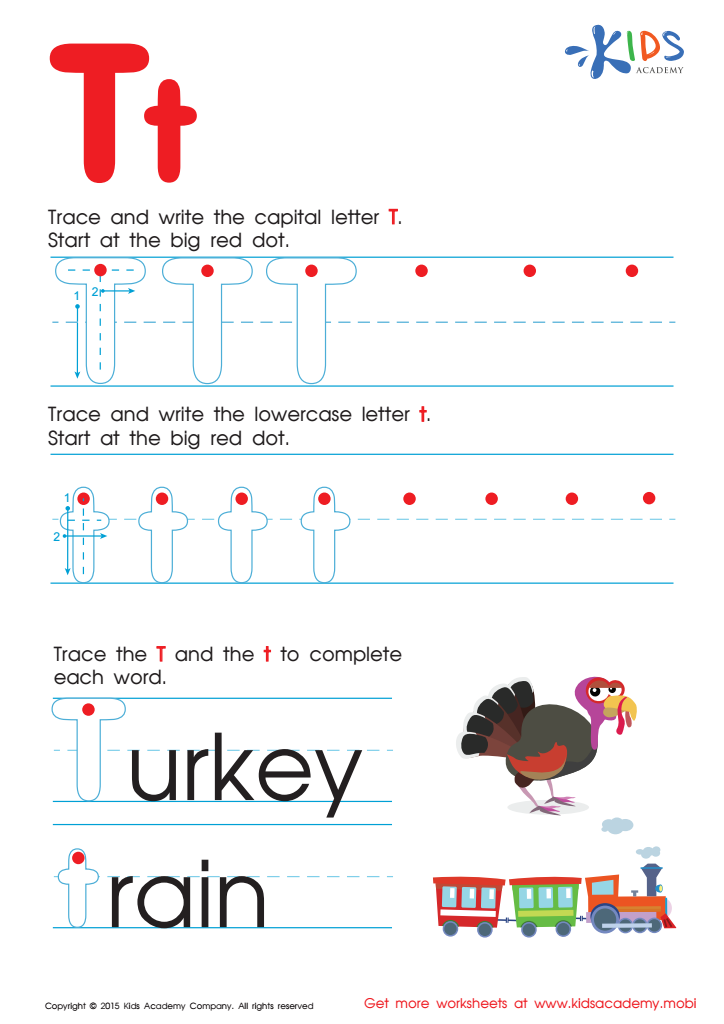
Letter T Tracing Page
Trace letters, complete words, draw pictures and see your kids having fun!
Kids Academy offers alphabet tracing worksheets to learn to write letters. Start with the big red dot, trace the letter, then write it. Practice uppercase and lowercase. Have fun completing words with a Turkey or a rain-train and draw pictures. Get more printable worksheets to make learning enjoyable.
Letter T Tracing Page
Worksheet
Join Kids Academy for Free
Who is primarily going to use this learning content?






Fine motor skills involve the refinement of small muscle movements in the fingers, hands, and wrists crucial for everyday tasks such as writing, buttoning, and cutting. For ages 3-7, developing these skills is critical as it forms the foundation for advanced activities, including academic success. Fine Motor Skills Extra Challenge ABC Letters provide an excellent framework for this development. By engaging with these materials, children can enhance their dexterity and hand-eye coordination, which are essential for writing letters and completing more precise tasks.
When kids mold playdough into alphabet shapes, thread beads onto string to form letters, or trace intricate designs, they aren't just learning the ABCs. They’re also fine-tuning their control over hand movements, which boosts their ability to hold pencils, type on keyboards, and perform other academic-related tasks with greater ease. Moreover, these activities allow for cognitive development as children recognize patterns, develop problem-solving skills and reinforce their memory by associating letters with their respective sounds.
Teachers and parents should care because addressing these skills early fosters a more supportive learning environment, reducing future educational hurdles. By concentrating on fine motor skill development through engaging and educational means, we set children on the path to a lifetime of academic and personal achievement.