Vowel Recognition Extra Challenge Long Vowels Worksheets for Ages 3-7
3 filtered results
Difficulty Level
Grade
Age
-
From - To
Subject
Activity
Standards
Enhance your child's reading skills with our "Vowel Recognition Extra Challenge Long Vowels Worksheets for Ages 3-7". These engaging worksheets are designed to help young learners, from ages 3 to 7, master the art of recognizing long vowels through fun and interactive exercises. Each activity is specifically tailored to reinforce long vowel sounds, improve phonemic awareness, and build a strong foundation for early literacy. Perfect for home or classroom use, our printable worksheets provide an excellent resource for extra practice and learning reinforcement. Explore a wide range of challenging and entertaining tasks that make learning long vowels a delightful adventure for your child!
Favorites
With answer key
Interactive
Long Vowel Sound A Worksheet
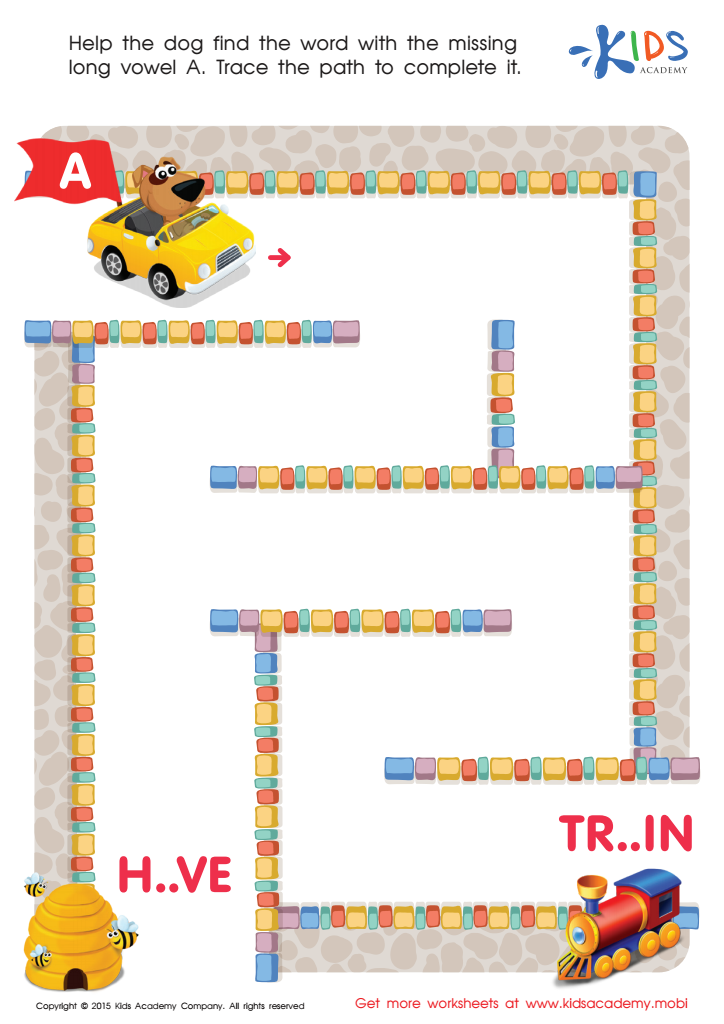
Teach your young learner about the long vowel A with this colorful free printable phonics worksheet. The long vowel A says its name while the short vowel A does not. Complete the worksheet by tracing the root to the toy train and helping the dog by filling in the missing letter A. Have them practice writing and spelling with phonics while having fun!
 Assign to My Students
Long Vowel Sound A Worksheet
Worksheet
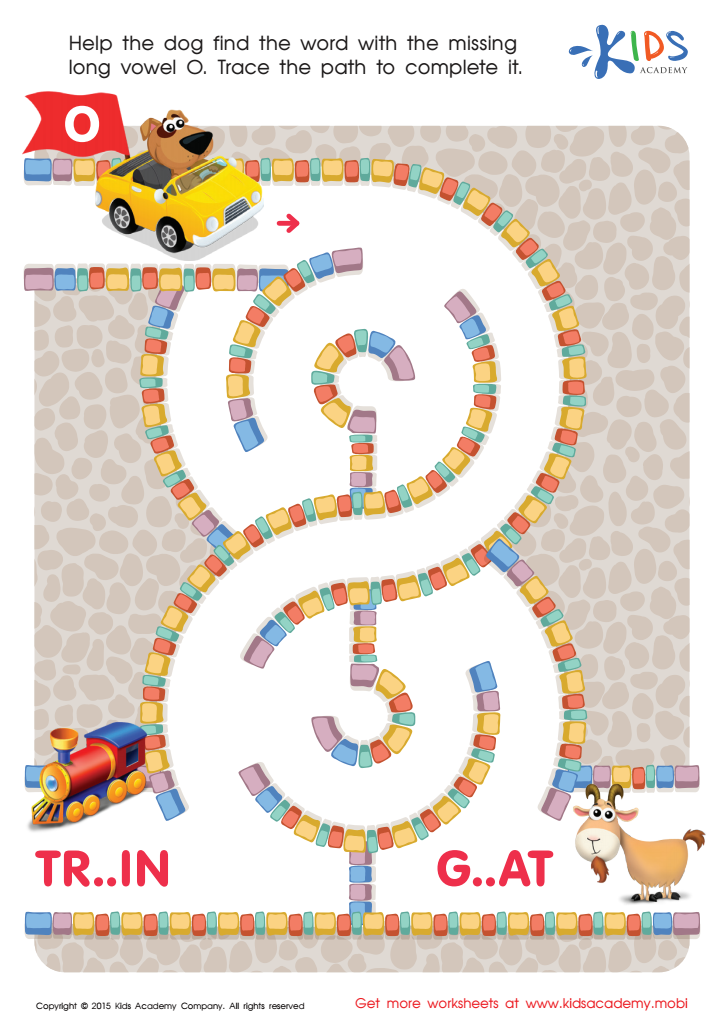
Long Vowel Sound O Worksheet
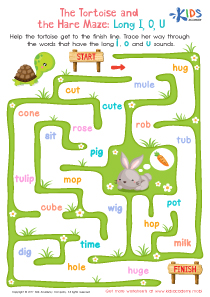
Help the goat find her missing O! Guide your little learner through this fun maze to help the goat get its vowel sound back. Make phonics learning engaging and enjoyable with this free printable worksheet.
Long Vowel Sound O Worksheet
Worksheet
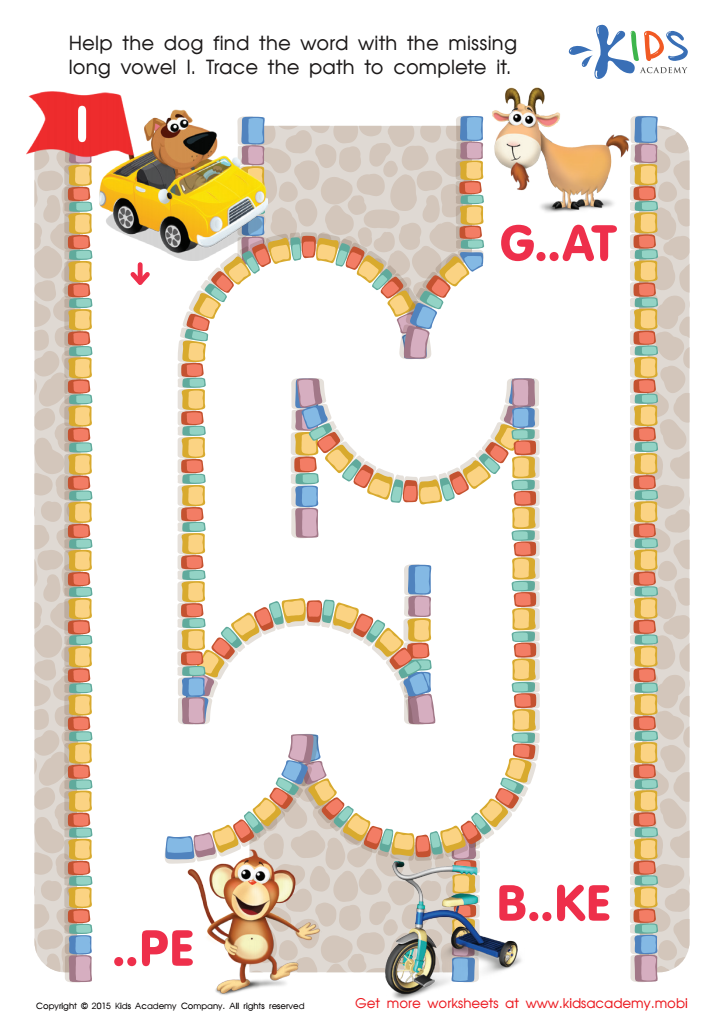
Long Vowel Sound I Worksheet
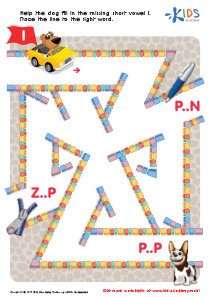
Learning long vowels is essential to becoming a good reader. Ask your child to distinguish between the long and short I vowel sounds. Remind them that the long I says its name, while the short I doesn't. With this fun printable phonics worksheet, your kid can practice writing and spelling while helping a dog find his way through a maze. Check out our phonics worksheets for more learning activities.
Long Vowel Sound I Worksheet
Worksheet
Join Kids Academy for Free
Who is primarily going to use this learning content?



Vowel recognition, especially understanding long vowels, is fundamental for early literacy development in children aged 3-7. Mastery of vowel sounds lays the groundwork for fluent reading and accurate spelling, essential skills in a child's educational journey. Long vowels, which ''say their names'' (like the "a" in "cake" or "e" in "beet"), often appear in various words, forming the building blocks of proficient word recognition.
Introducing an extra challenge focused on long vowels engages young learners in a critical learning phase. It encourages them to listen carefully to the sounds within words, helping to improve their phonemic awareness. This heightened auditory discrimination is integral for decoding words during reading and encoding them while writing.
Moreover, challenges that focus on long vowels foster confidence through repeated exposure and practice. It provides ample opportunities to recognize patterns in word construction, aiding in vocabulary expansion. Parents and teachers supporting these activities can build scaffolded learning environments that adapt to each child's specific pace.
In summary, focusing on long vowels at an early age not only promotes reading and writing proficiency but also builds a strong educational foundation. This foundation is essential for further academic success, making vowel recognition exercises significant for both parents and teachers.