Extra Challenge Missing Vowels Worksheets for Ages 3-7
4 filtered results
-
From - To
Introduce your young learners to the exciting world of vowels with our "Extra Challenge Missing Vowels Worksheets for Ages 3-7". These engaging printables encourage children to fill in the missing vowels to complete the words, enhancing their reading and spelling skills while making learning fun. Each worksheet is designed to captivate young minds with colorful images and age-appropriate challenges. Perfect for early readers, our missing vowels activities help kids develop phonemic awareness, essential for their literacy journey. Give your child a head start with these dynamic worksheets that make mastering letters a delightful adventure. Download now and watch their confidence soar!
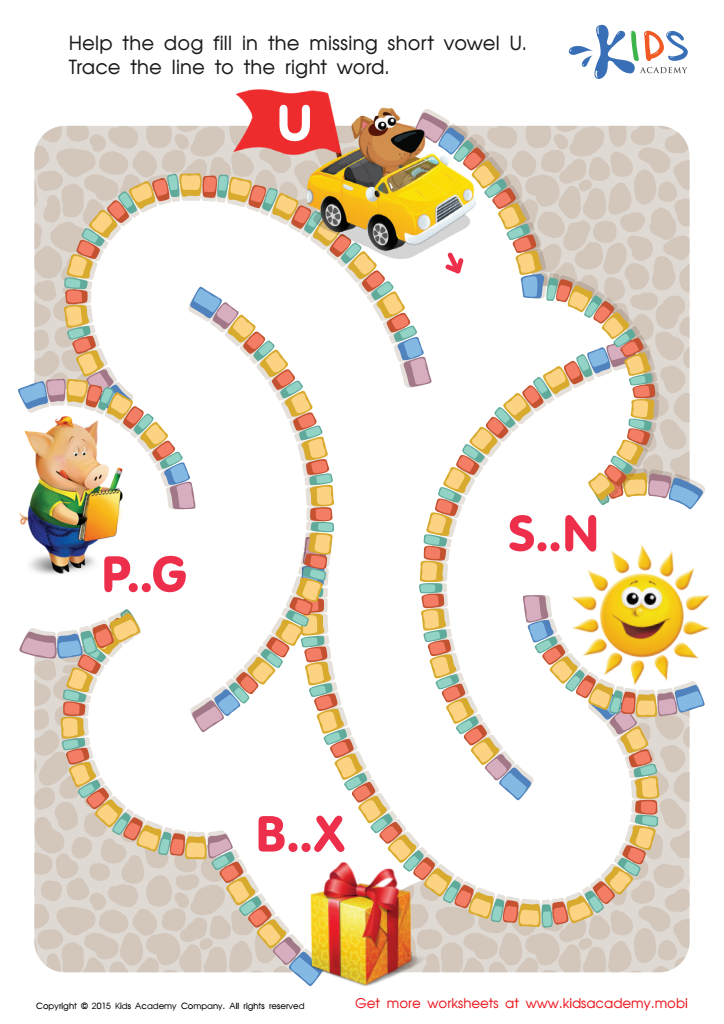
Short Vowel Sound U Worksheet
 Assign to My Students
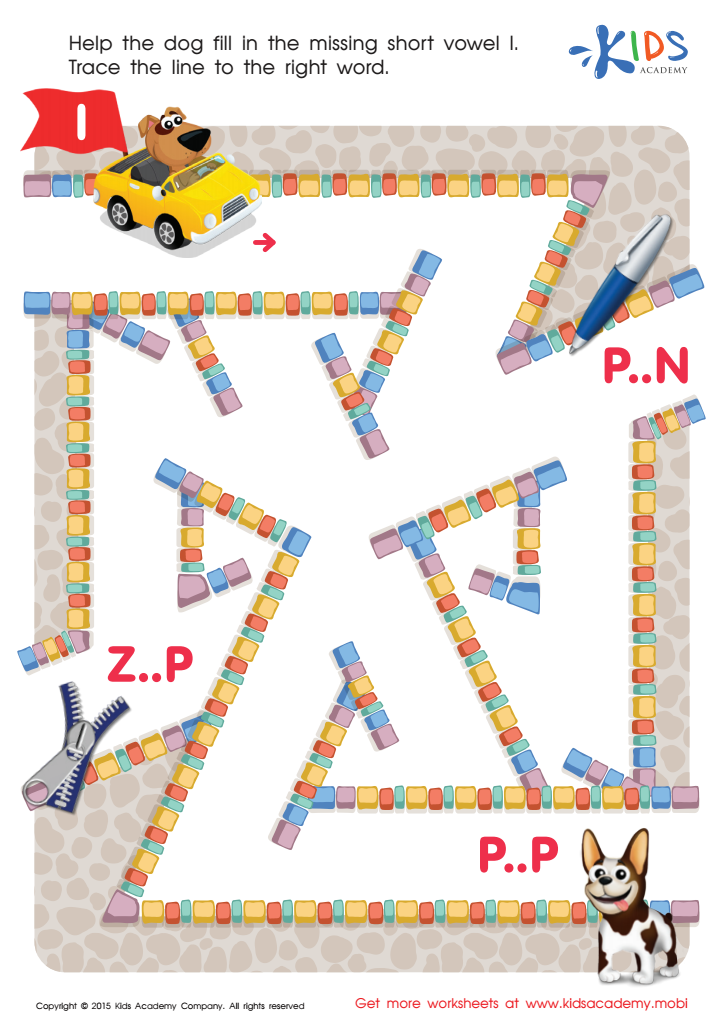
Short Vowel Sound I Worksheet
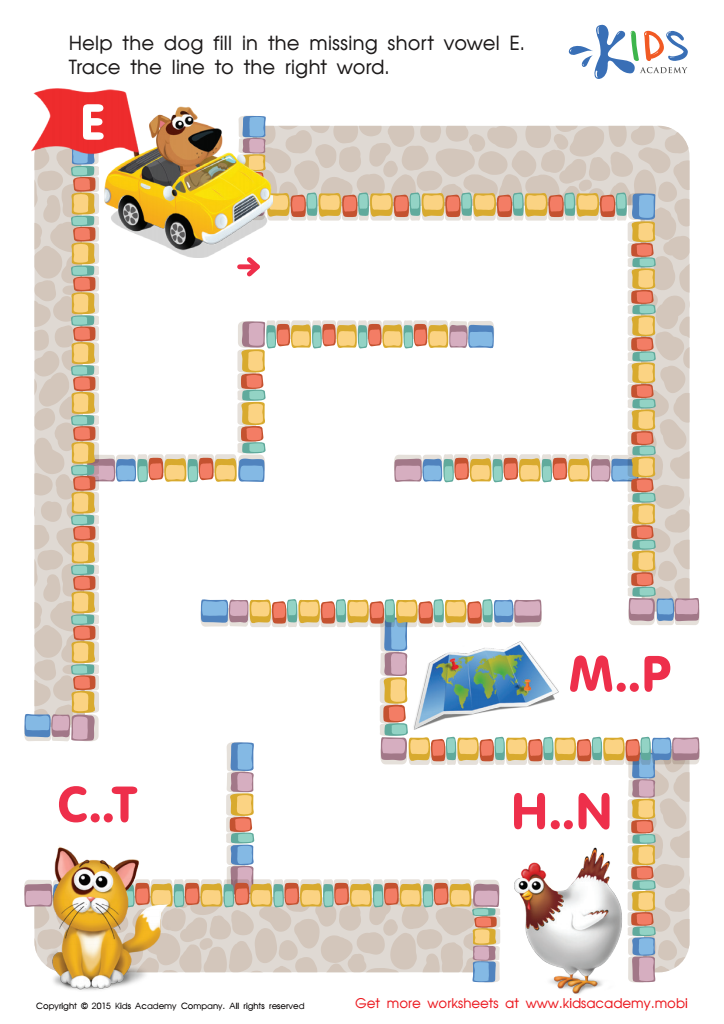
Short Vowel Sound E Worksheet
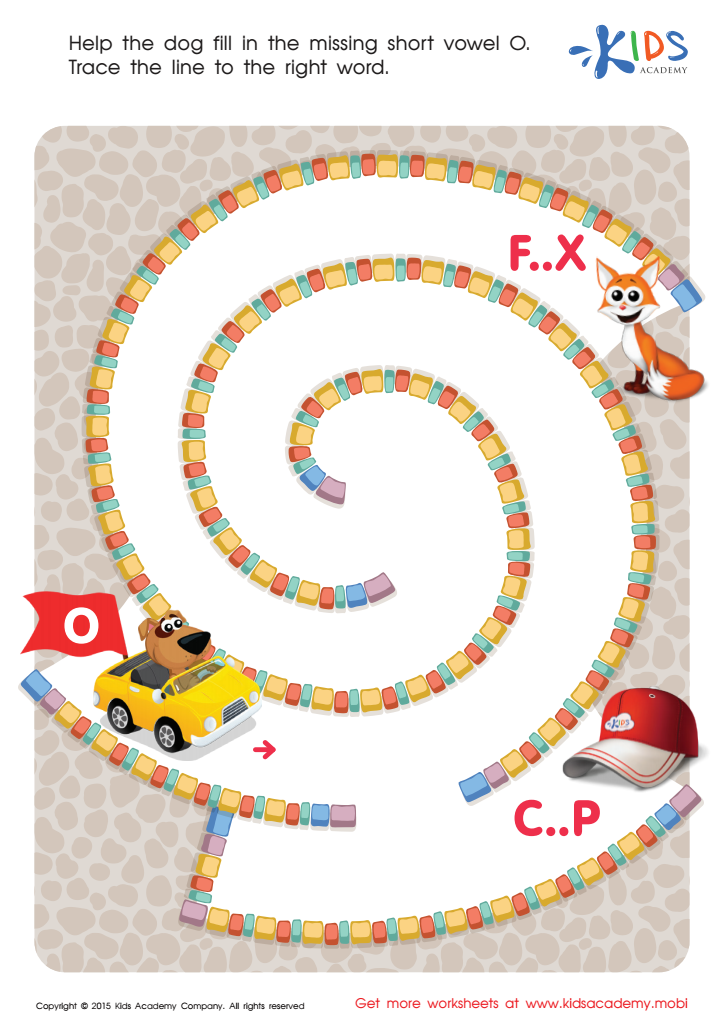
Short Vowel Sound O Worksheet


Extra Challenge Missing Vowels activities are pivotal for children ages 3-7 because they significantly boost early literacy skills in an engaging and enjoyable manner. At this tender age, young minds are rapidly expanding, and activities that challenge their thinking can lead to substantial cognitive gains.
When children participate in Missing Vowels exercises, they are encouraged to recognize patterns and enhance their letter-sound relationships, which are foundational for reading. Filling in the vowels requires the use of phonemic awareness—understanding how sounds form words—a critical component in learning to decode and read new words effectively.
Moreover, these activities can serve to expand a child's vocabulary and comprehension. By identifying and placing missing vowels, children learn to recognize words in multiple contexts, enhancing their ability to understand and digest written material. This equips them with better language and reading skills that will be instrumental throughout their educational journey.
Additionally, the element of challenge and fun in such exercises keeps children engaged and excited about learning. Educators and parents can introduce these activities to cultivate a love for reading and wordplay, addressing varied learning styles and providing a solid foundation for academic success. Encouraging this at an early age helps set the stage for lifelong linguistic proficiency.