Basic counting skills Extra Challenge Worksheets for Ages 3-7
4 filtered results
-
From - To
Enhance your child's numeracy with our "Basic Counting Skills Extra Challenge Worksheets for Ages 3-7." These engaging, printable worksheets are designed to advance counting proficiency by offering fun, progressively challenging activities. Ideal for young learners, each worksheet focuses on fundamental counting skills while incorporating colorful visuals to maintain interest and encourage enthusiasm. From simple number recognition to more advanced counting sequences, these activities build a strong mathematical foundation in a joyful and supportive way. Give your child an extra edge in early math skills with our expertly crafted learning resources!
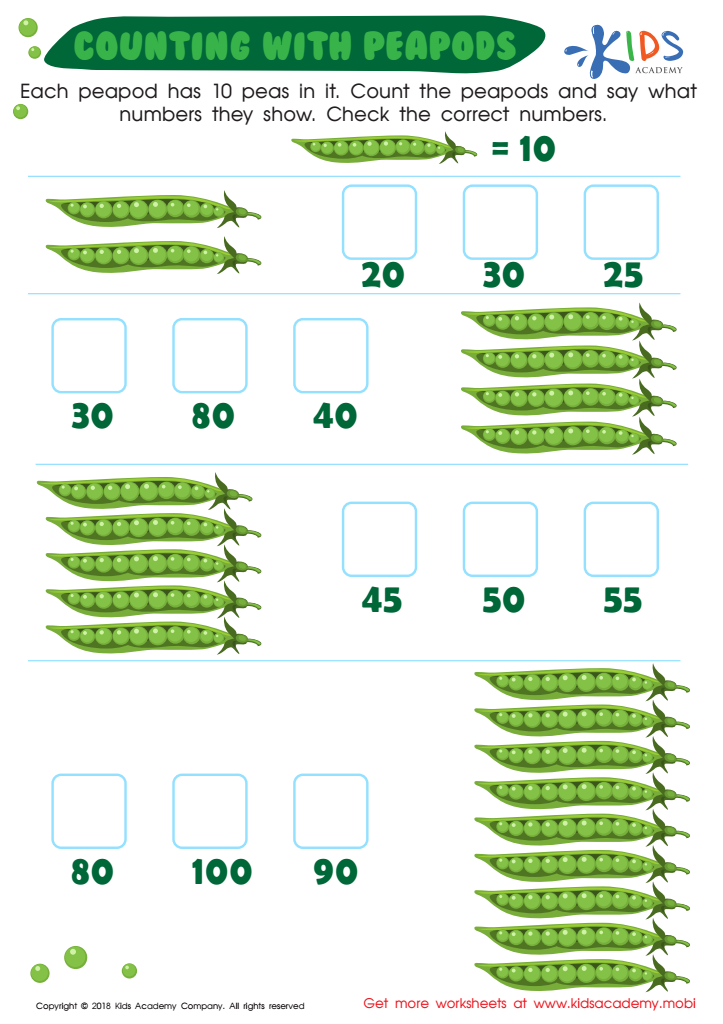
Number Worksheet: Counting With Peapods
 Assign to My Students
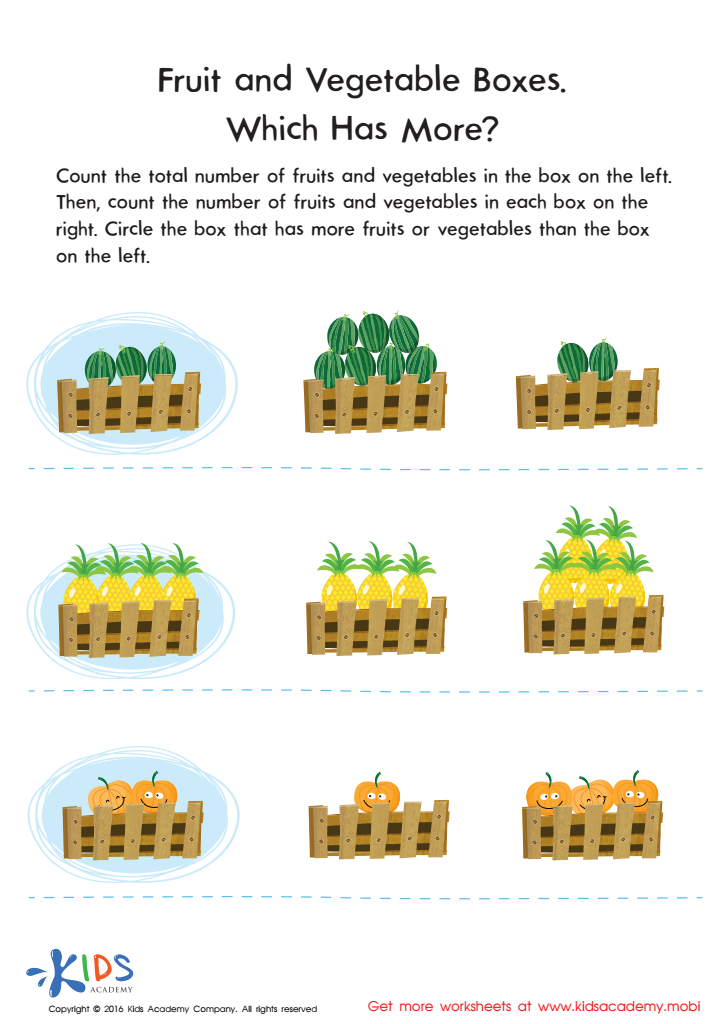
Which Has More? Size Worksheet
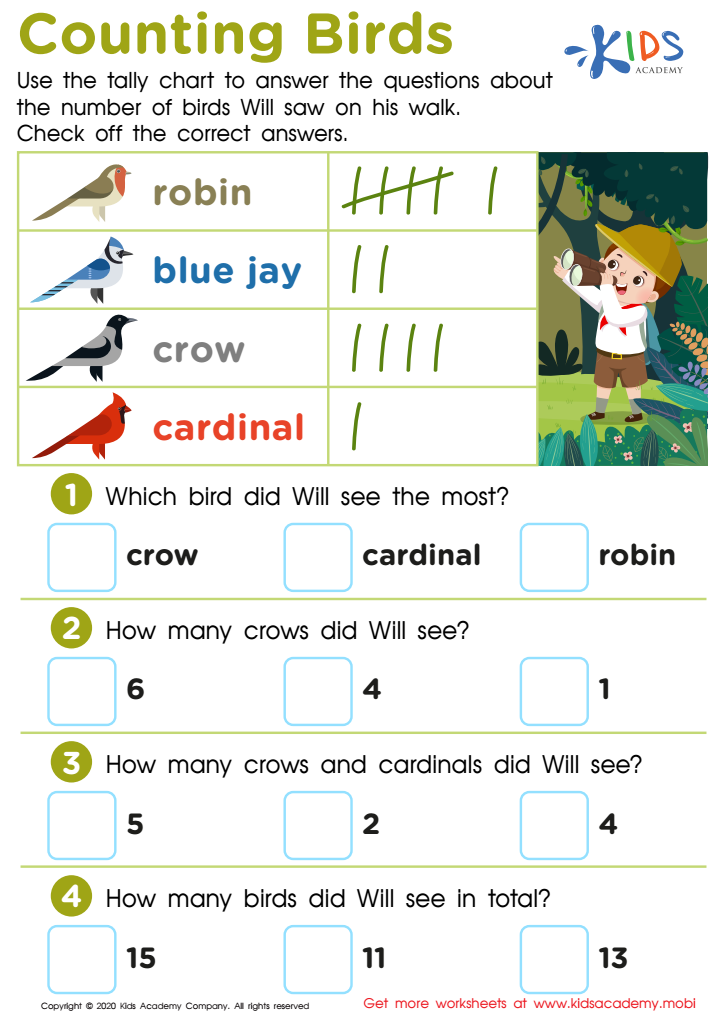
Counting Birds Worksheet
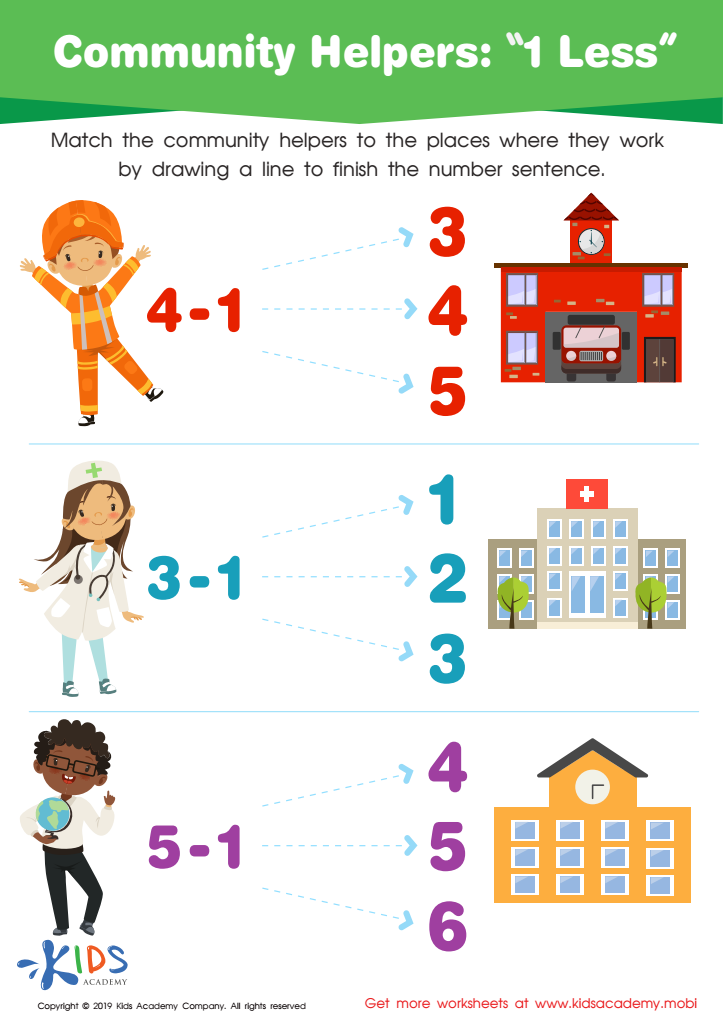
Community Helpers: 1 less Worksheet








Basic counting skills are foundational to a child's overall mathematical development, and introducing extra challenges for ages 3-7 is crucial for several reasons. First, early proficiency in counting enhances confidence and enthusiasm for mathematics, fostering a positive attitude toward learning in general. This fundamental ability is not limited to rote memorization but encompasses understanding number sequences, one-to-one correspondence, and recognizing patterns—all vital skills that underpin higher-level math concepts.
For parents and teachers, integrating extra counting challenges can cater to varied learning paces, ensuring all children find suitable levels of engagement. Children who grasp basic counting swiftly can be encouraged to explore more complex activities like skip counting, grouping, or introductory addition and subtraction, which solidify their comprehension and keep them motivated. This also provides opportunities for differentiation in the classroom, ensuring every child is appropriately challenged and supported.
Additionally, advanced counting practices help develop critical thinking and problem-solving skills. They learn to analyze quantities and relationships, gradually honing their ability to navigate real-world tasks like measuring, sorting, and budgeting. Lastly, such skills build foundational readiness for formal education settings, equipping children for a smoother transition into more structured learning environments. Overall, prioritizing extra counting challenges nurtures a balanced blend of cognitive growth, resilience, and curiosity.








