Critical thinking development Extra Challenge Worksheets for Ages 3-7
5 filtered results
-
From - To
Enhance your child's critical thinking skills with our fun and engaging Extra Challenge Worksheets designed for ages 3-7! These versatile worksheets include a variety of puzzles and activities tailored to stimulate creative problem-solving, logical reasoning, and analytical abilities. Children will enjoy challenges that inspire them to think independently while honing their cognitive skills. Perfect for both home and classroom use, our worksheets provide endless opportunities for learning. Each activity is thoughtfully crafted to encourage curiosity and promote a love of learning. Prepare your little ones for future academic success with these essential critical thinking development worksheets!
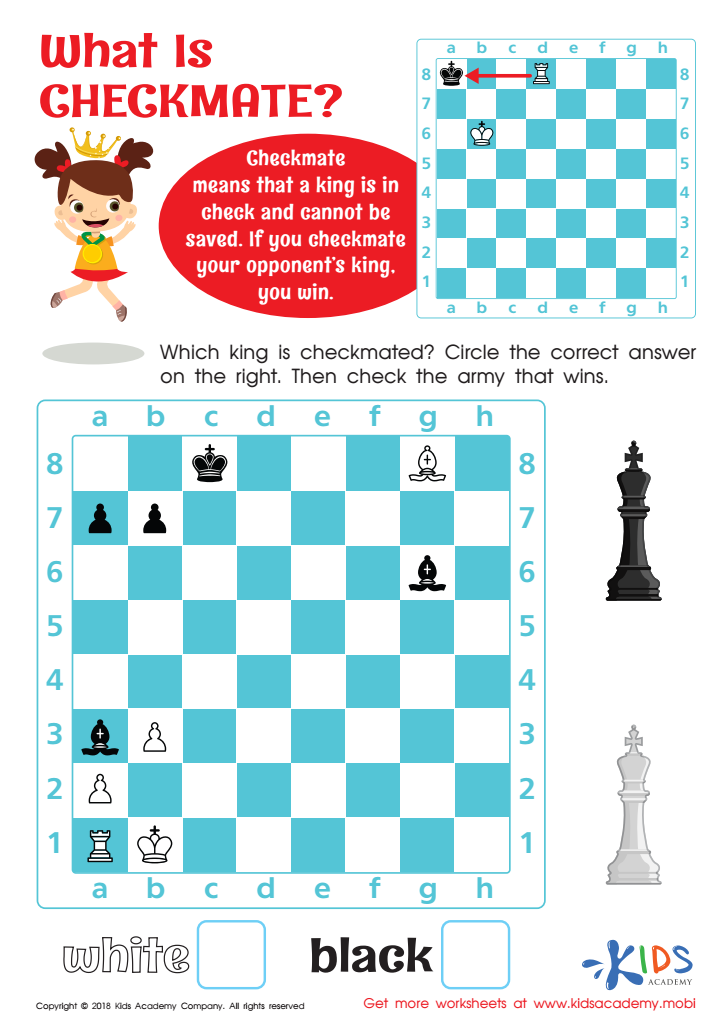
What is Checkmate? Worksheet
 Assign to My Students

Fact or Make Believe Worksheet
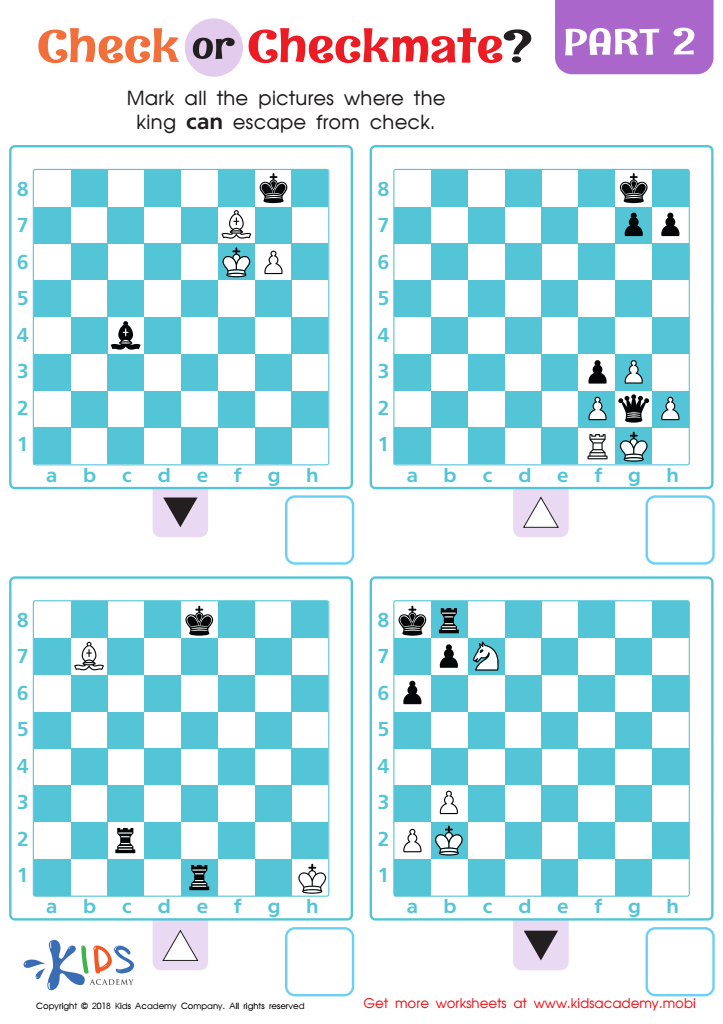
Check or Checkmate: Part 2 Worksheet
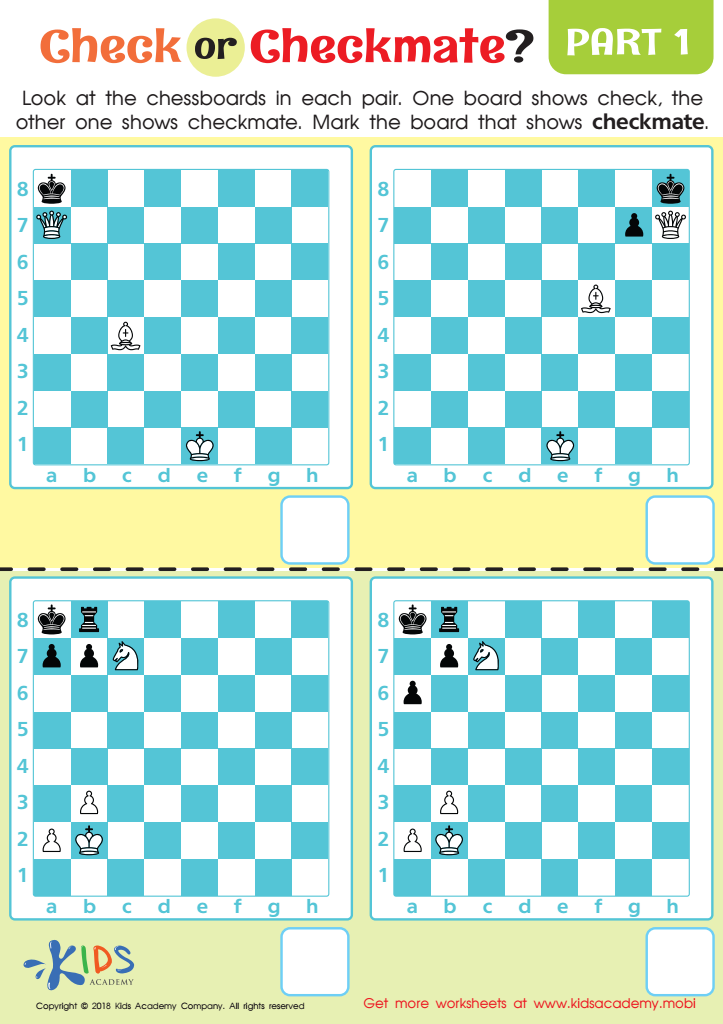
Check or Checkmate: Part 1 Worksheet
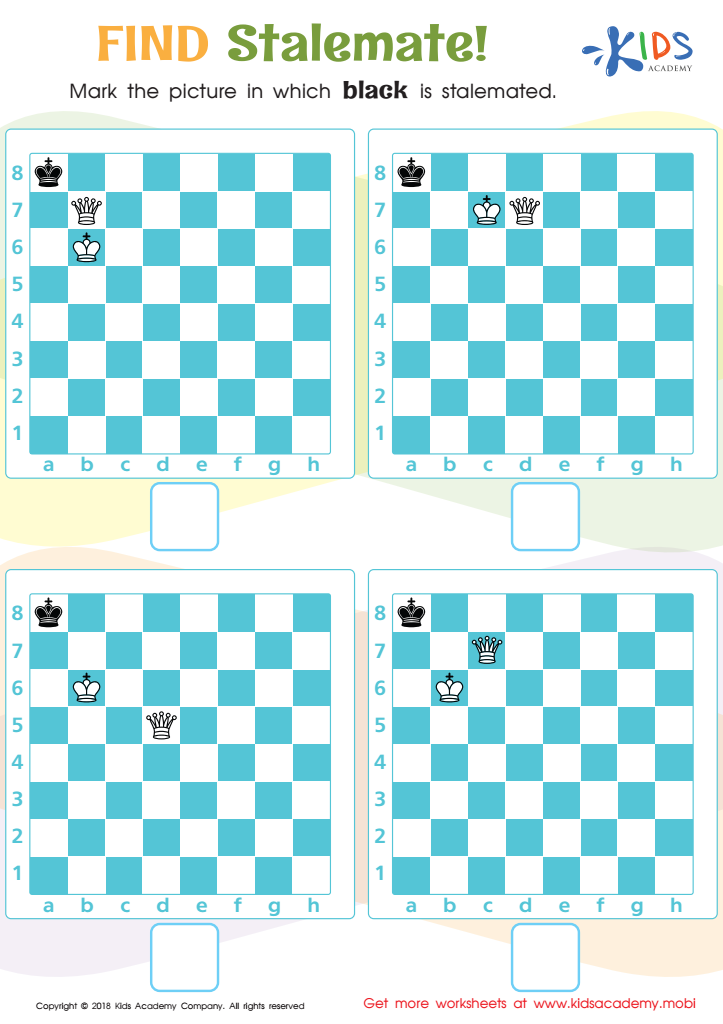
Find Stalemate! Worksheet







Critical thinking is a vital skill that lays the foundation for lifelong learning, problem-solving, and decision-making. For children aged 3-7, nurturing critical thinking development helps them question, analyze, and interpret the world around them. At this young age, children are naturally curious, and encouraging this curiosity fosters an inquisitive mindset that is essential for success in school and life.
Parents and teachers should prioritize these skills, as critical thinking empowers young learners to navigate complex situations. Children who engage in critical thinking demonstrate improved communication skills, heightened creativity, and increased social understanding, enabling them to express their thoughts and emotions effectively. During these formative years, interactive play, storytelling, and meaningful discussions can be invaluable strategies for promoting critical thinking. By guiding children to think reflectively and evaluate different perspectives, adults can help them build resilience and adaptability in an increasingly complex world.
Moreover, instilling analytical thinking at a young age prepares children for academic challenges ahead. It encourages them to approach tasks with confidence and a positive mindset, ultimately leading to improved educational outcomes and better preparedness for real-life situations. Empowering young minds through critical thinking development not only supports their individual growth but also contributes to a more thoughtful and innovative society.








