Sequencing numbers Extra Challenge Worksheets for Ages 3-7
3 filtered results
-
From - To
Enhance your child's learning with our Sequencing Numbers Extra Challenge Worksheets designed for ages 3-7! These engaging and interactive worksheets provide a fun way for young learners to develop essential sequencing skills through number recognition and ordering exercises. Perfect for reinforcing classroom lessons or as supplementary materials at home, each worksheet encourages critical thinking and problem-solving. Our thoughtfully crafted activities cater to varying skill levels, ensuring that children are challenged while enjoying the process. Help your little one gain confidence in their number sequences today—download our free, printable worksheets and watch their skills soar! Discover the joy of learning through play!
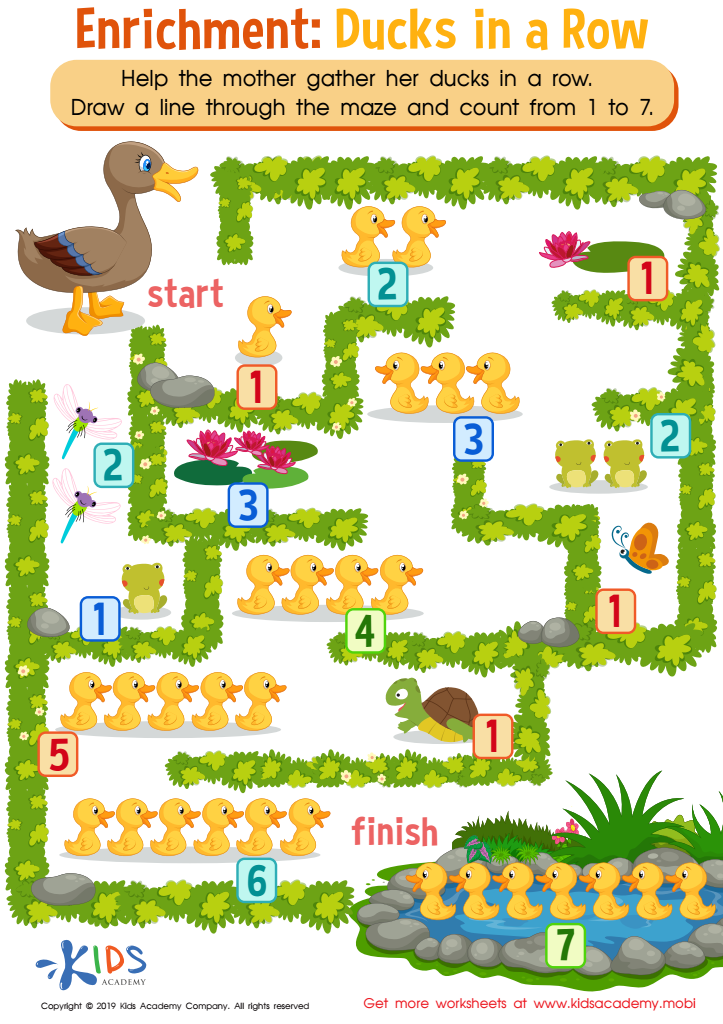
Ducks in a Row Worksheet
 Assign to My Students
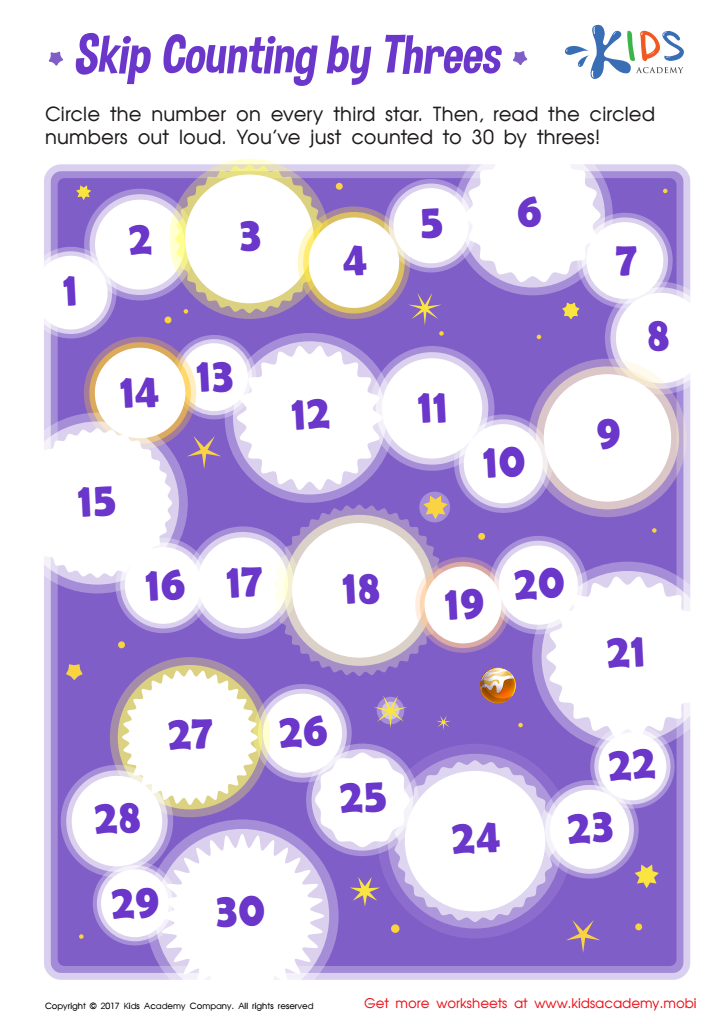
Skip Counting By Three Printable
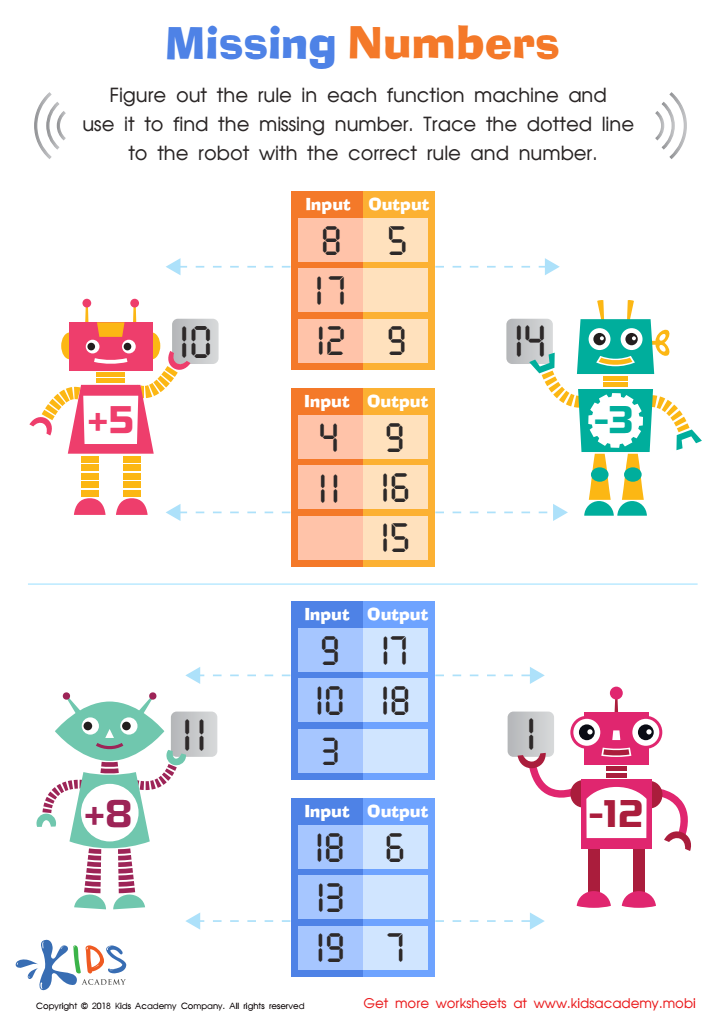
Missing Numbers Worksheet








Sequencing numbers is a fundamental skill in early childhood education that lays the groundwork for various mathematical concepts. For children aged 3-7, mastering number sequences boosts their cognitive development, enhances problem-solving abilities, and improves their understanding of patterns. Parents and teachers should care about this skill for several reasons.
First, confidence in sequencing creates a solid foundation for future math-related tasks, such as addition and subtraction. Children who can effectively identify and arrange numbers will likely find more advanced mathematical concepts easier to grasp.
Second, sequencing activities promote critical thinking and logical reasoning. For instance, as children predict what number comes next or organize numbers, they learn to make connections, enhancing their analytical skills.
Third, sequencing can be fun and engaging, allowing for interactive learning experiences between parents, teachers, and children. Through games, songs, or hands-on activities, adults can foster a positive attitude towards learning math.
Finally, drawing on sequencing during everyday routines, like counting snacks or organizing toys, creates meaningful learning moments that support retention. For all these reasons, emphasizing the importance of sequencing numbers is crucial for fostering a love of learning in young children and setting them up for future academic success.








