Understanding adjectives Extra Challenge Worksheets for Ages 3-7
3 filtered results
-
From - To
Understanding adjectives is a crucial skill for young learners, enriching their vocabulary and descriptive abilities. Our "Understanding Adjectives Extra Challenge Worksheets for Ages 3-7" are designed to provide an engaging and stimulating way to practice this essential language skill. Featuring fun activities, including matching, coloring, and sentence completion, these worksheets cater to a range of learning styles. Perfect for classroom use or at-home practice, they encourage creativity and enhance linguistic development. Boost your child's understanding of adjectives while having fun with challenging exercises that foster a deeper grasp of descriptive words. Empower young minds with the tools they need to express themselves vividly.
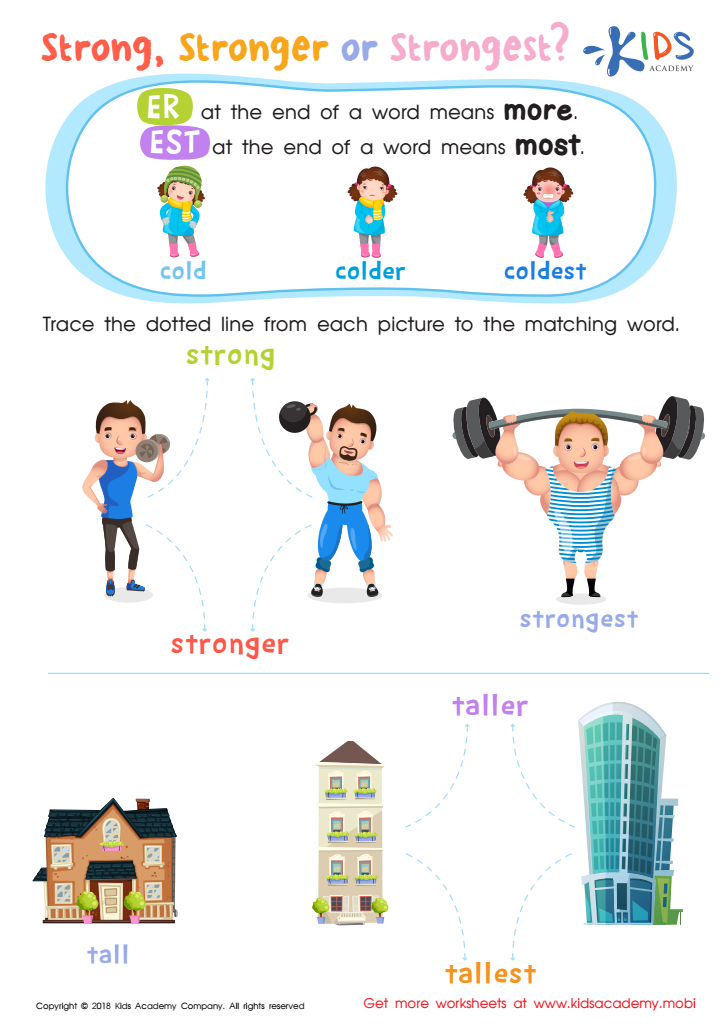
Strong or Stronger? Worksheet
 Assign to My Students
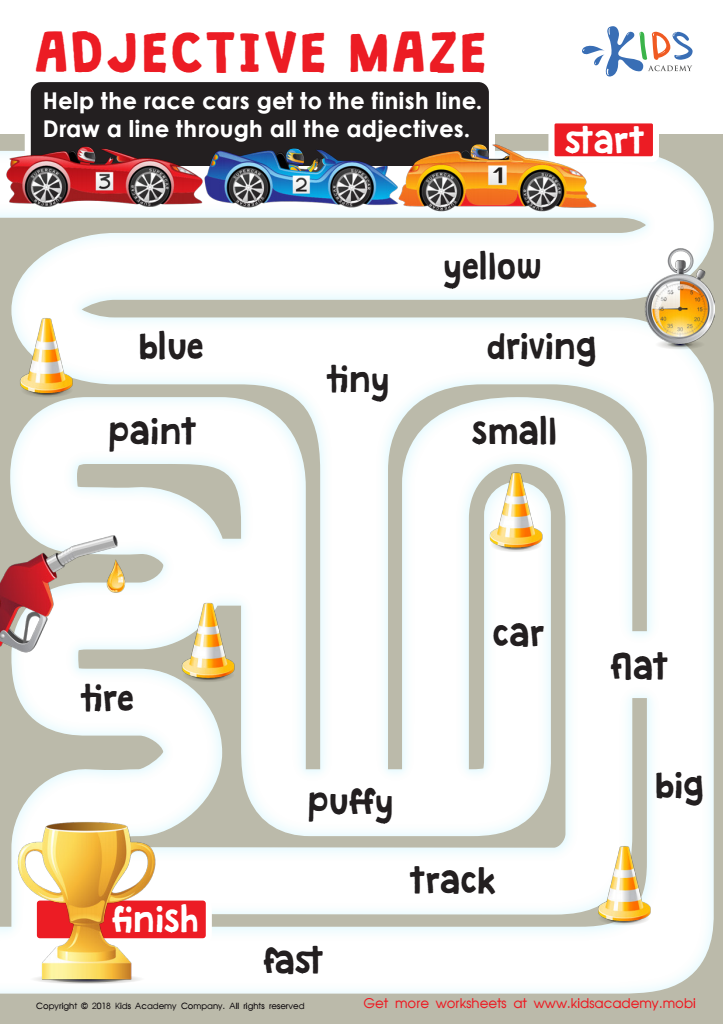
Adjective Maze Worksheet
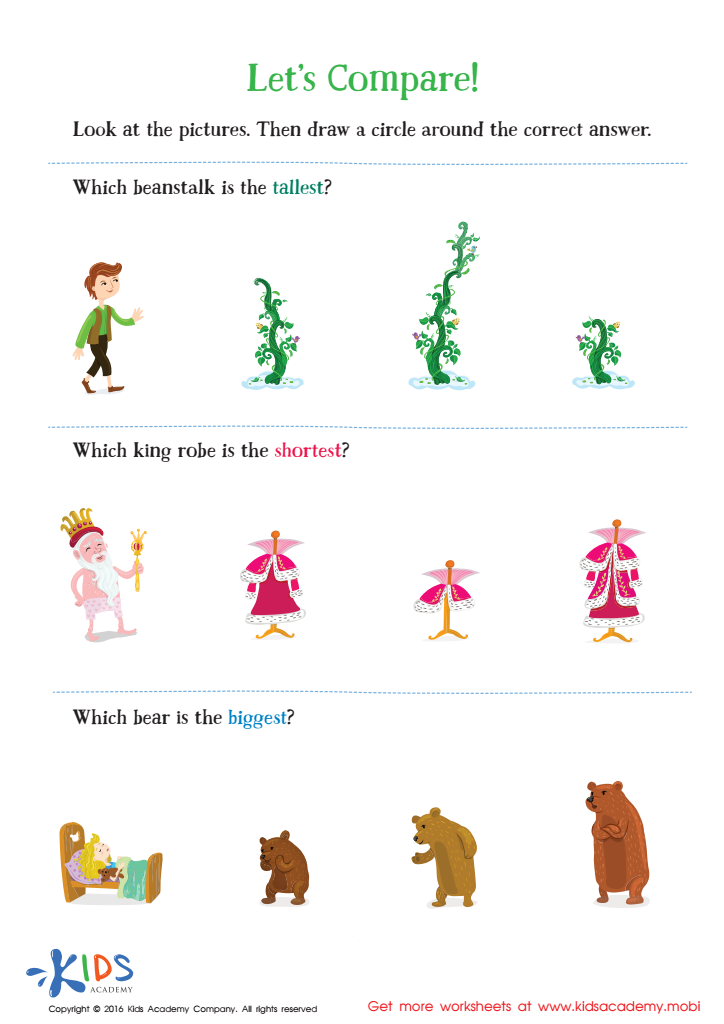
Fairy Tale Worksheet: Let's Compare






.jpg)

Understanding adjectives is critical for children aged 3-7 as it enhances their language development. At this age, children are rapid learners and absorb new information quickly. Introducing adjectives helps in expanding their vocabulary and enabling more precise and vivid communication. Knowing how to use descriptive words allows children to express their thoughts, feelings, and observations more accurately, paving the way for effective social interactions and emotional articulation.
For parents and teachers, focusing on adjectives fosters a rich language environment. It cultivates an early love for reading and storytelling as children begin to appreciate the nuances of description in their everyday experiences and in the texts they encounter. Enhanced descriptive skills support better understanding and appreciation of books, leading to improved literacy.
Moreover, understanding adjectives aids cognitive development by helping children categorize and make sense of the world around them. Describing textures, colors, shapes, and sizes bolsters critical thinking and observational skills.
From a developmental standpoint, the ability to grasp and use adjectives is a marker of language proficiency and cognitive health. Encouraging children to learn and use descriptive language is an investment in their overall growth, laying a foundation for academic success and well-rounded communication abilities. Thus, both parents and teachers should prioritize this aspect of early education.








