Comparing sizes Extra Challenge Math Worksheets for Ages 3-7
5 filtered results
-
From - To
Discover our "Comparing Sizes Extra Challenge Math Worksheets" designed for children aged 3-7! These engaging worksheets provide a fun and interactive way for young learners to explore the concept of size through comparisons. Children will practice identifying and comparing objects of different dimensions, honing their mathematical reasoning and critical thinking skills. Each worksheet features colorful illustrations and age-appropriate challenges, ensuring kids remain excited and motivated while learning. Perfect for parents and educators seeking to enhance early math skills, these worksheets make learning about sizes enjoyable. Download now to inspire your child's love for learning and spark creativity in their activities today!
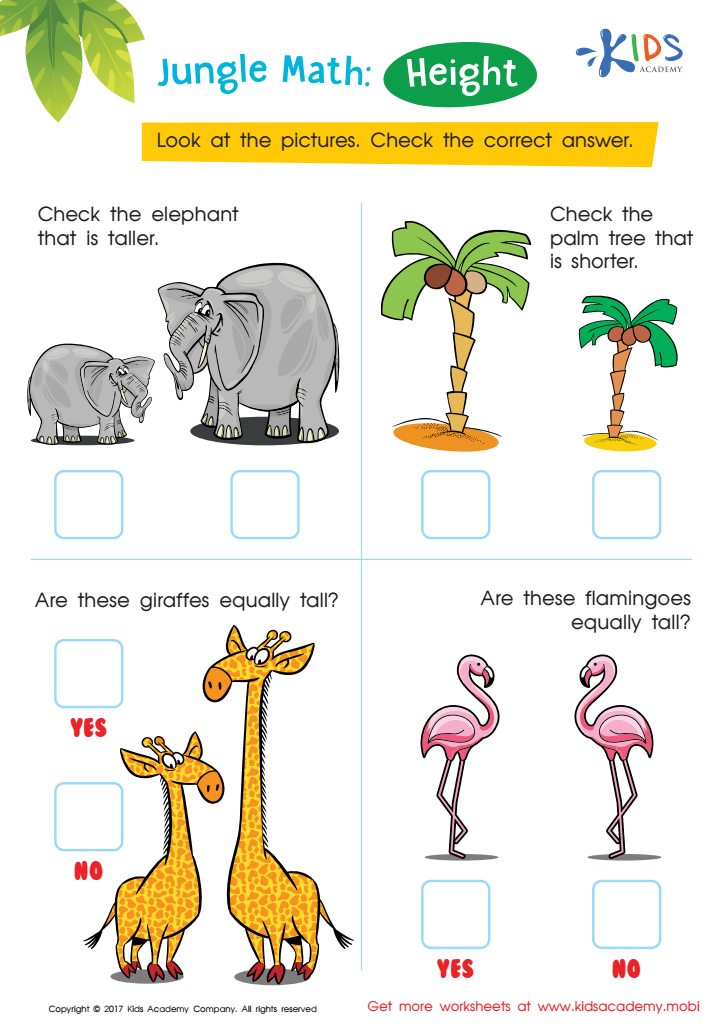
Which Is Taller Worksheet
 Assign to My Students
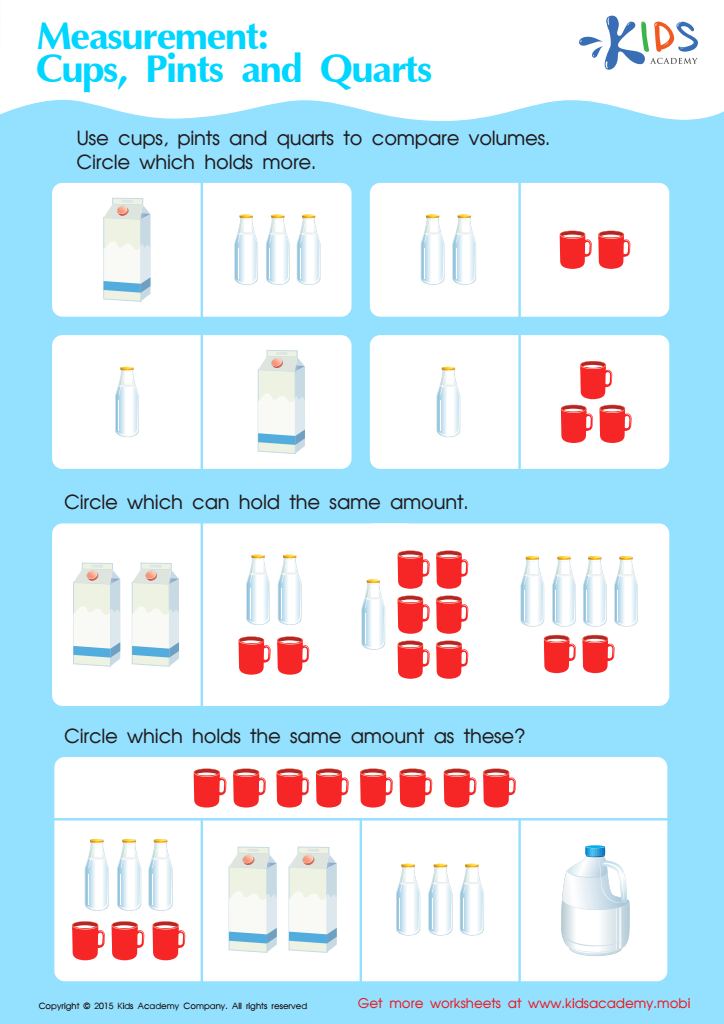
Measurement: Compare Volumes Worksheet
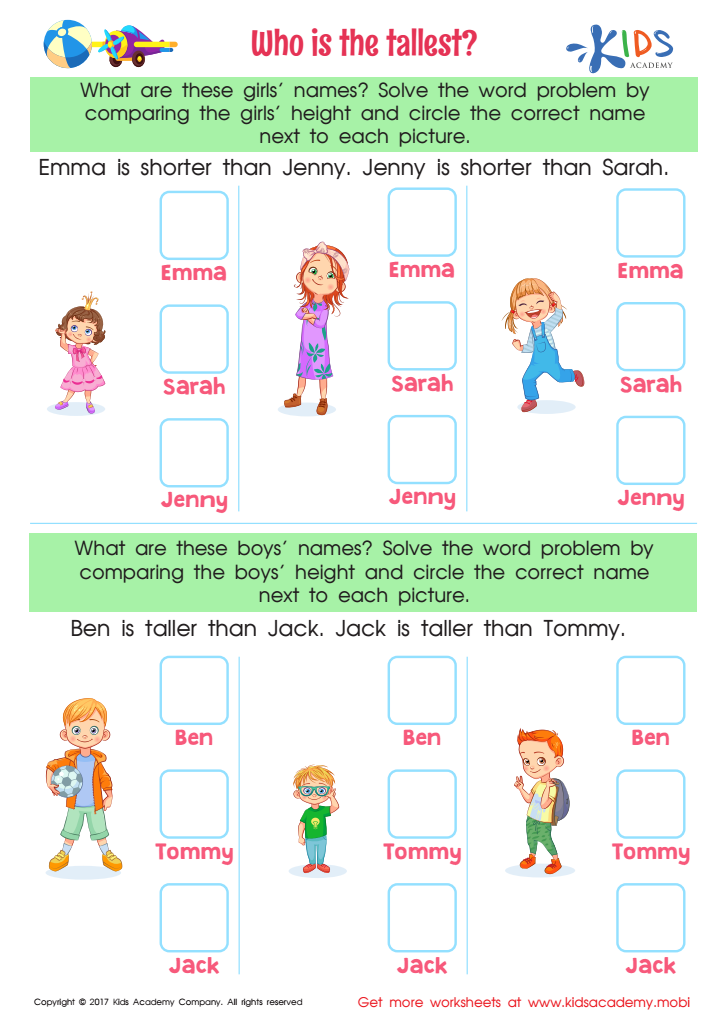
Who Tallest Printable
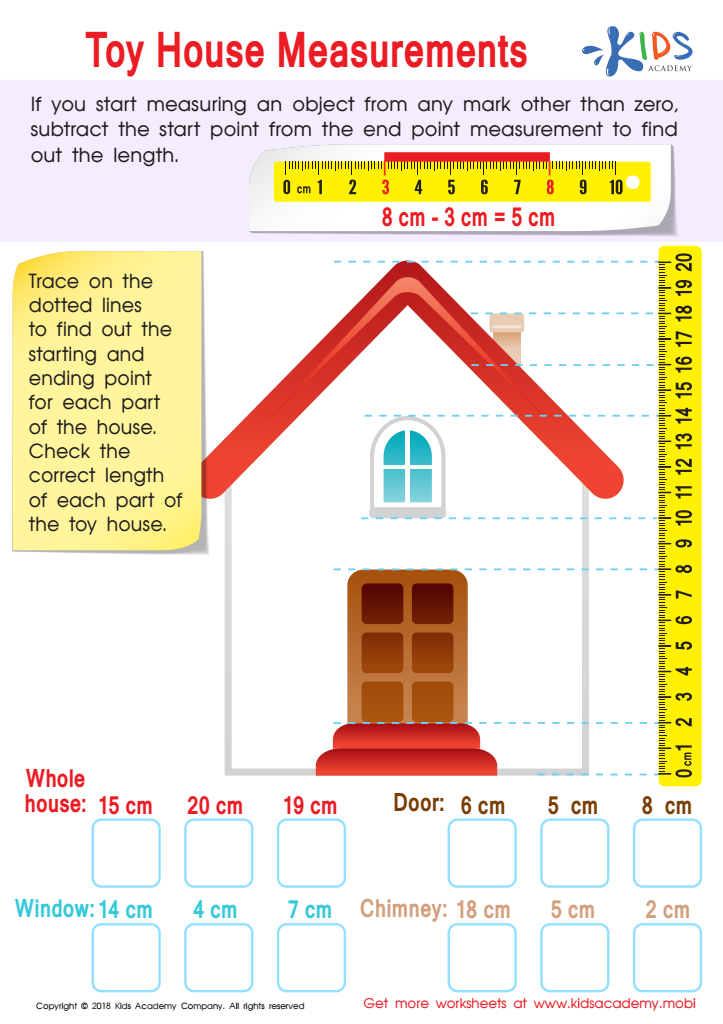
Toy House Measurements Worksheet
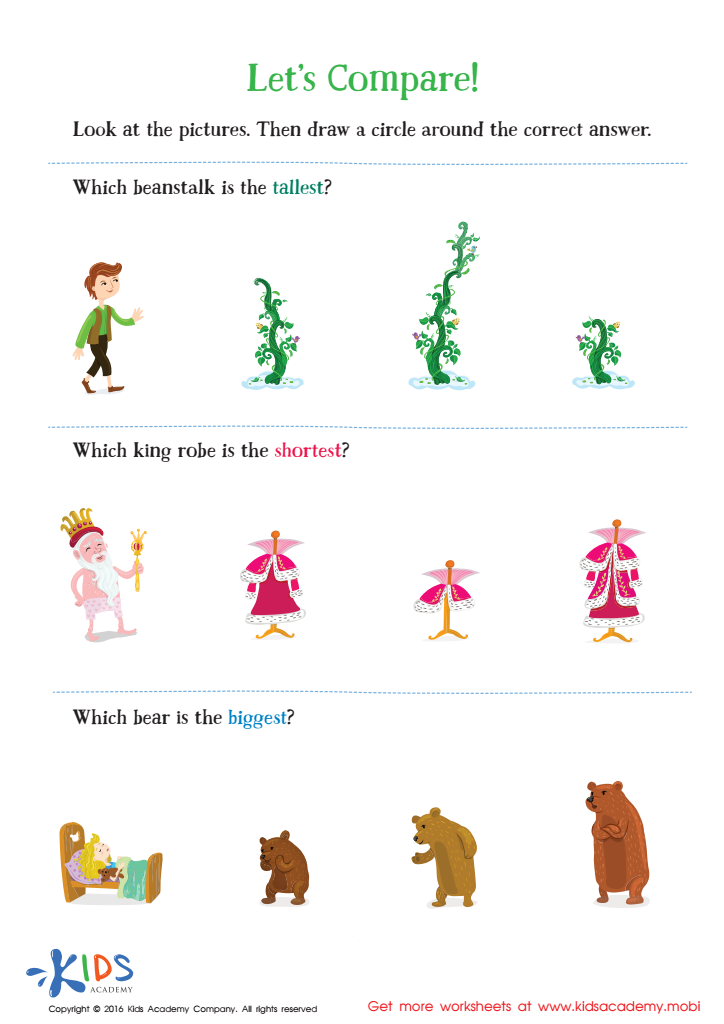
Fairy Tale Worksheet: Let's Compare







Comparing sizes is a fundamental math concept crucial for early childhood development. It introduces pre-schoolers and early grade schoolers to essential mathematical reasoning and critical thinking skills. Engaging children in activities that involve comparing sizes helps them understand relationships, fosters their cognitive growth, and enhances their problem-solving abilities. This skill not only aids in math, but also supports literacy through language development as children learn to articulate their observations using comparative vocabulary like "bigger," "smaller," "taller," and "shorter."
Furthermore, early experiences with comparing sizes provide a foundation for more advanced mathematical concepts like measurement, multiplication, and fractions later in their education. Learning to discern different sizes and dimensions also plays a significant role in developing spatial awareness, which is useful in science, engineering, and everyday life.
Teachers and parents can encourage these comparisons through hands-on activities like sorting objects, measuring items, or playing sorting games. By integrating playful methods and real-world applications into learning, adults help nurture a child's natural curiosity and authentic interest in math—ensuring they approach future mathematics with confidence and enthusiasm. In sum, fostering size comparison skills paves the way for a child’s long-term academic success and a solid understanding of mathematics.








