
Story sequencing Extra Challenge Reading Fiction Worksheets for Ages 3-7
3 filtered results
Difficulty Level
Grade
Age
-
From - To
Subject
Activity
Standards
Discover our "Story Sequencing Extra Challenge Reading Fiction Worksheets," designed specifically for children ages 3-7. These engaging worksheets encourage young readers to refine their sequencing skills by arranging story events in the correct order. Perfect for enhancing comprehension and logical thinking, our resources help children visualize narratives while boosting their excitement for reading. Ideal for both classroom and home learning environments, these worksheets feature vibrant illustrations and fun themes that captivate young minds. Whether used as part of a lesson or for independent practice, these worksheets make learning enjoyable and effective, supporting early literacy development in a creative way. Explore the magic of storytelling today!
Favorites
With answer key
Interactive
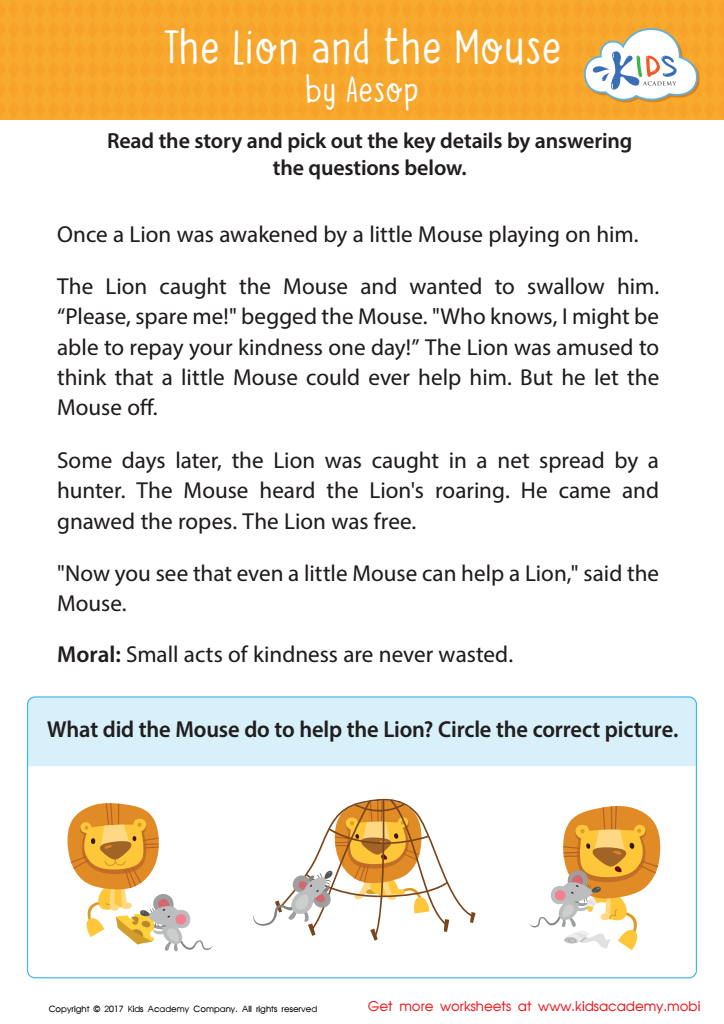
The Lion and The Mouse Sequencing Worksheet
Read the fable "The Lion and the Mouse" and test your child's comprehension skills! Answer the question by selecting the image that best matches the answer. It's a great way to practice reading comprehension.
 Assign to My Students
The Lion and The Mouse Sequencing Worksheet
Worksheet
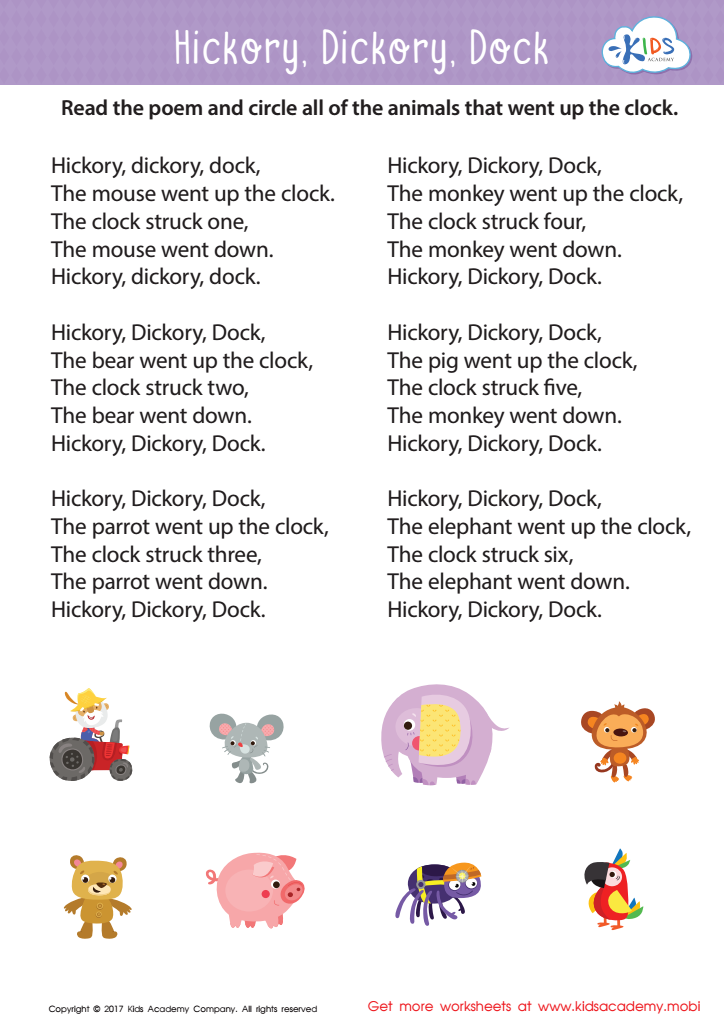
Hickory Dickory Dock Sequencing Worksheet
Help your child boost their reading skills with this fun Hickory Dickory Dock sequencing worksheet! They'll read and identify the animals in the right order, strengthening their story sequencing and comprehension skills.
Hickory Dickory Dock Sequencing Worksheet
Worksheet
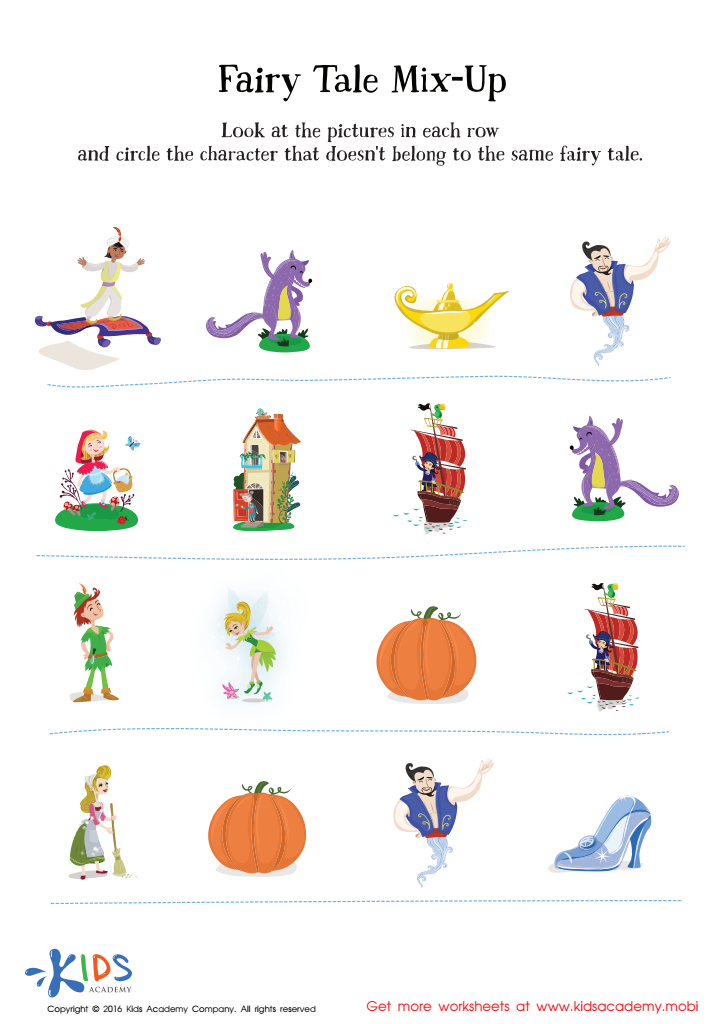
Fairy Tale Worksheet: Story Mix Up
Kids love fairy tales! Encourage your child to engage with their favorite stories using our vibrant worksheet. It'll help sharpen cognitive and comprehension skills, build problem-solving skills, and strengthen classification skills. Beforehand, read or watch the fairy tales and talk about each one's characters and elements. Your child will love the story and time spent together! Print the worksheet and get ready for a magical experience.
Fairy Tale Worksheet: Story Mix Up
Worksheet
Join Kids Academy for Free
Who is primarily going to use this learning content?





.jpg)


Story sequencing is an essential skill for young learners, particularly for ages 3-7, as it fosters critical thinking, comprehension, and narrative understanding. For parents and teachers, encouraging the development of story sequencing skills enhances children's ability to retell stories, predict outcomes, and grasp the overall structure of a narrative. This foundational skill plays a pivotal role in early literacy, aiding in the understanding of beginning, middle, and end—elements that are critical in both academic and everyday contexts.
When children practice story sequencing, they engage with the text on a deeper level, enabling them to make connections between events and characters. This contributes to their overall cognitive development, as they learn to identify cause-and-effect relationships, thus sharpening their analytical skills. Furthermore, story sequencing can spark creativity, inviting children to think about alternative endings or plot twists, thereby promoting imaginative play and storytelling.
For teachers, integrating story sequencing activities into the curriculum can lead to more interactive and engaging lessons, encouraging participation and collaboration among students. Ultimately, by prioritizing story sequencing, parents and teachers help cultivate proficient readers who are not only skilled in literacy but also equipped to navigate the complexities of stories and life.







