Spelling improvement Extra Challenge Writing Worksheets for Ages 3-8
4 filtered results
-
From - To
Enhance your child's spelling skills with our "Spelling Improvement Extra Challenge Writing Worksheets" designed for ages 3-8. These engaging worksheets provide a fun and interactive way for young learners to practice spelling through a variety of exercises and activities. Each worksheet is tailored to foster creativity while reinforcing spelling patterns, vocabulary, and language comprehension. With diverse challenges that cater to differing skill levels, children will build confidence in their writing abilities while exploring new words. Perfect for both home and classroom use, these worksheets make learning to spell an enjoyable adventure. Transform learning into fun and boost your child's literacy today!
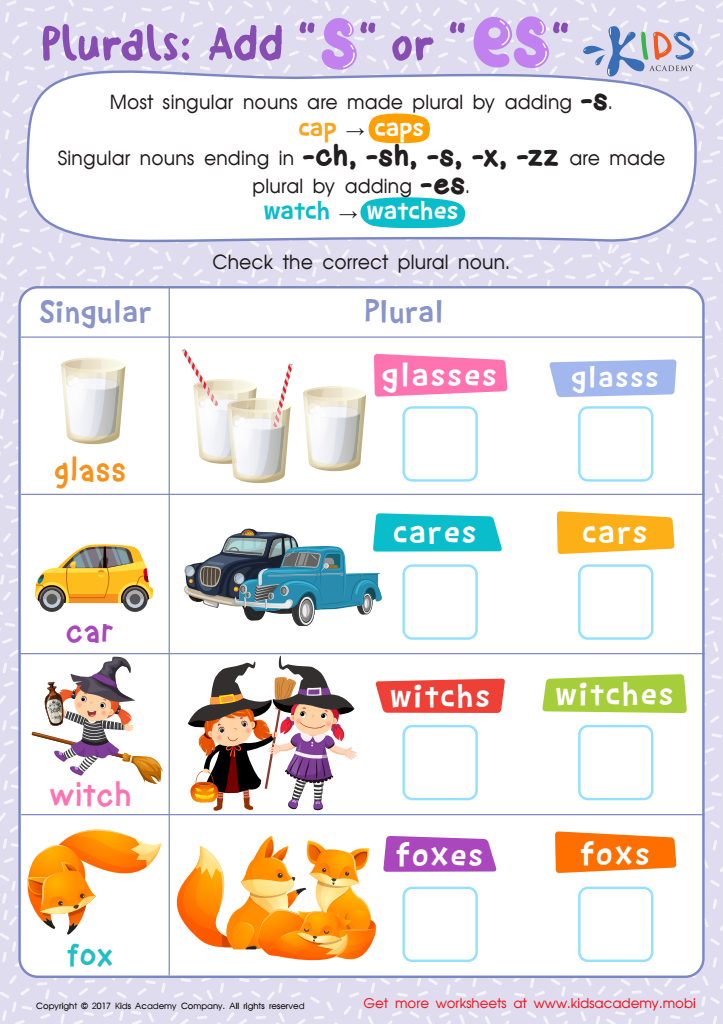
Plurals: "–es" or "–es"? Worksheet
 Assign to My Students
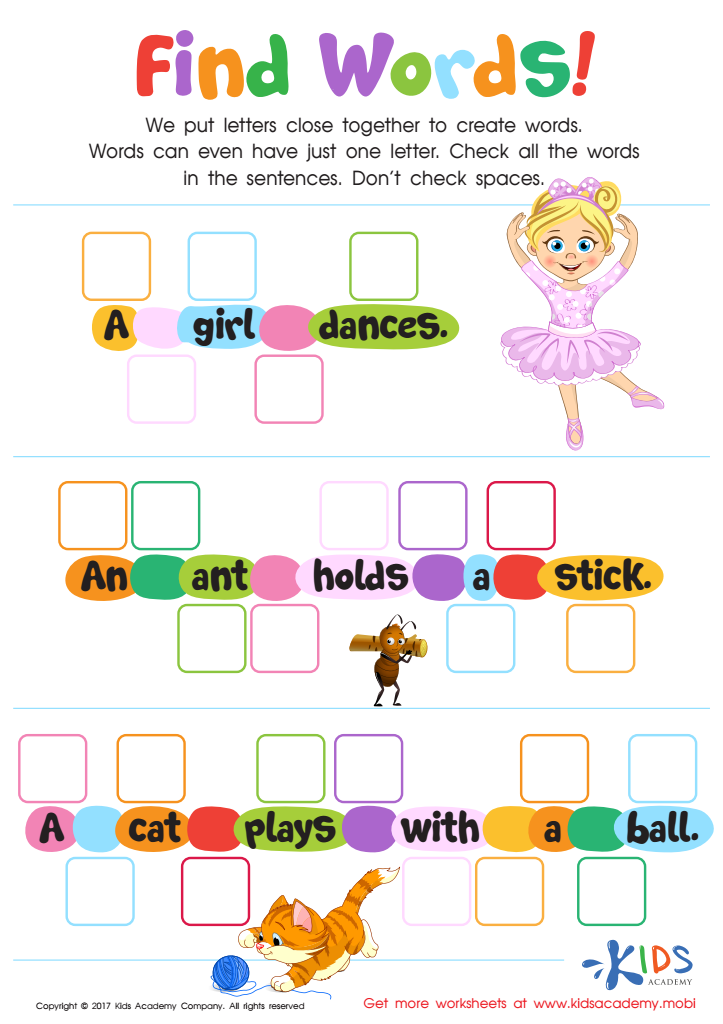
Find Words Worksheet
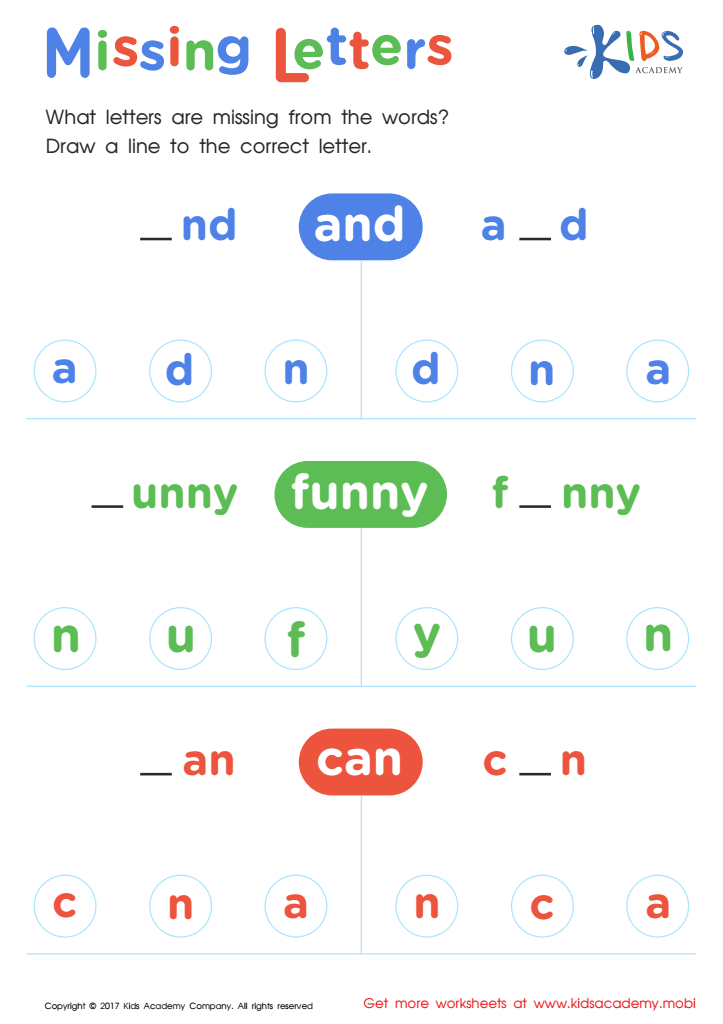
Missing Letters Worksheet
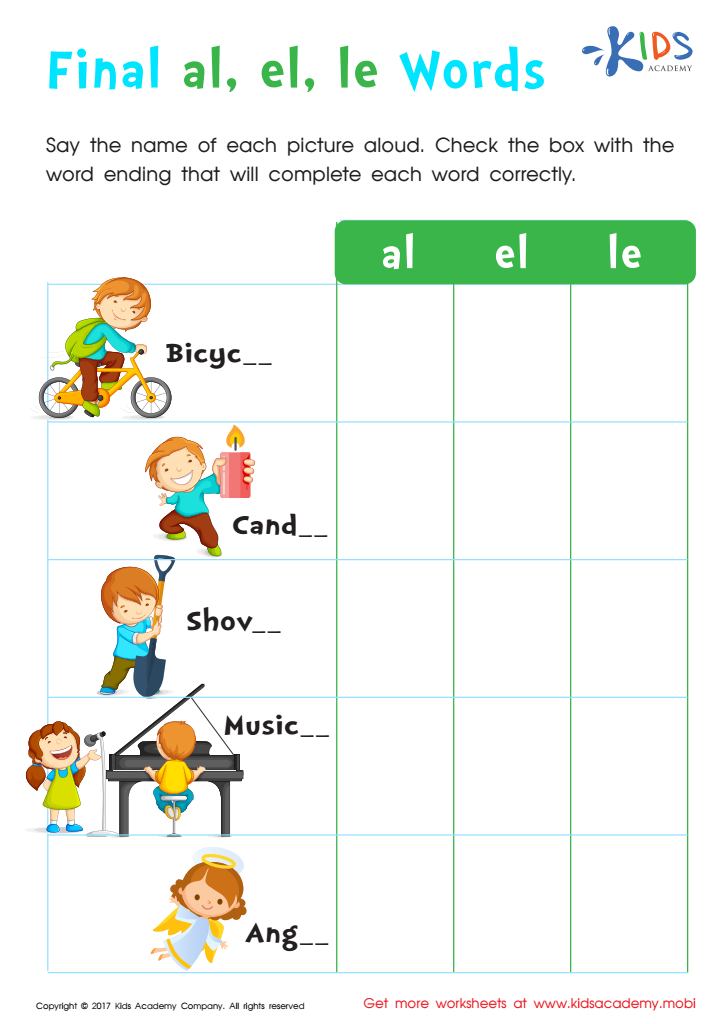
Spelling Words Ending with –le, –el and –al Worksheet








Parents and teachers play a crucial role in a child’s literacy development, and improving spelling through extra challenge writing for ages 3-8 is immensely beneficial for several reasons. First, spelling is foundational for reading and writing. As young children learn to spell, they grow their vocabulary and comprehension skills, helping them recognize words in different contexts.
Engaging in extra challenge writing can stimulate creativity and critical thinking. It allows children to explore language playfully while reinforcing the rules of spelling. For instance, when tasked with spelling out stories or characters, children become excited about words and their meanings, leading to deeper engagement in language arts.
Moreover, effective spelling skills build confidence in children, which fosters a love for reading and writing. When children feel competent in their spelling abilities, they are more likely to participate actively in class discussions and share their written work, further enhancing their knowledge and skills.
Lastly, strong spelling abilities are advantageous in a competitive educational landscape, preparing kids for future academic success. By investing time in spelling improvement and challenge writing, parents and teachers nurture confident, competent learners ready to tackle more complex literacy tasks ahead.