Vocabulary development Extra Challenge Writing Worksheets for Ages 3-8
3 filtered results
-
From - To
Unlock the power of words with our Vocabulary Development Extra Challenge Writing Worksheets designed specifically for ages 3-8! These engaging worksheets provide children with fun and interactive activities that enhance their vocabulary skills through writing exercises. Whether they’re learning new words, practicing spelling, or expanding their language comprehension, these worksheets are perfect for fostering early literacy. Each activity is tailored to challenge young minds and encourage creative expression, making vocabulary development both enjoyable and effective. Ideal for parents and teachers alike, our resources help children build a strong foundation in language skills that will benefit them for years to come!
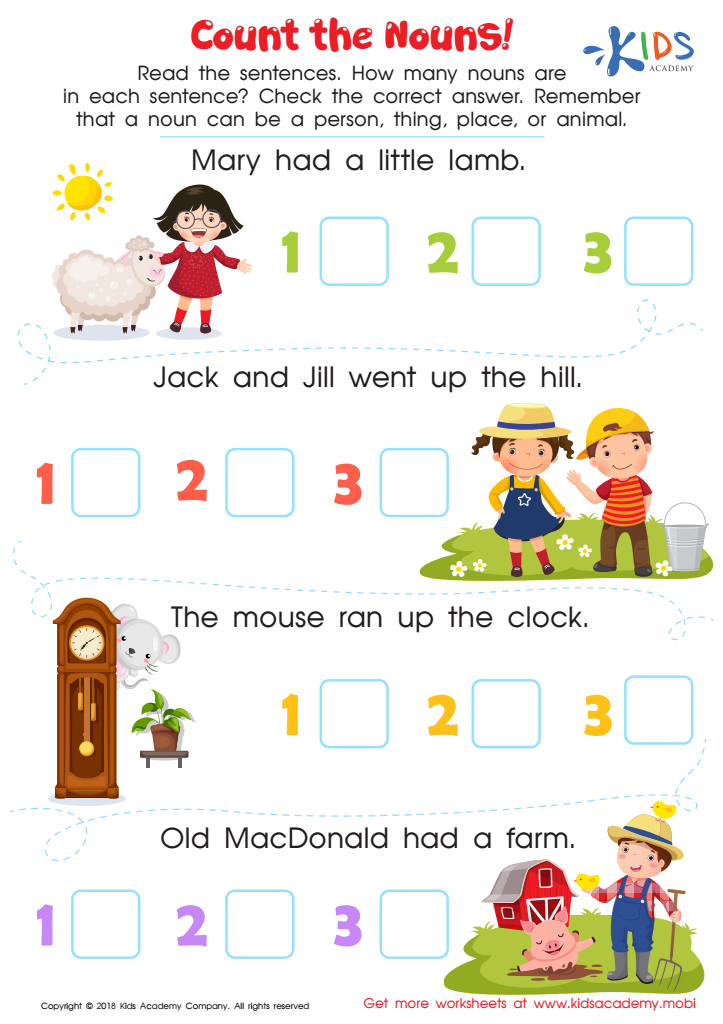
Count the Nouns Worksheet
 Assign to My Students
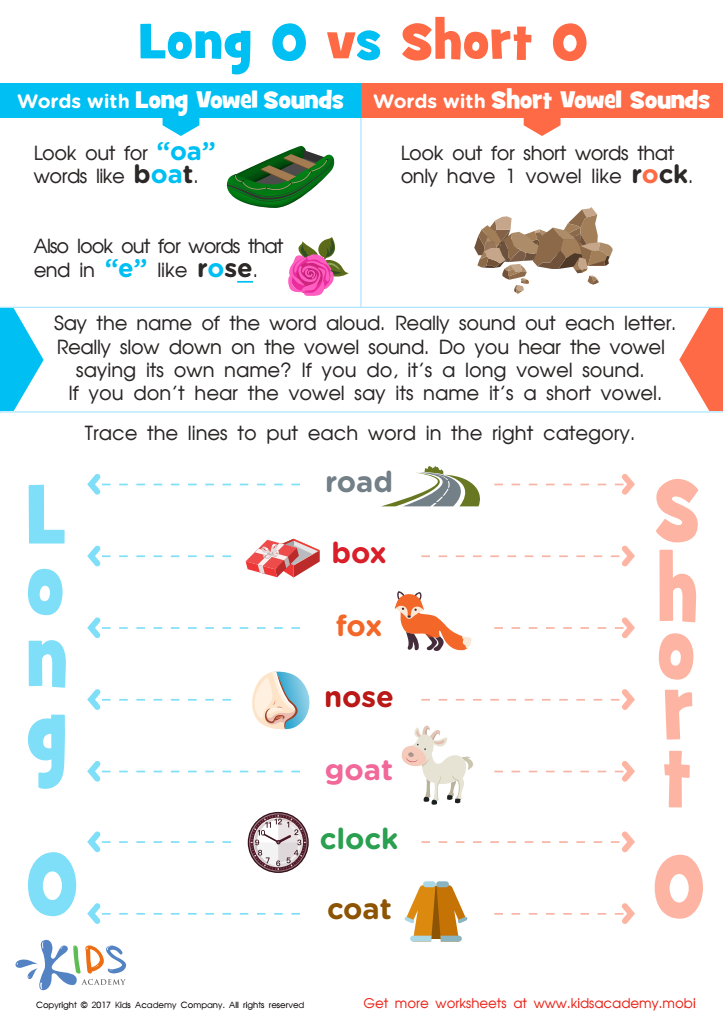
Long and Short Vowel O Spelling Worksheet
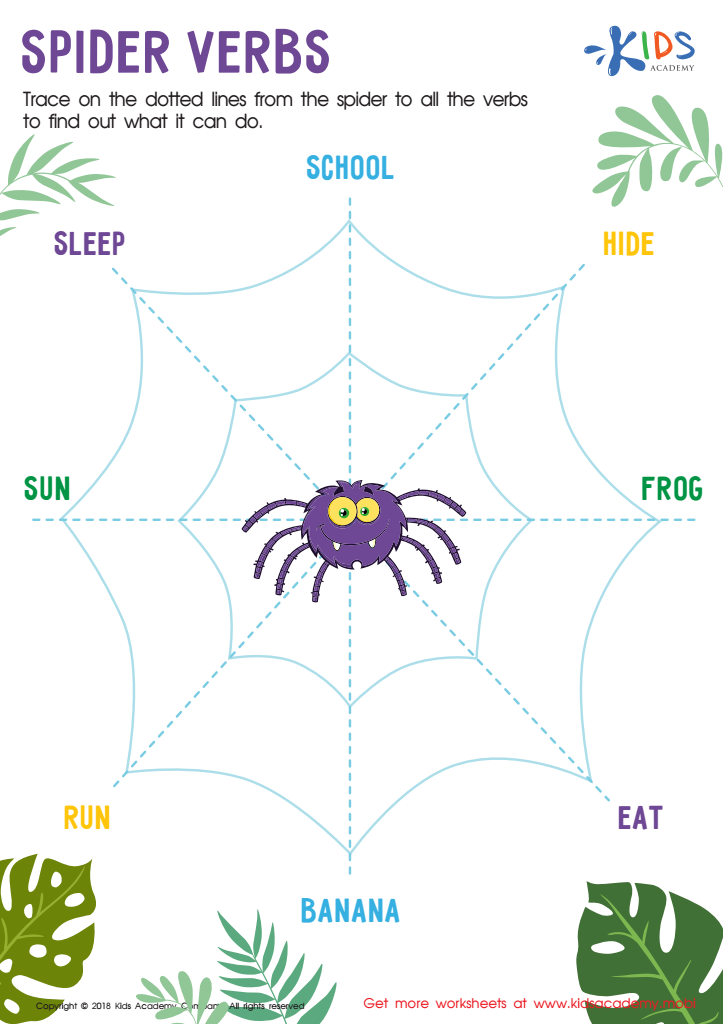
Spider Verbs Worksheet








Vocabulary development is a critical aspect of early childhood education that directly impacts a child's overall language skills, literacy, and communication abilities. For parents and teachers, nurturing vocabulary from ages 3 to 8 is vital, as it serves as the foundation for reading, writing, and critical thinking. When children develop a robust vocabulary, they are better equipped to express their thoughts, understand complex concepts, and engage in meaningful conversations.
Furthermore, a strong vocabulary enhances comprehension skills, enabling children to grasp more intricate materials as they progress through their education. It also plays a significant role in academic success; studies have shown that students with extensive vocabularies tend to perform better on standardized tests and in school overall.
In addition, vocabulary development can boost a child's confidence and willingness to participate in discussions, promoting social skills and emotional intelligence. Parents and teachers should prioritize early vocabulary growth by introducing new words in engaging ways—such as through read-alouds, songs, games, and interactive activities. In doing so, they equip children with essential tools that will serve them throughout their educational journey and beyond, ultimately fostering a lifelong love for language and learning.