Letter recognition Extra Challenge Alphabet Worksheets for Ages 3-9
8 filtered results
Difficulty Level
Grade
Age
-
From - To
Subject
Activity
Standards
Boost your child's letter recognition skills with our Extra Challenge Alphabet Worksheets for ages 3-9. Specifically designed by educational experts, these engaging and thoughtfully crafted worksheets provide diverse activities to make learning fun. With puzzles, searches, and matching games, your little one will master the alphabet in no time. Ideal for preschoolers and early elementary students, these worksheets cater to various learning styles, promoting both confidence and enthusiasm in young learners. Enhance your child's literacy journey today with these comprehensive and delightful resources at Kids Academy. Explore, learn, and grow with our exciting letter recognition challenges!
Favorites
With answer key
Interactive
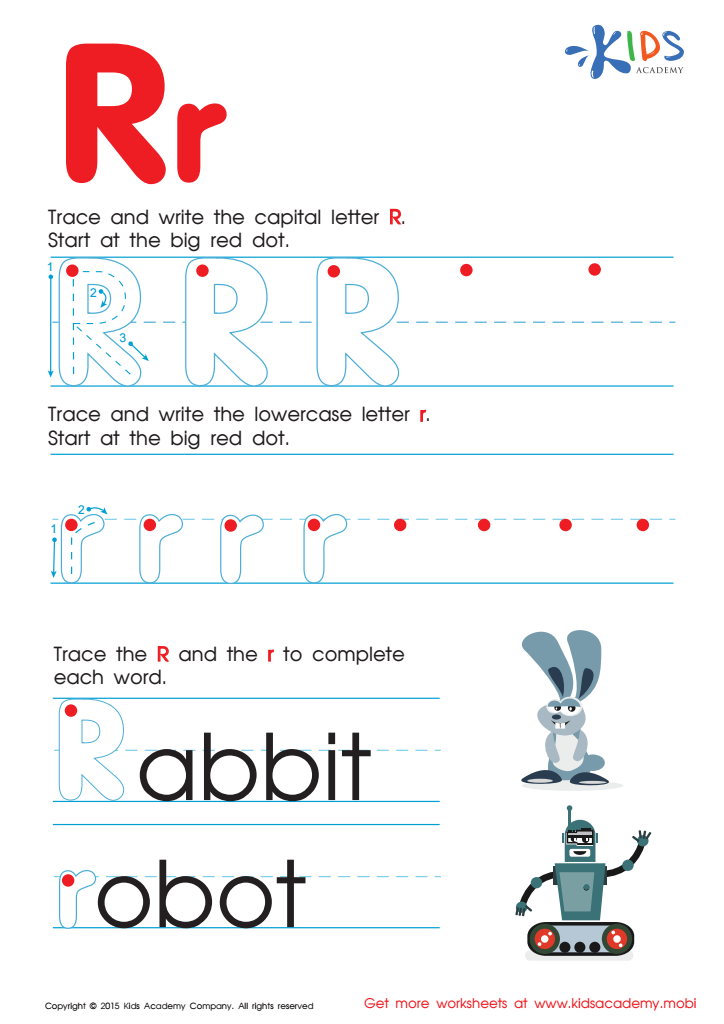
Letter R Tracing Page
Trace and write the letter "R" with this worksheet for kindergarten. Start with the uppercase, then move on to the lowercase. Write the letters several times for practice. Then help complete the words for the rabbit and robot, spelling carefully. More ABC worksheets can be found at Kids Academy.
 Assign to My Students
Letter R Tracing Page
Worksheet
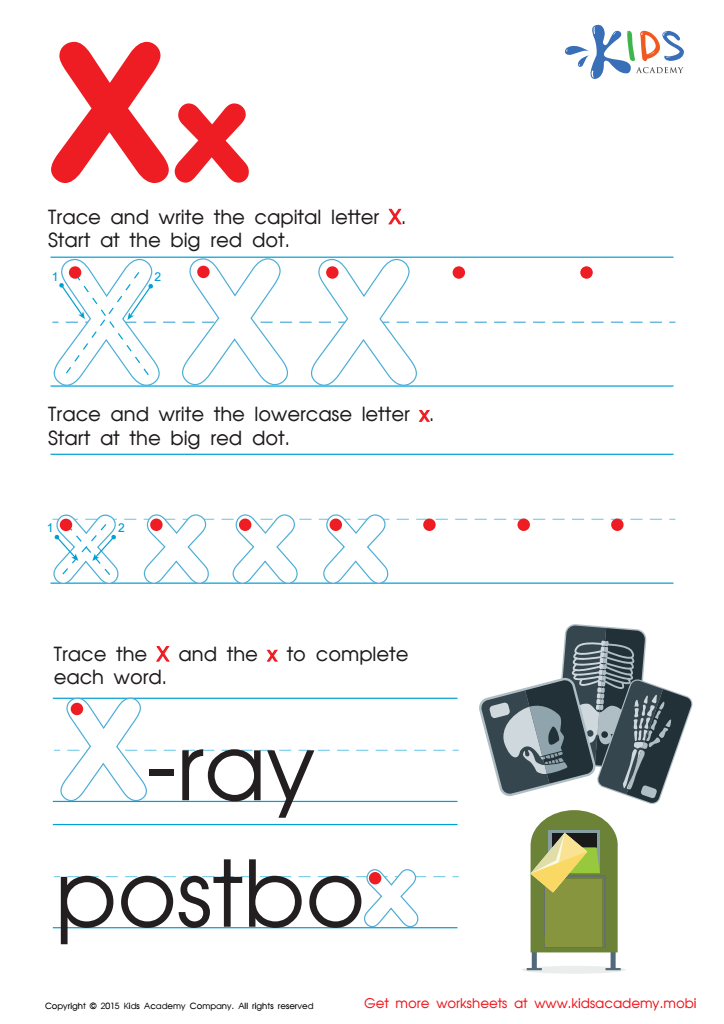
Letter X Tracing Page
Trace the uppercase letter "X" to learn, then write it yourself and practice. Then do the same with the lowercase "x" before completing the words "X-ray" and "postbox". Enjoy our alphabet printables!
Letter X Tracing Page
Worksheet
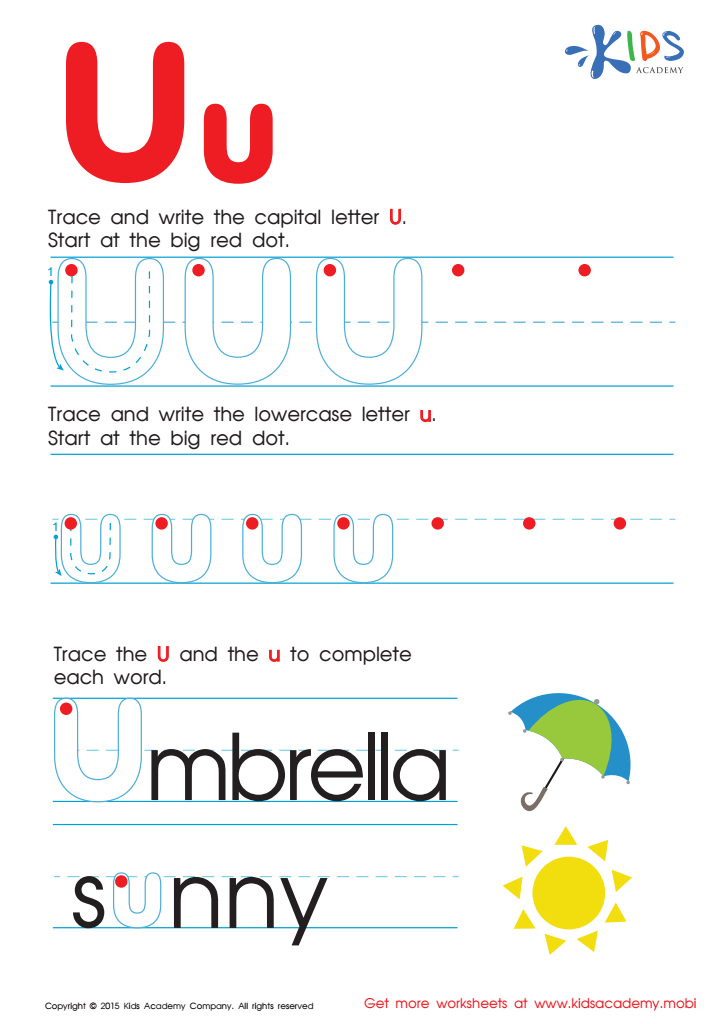
Letter U Tracing Page
Ready to trace and write the letter "U"? Use our worksheet and practice tracing both uppercase and lowercase letters. Complete the words "umbrella" and "sunny" with a capital "U". Check our full collection of alphabet printables for more activities.
Letter U Tracing Page
Worksheet
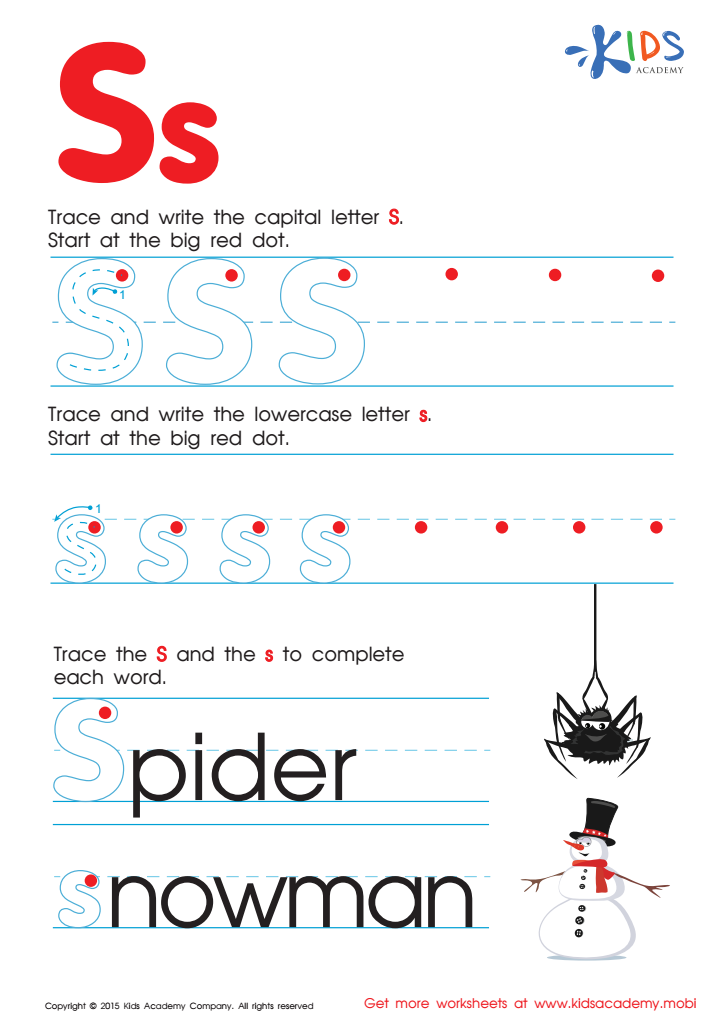
Letter S Tracing Page
Trace and write the capital and lowercase "S" on this ABC worksheet for kindergarten. Start with the big red dot and be careful. When you finish, help the spider and snowman in the pictures restore their words with the capital and lowercase letters. Continue learning the alphabet with Kids Academy.
Letter S Tracing Page
Worksheet
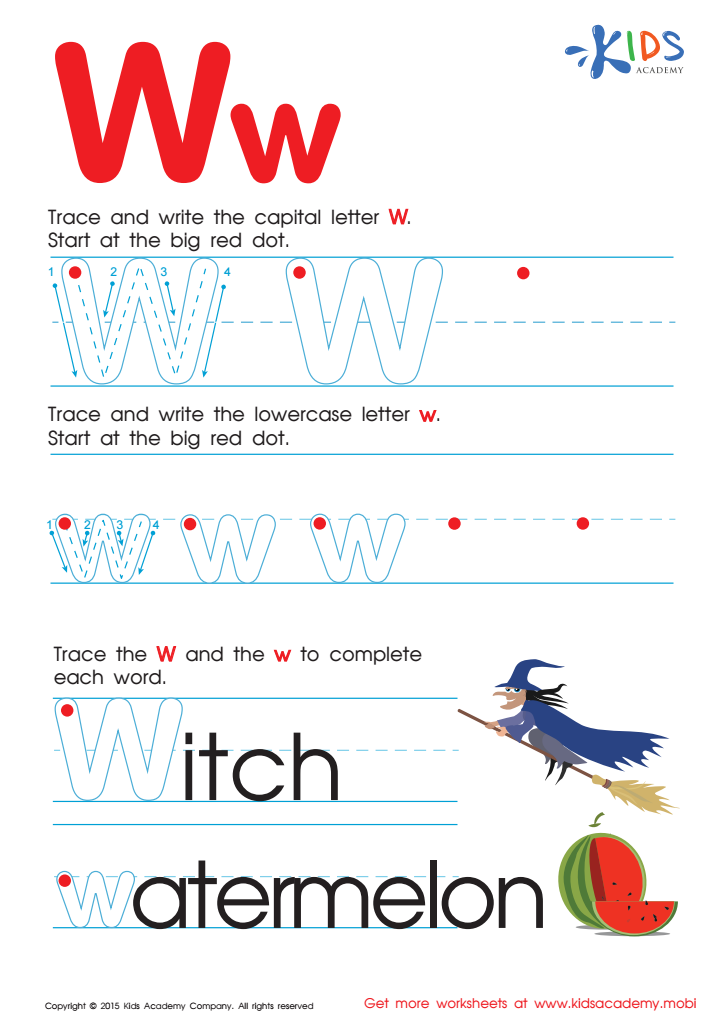
Letter W Tracing Page
Trace and write the capital and lowercase letter W with this free letter tracing worksheet by Kids Academy. Complete the words "Witch" (capital) and "watermelon" (lowercase). Check out our other kindergarten alphabet worksheets!
Letter W Tracing Page
Worksheet
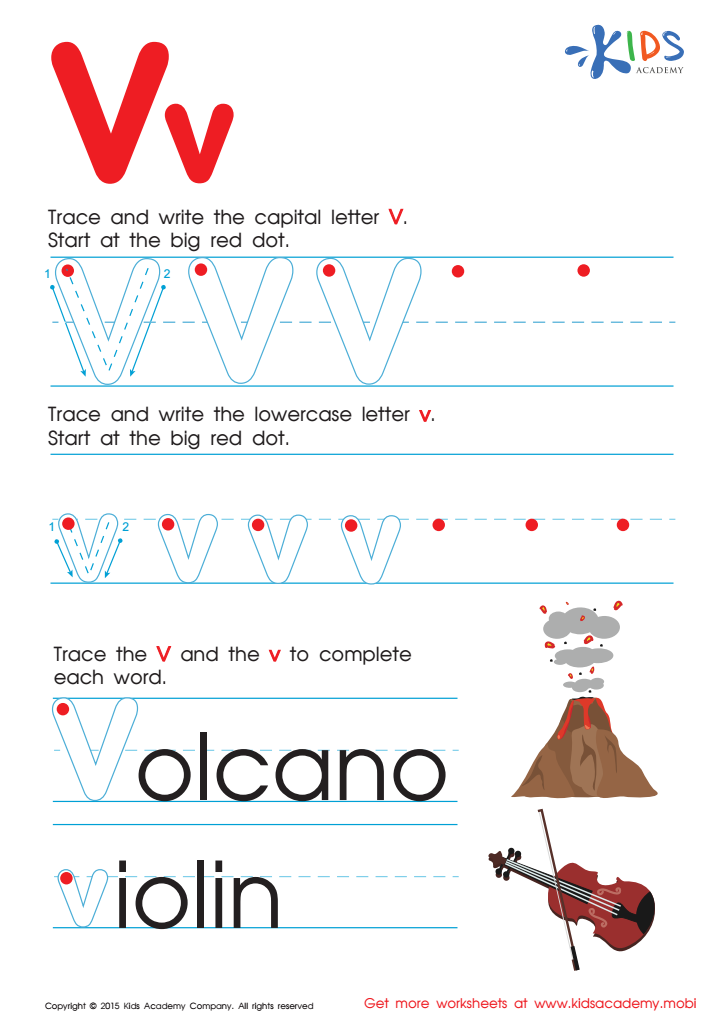
Letter V Tracing Page
Trace the uppercase and lowercase letter "V" with our kindergarten tracing worksheet. Begin at the red dot and follow the lines. Write it several times. Complete the words "Volcano" and "violin". Get more alphabet activities at Kids Academy.
Letter V Tracing Page
Worksheet
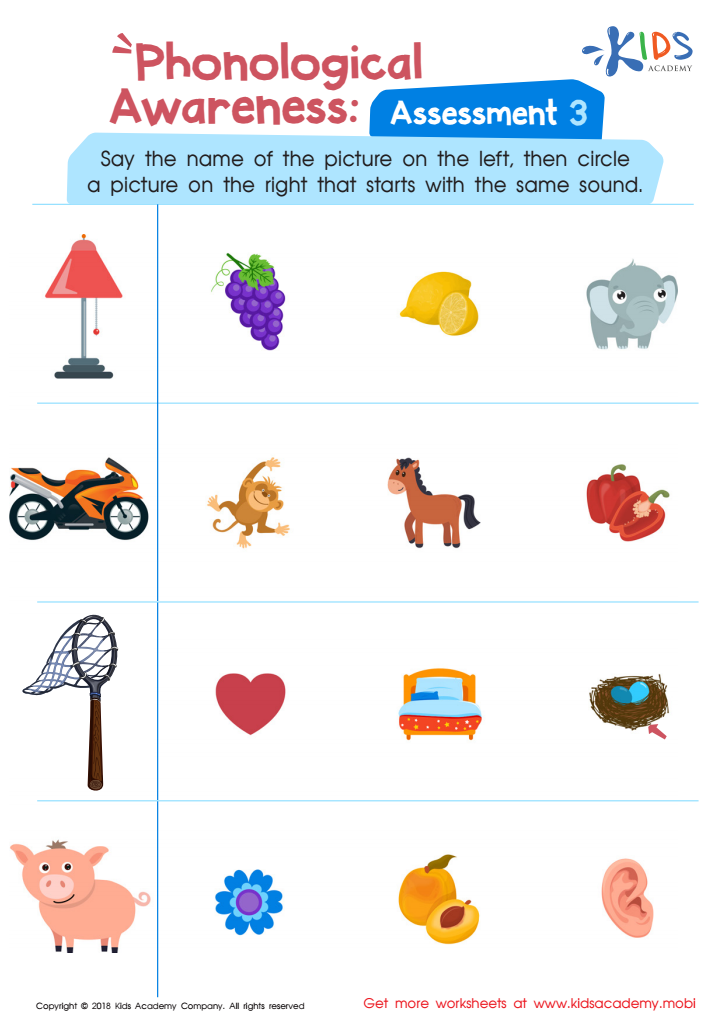
Phonological Awareness: Assessment 3 Worksheet
Test kids' reading readiness with a phonological awareness worksheet! With this PDF exercise, encourage children to name each picture aloud and match left to right. Help them learn to recognize word sounds at the start, middle and end of words. They'll be sure to remember that lamp doesn't sound like elephant!
Phonological Awareness: Assessment 3 Worksheet
Worksheet
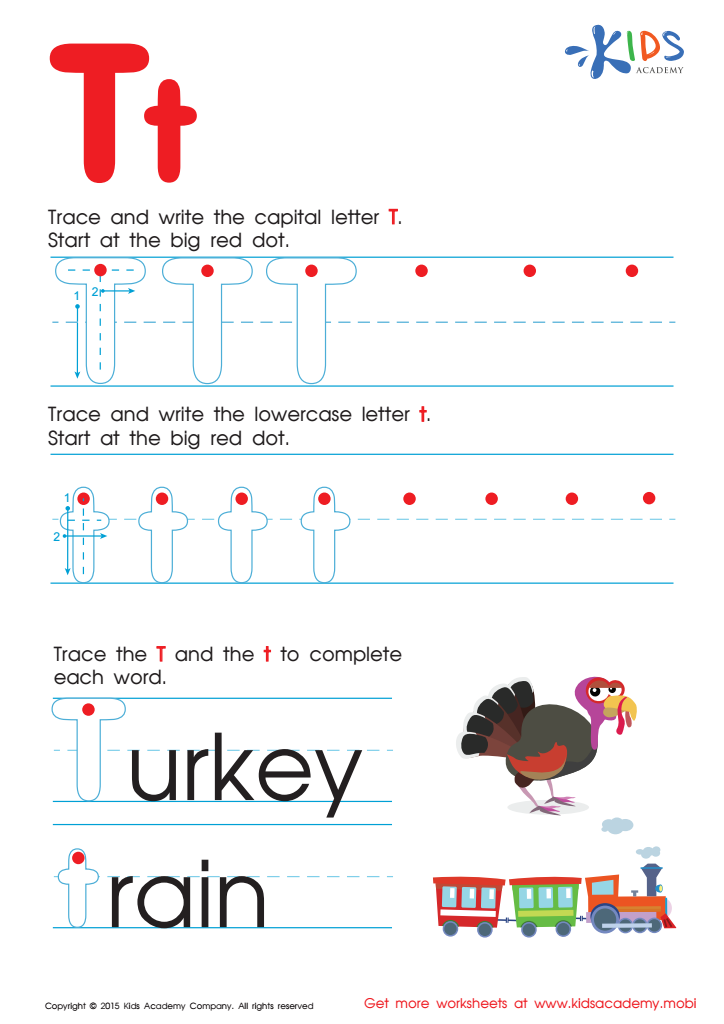
Letter T Tracing Page
Trace letters, complete words, draw pictures and see your kids having fun!
Kids Academy offers alphabet tracing worksheets to learn to write letters. Start with the big red dot, trace the letter, then write it. Practice uppercase and lowercase. Have fun completing words with a Turkey or a rain-train and draw pictures. Get more printable worksheets to make learning enjoyable.
Letter T Tracing Page
Worksheet
Join Kids Academy for Free
Who is primarily going to use this learning content?




.jpg)



Teaching letter recognition to children ages 3-9 is foundational for their literacy development, making activities like the Letter Recognition Extra Challenge Alphabet essential. At this age, children are in a critical period for brain development, language acquisition, and beginning literacy skills. Early and effective introduction to letter recognition helps them understand the alphabetic principle – the idea that letters and sounds form the basis of written language.
By mastering letter recognition through engaging challenges, children not only differentiate between individual letters but also develop the ability to connect letters with their corresponding sounds. This recognition is a key precursor to phonemic awareness, decoding, and eventually, fluent reading and writing skills.
Moreover, these activities often come in the form of games or engaging puzzles, which make learning fun and interactive. Such positive learning experiences can foster a love for reading and lifelong learning. In today's digital age, strong literacy skills remain crucial for academic success and active participation in society.
In addition, early letter recognition skills can enhance a child's overall cognitive development, including attention to detail, memory, and problem-solving abilities. Hence, parents and teachers providing these extra challenges equip children with a vital toolkit, ensuring a smoother transition into more complex literacy tasks in the future.