Basic counting skills Extra Challenge Worksheets for Ages 3-9
4 filtered results
-
From - To
Enhance your child’s understanding of numbers with our Basic Counting Skills Extra Challenge Worksheets designed for ages 3-9! These fun and engaging worksheets offer exciting challenges that promote number recognition and counting proficiency. With a variety of activities, including number tracing, object counting, and simple math problems, kids will build confidence in their numerical skills while having a blast. Perfect for homeschooling, classroom use, or additional practice at home, each worksheet supports early math development in a playful way. Help your child become a counting pro while enjoying learning! Start your journey towards math mastery today!
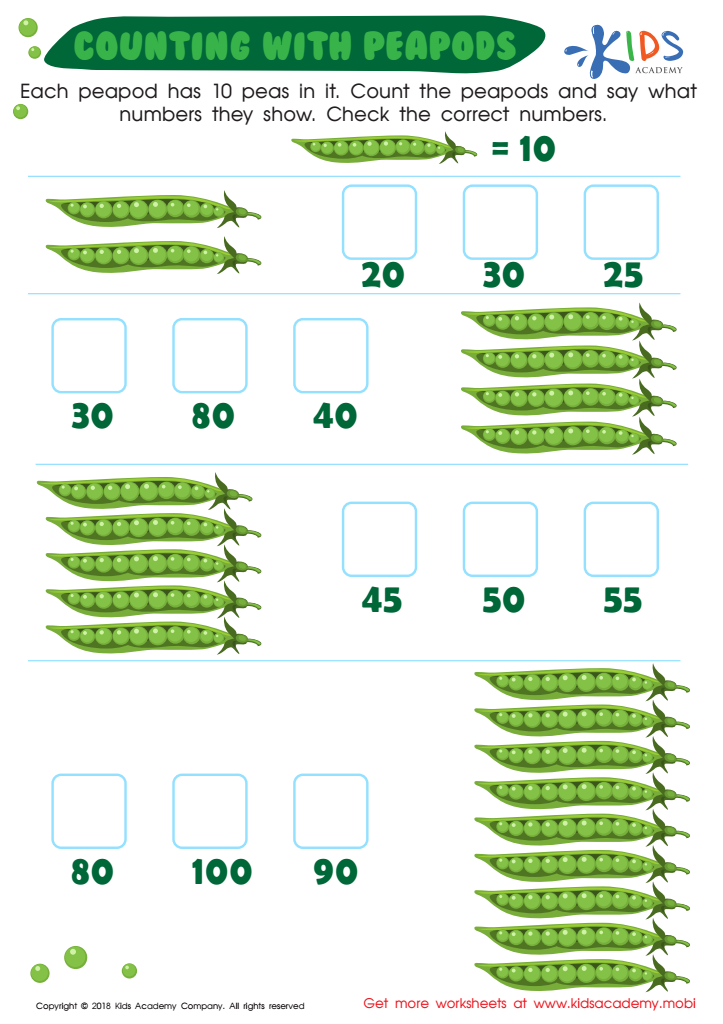
Number Worksheet: Counting With Peapods
 Assign to My Students
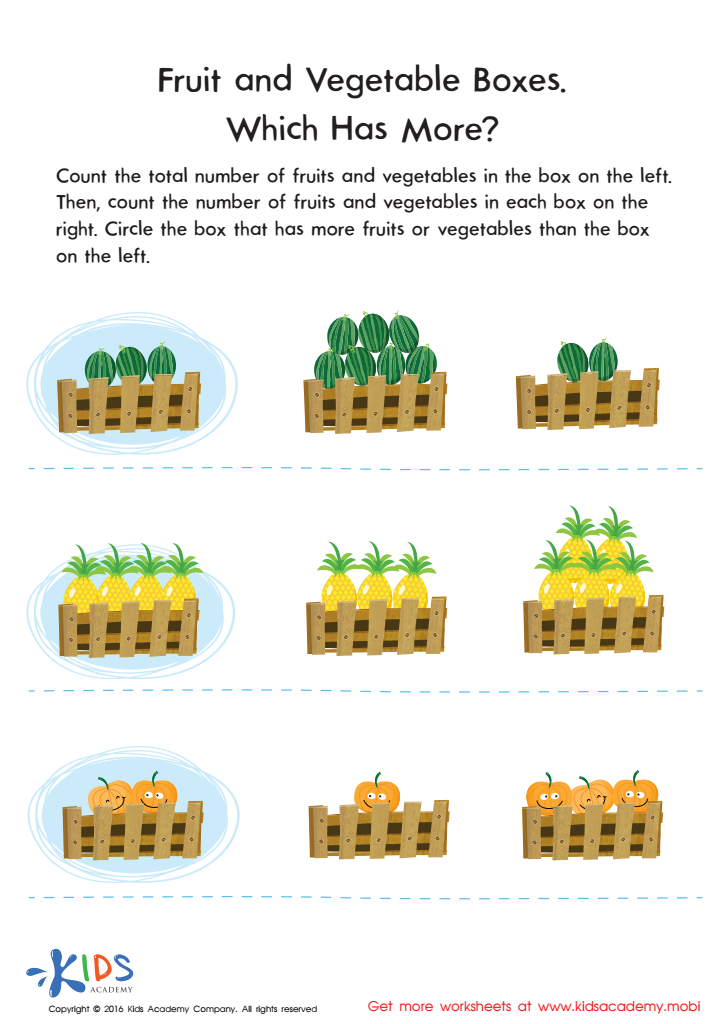
Which Has More? Size Worksheet
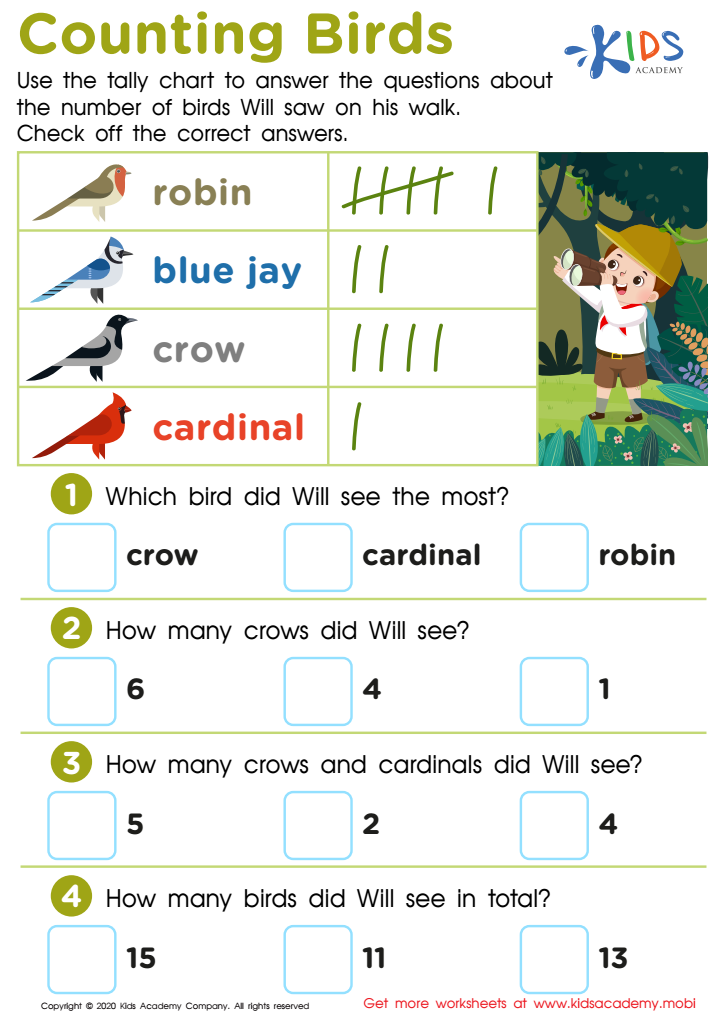
Counting Birds Worksheet
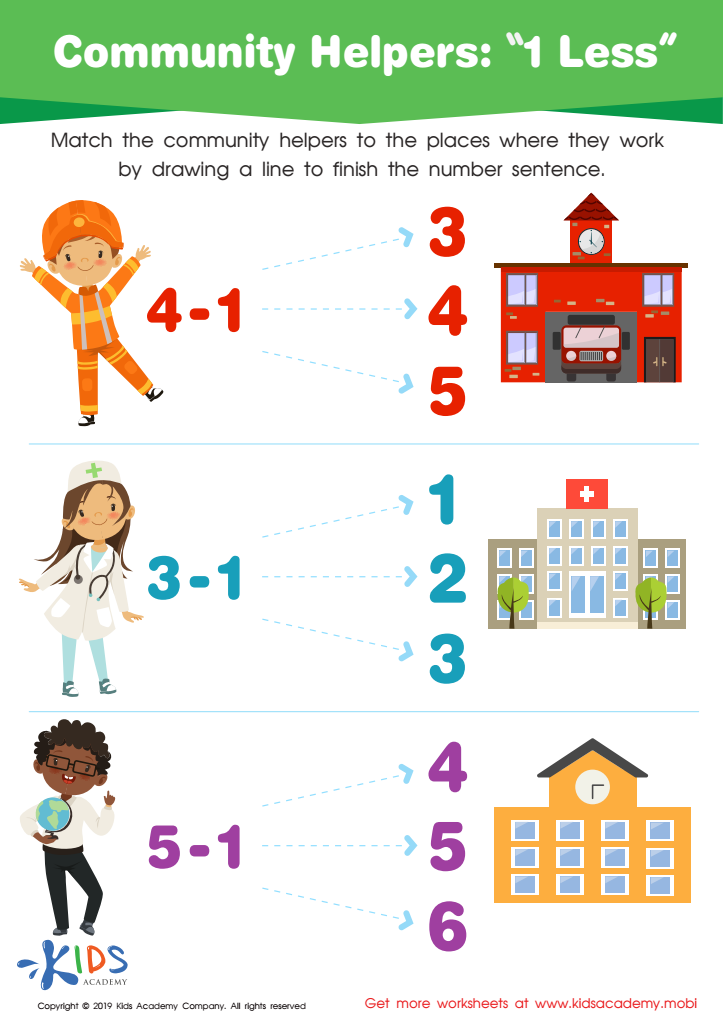
Community Helpers: 1 less Worksheet








Basic counting skills are essential foundational abilities that lay the groundwork for children's mathematical understanding and problem-solving capabilities. From ages 3 to 9, children experience critical periods of cognitive development where early exposure to counting significantly impacts their future academic success. Parents and teachers should prioritize these skills as they foster not only numerical literacy but also logical reasoning and critical thinking.
Counting teaches children about quantities, sequences, and relationships between numbers, all of which are vital in everyday situations, from sharing snacks to understanding time. Moreover, developing counting skills supports a child's ability to progress in more complex mathematical concepts, such as addition and subtraction.
Engaging children through basic counting activities fosters enthusiasm for learning, encouraging them to explore math in fun and interactive ways. It also enhances fine motor skills and promotes language development as children learn to articulate numbers and quantities.
Ultimately, when parents or teachers emphasize basic counting, they empower children to build self-confidence in their abilities and develop a positive attitude towards math, setting them up for lifelong success both in academics and everyday life. Investing time and resources in this area is an invaluable step in nurturing well-rounded learners.








