Math fluency development Extra Challenge Worksheets for Ages 3-9
3 filtered results
-
From - To
Enhance your child's math skills with our "Math Fluency Development Extra Challenge Worksheets" designed for ages 3-9. These engaging worksheets offer a variety of fun and challenging activities to boost mathematical confidence and proficiency. Kids will tackle addition, subtraction, and other fundamental concepts while enjoying colorful illustrations that keep learning exciting. Perfect for young learners, these resources are ideal for both classroom and home use, nurturing essential problem-solving skills. By incorporating these worksheets into your child's routine, you'll foster a love for math and support their journey toward fluency. Get started today and watch your child's math abilities soar!
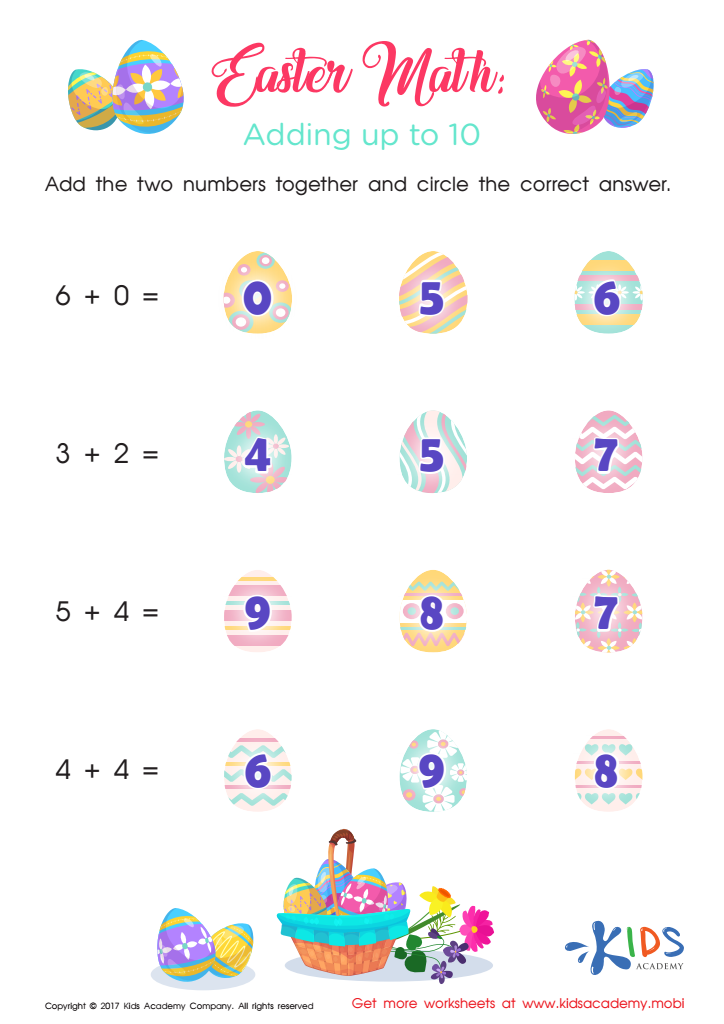
Addition Up To 10 Worksheet
 Assign to My Students
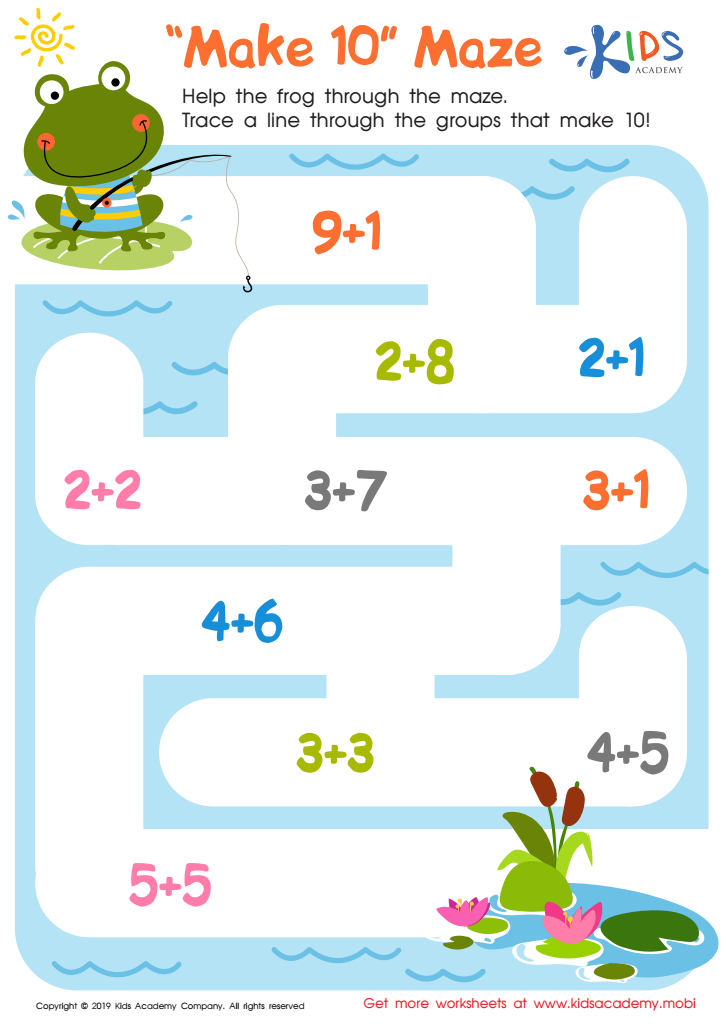
Make 10 Maze Worksheet
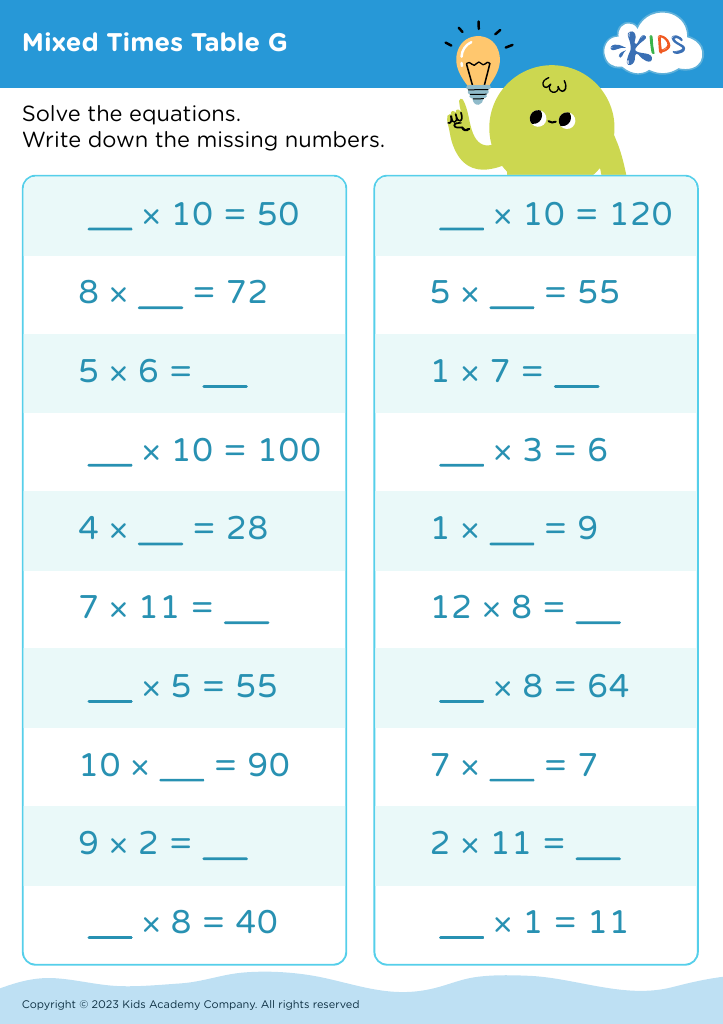








Math fluency development is crucial for children aged 3-9 as it lays the foundation for their overall academic success and everyday problem-solving skills. When children can quickly and accurately perform basic math operations—like addition and subtraction—they build confidence and a positive attitude toward math. This early competency allows them to tackle more complex math concepts in later years, preventing frustration and anxiety often associated with the subject.
Parents and teachers should care about fostering this fluency because it enhances critical thinking, analytical skills, and mental agility. Engaging children with math fluency activities—such as games, puzzles, and practical application—can make learning enjoyable, transforming the perception of math from a daunting task to a fun challenge. Additionally, strong math skills are linked to better performance in science, technology, engineering, and mathematics (STEM) fields, which are increasingly vital in today's job market.
Moreover, early exposure to math fluency promotes cognitive development and improves overall classroom performance. By investing in this early mathematical education, parents and teachers not only empower children for academic achievement but also equip them with essential life skills. Ultimately, nurturing math fluency sets the stage for a lifelong engagement and love for learning.








