Understanding adjectives Extra Challenge Worksheets for Ages 3-9
3 filtered results
-
From - To
Boost your child's vocabulary and language skills with our "Understanding Adjectives Extra Challenge Worksheets," specifically designed for ages 3-9. These interactive worksheets introduce young learners to the fascinating world of adjectives, helping them identify and describe various attributes of objects, people, and experiences. With engaging activities tailored to different learning levels, children will enhance their reading comprehension and expressive abilities while having fun. Perfect for both home and classroom settings, our worksheets encourage creativity and critical thinking, making language learning an enjoyable journey. Start enriching your child's language development today with our carefully crafted challenges that foster a love for words!
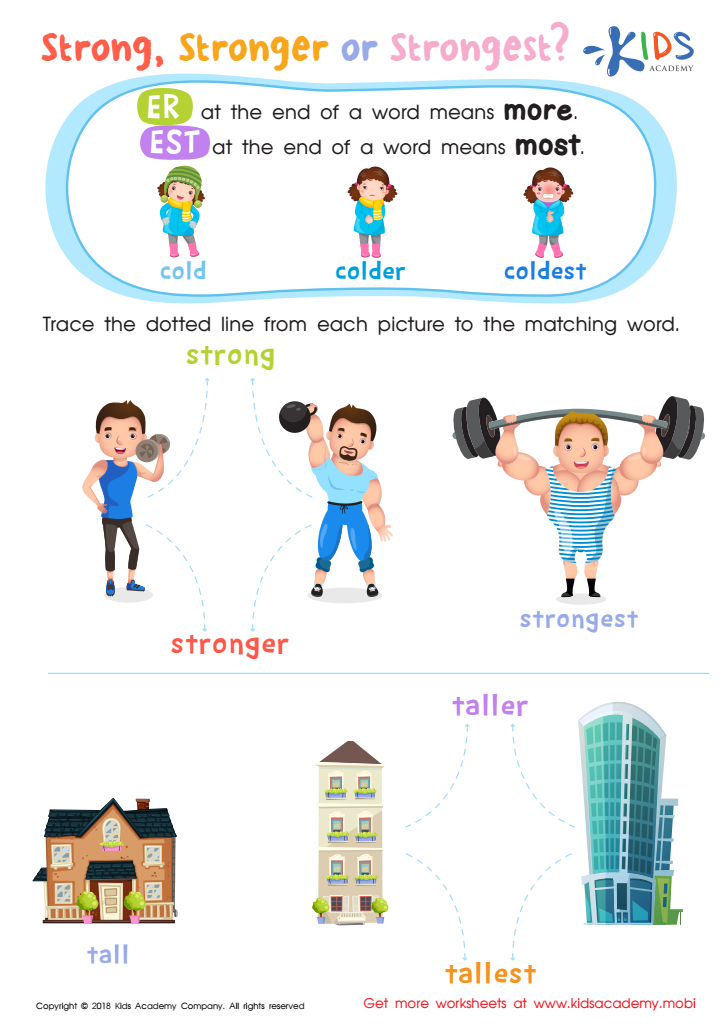
Strong or Stronger? Worksheet
 Assign to My Students
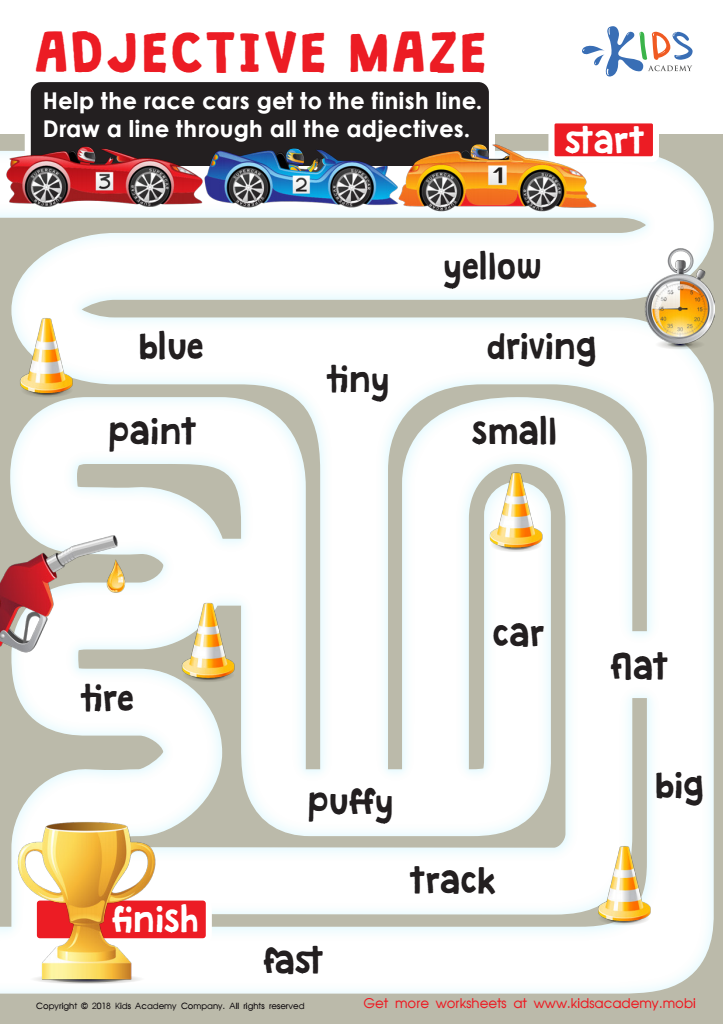
Adjective Maze Worksheet
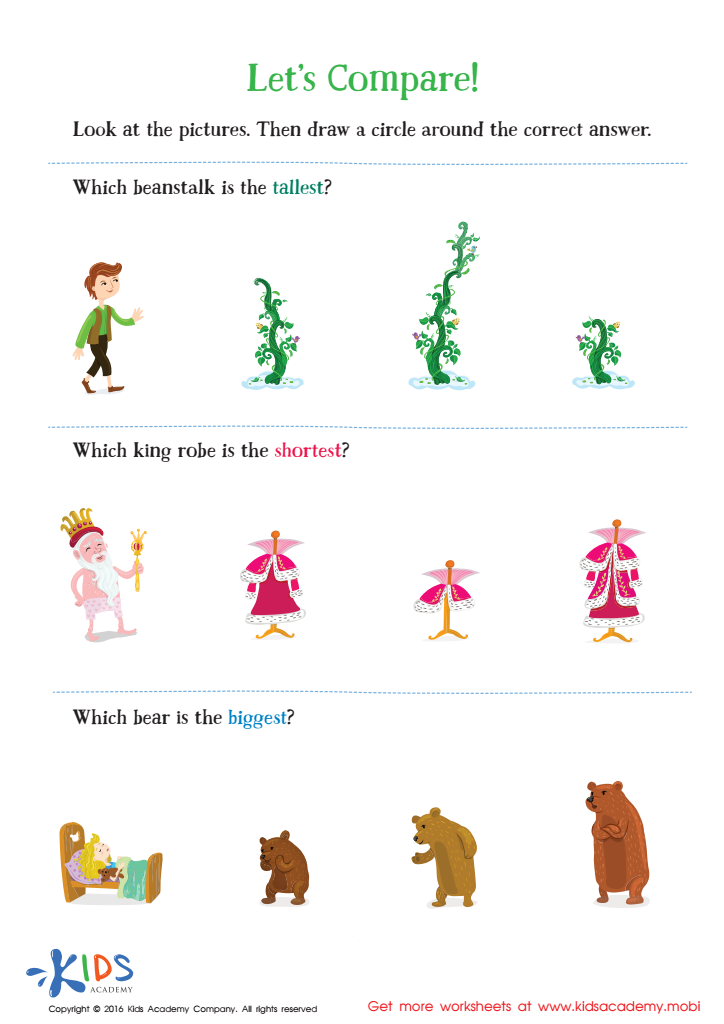
Fairy Tale Worksheet: Let's Compare








Understanding adjectives is essential for children aged 3-9, as it significantly enhances their language development and communication skills. Adjectives are descriptive words that add detail and nuance to language, allowing children to express themselves more vividly and accurately. By learning to recognize and use adjectives, children can better describe their surroundings, experiences, and emotions, which helps them articulate their thoughts effectively.
For parents and teachers, emphasizing the understanding of adjectives can transform a child's storytelling abilities, writing skills, and even their reading comprehension. When children grasp the concept of adjectives, they can extract deeper meanings from what they read and engage more critically with texts and discussions.
Moreover, using adjectives encourages creativity and imagination. For instance, when children learn to describe a “glistening, blue ocean” rather than just a “ocean,” their descriptions become more interesting and engaging. This also fosters their ability to create mental imagery, which is crucial for cognitive development.
Ultimately, caregivers should care about teaching adjectives because doing so lays a foundational language skill that supports academic success and enhances interpersonal communication, leading to overall emotional and social development in young learners. Investing time in this area will cultivate confident, articulate individuals.








