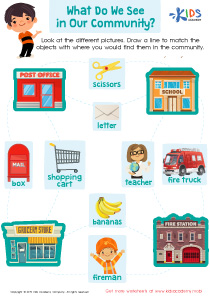
Data interpretation Extra Challenge Math Worksheets for Ages 3-9
3 filtered results
Difficulty Level
Grade
Age
-
From - To
Subject
Activity
Standards
Discover the "Data Interpretation Extra Challenge Math Worksheets for Ages 3-9," designed to enhance young learners' analytical skills through fun and engaging activities. These worksheets introduce children to essential data concepts such as graphs, charts, and tables, enabling them to make sense of information visually. Aimed at developing critical thinking, each worksheet features age-appropriate challenges that stimulate curiosity while reinforcing mathematical foundations. Perfect for home or classroom use, these resources encourage independent problem-solving and promote confidence in mathematics. Invest in your child's future by enriching their learning journey with our exciting and interactive data interpretation challenges today!
Favorites
With answer key
Interactive
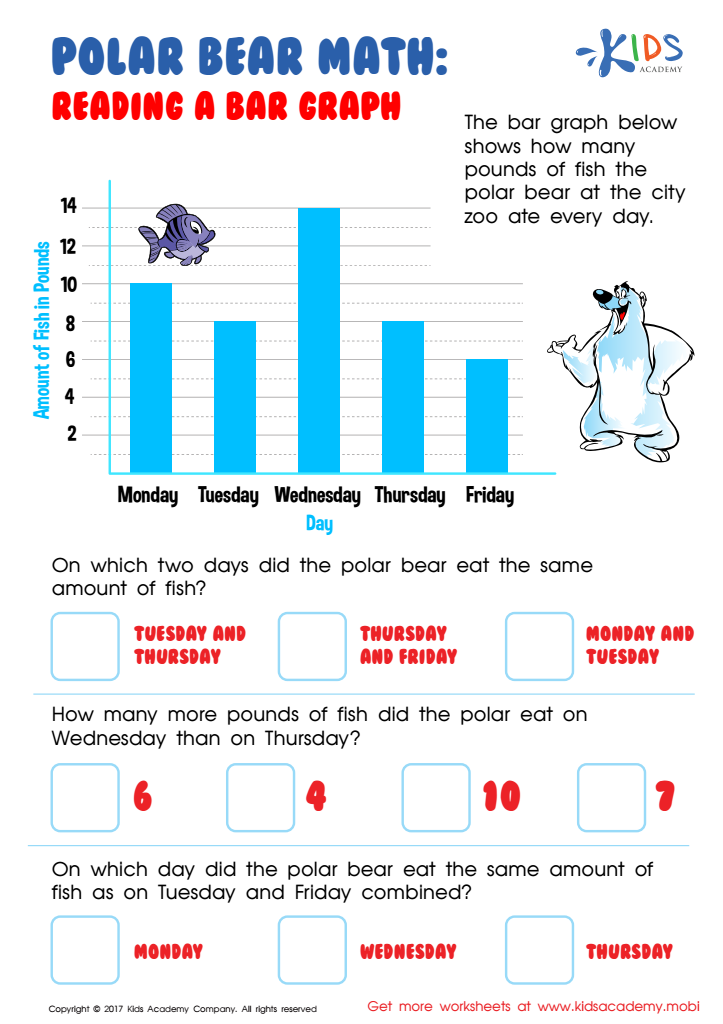
Reading Bar Graph Worksheet
Take your child north to practice data reading with a polar bear friend! This worksheet challenges 3rd graders to interpret data on a graph and solve related math problems.
 Assign to My Students
Reading Bar Graph Worksheet
Worksheet
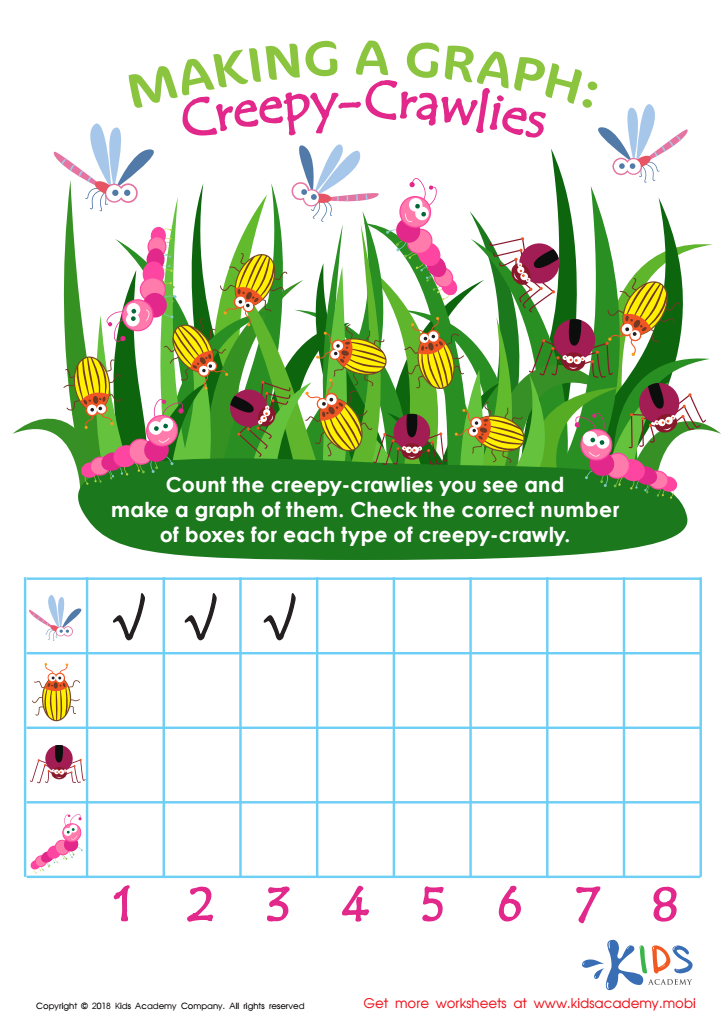
Making a Graph: Creepy Crawlies Worksheet
Let your little math whiz create a graph with this free PDF worksheet. They can count and sort the creepy-crawlies, checking off the correct number of boxes for each type. This engaging activity will help them hone their visual discrimination skills while efficiently organizing data.
Making a Graph: Creepy Crawlies Worksheet
Worksheet
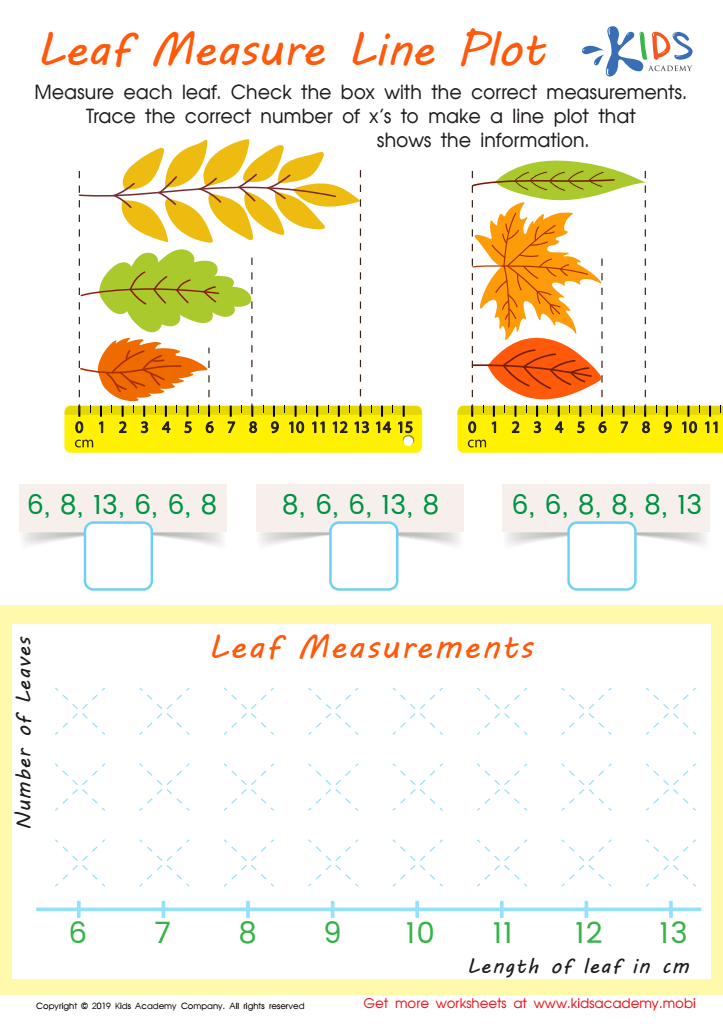
Leaf Measure Line Plot Worksheet
Help your third grader measure each of the four leaves, and check the box with the correct measurements. Then, trace the right number of x's to make a line plot showing the data. This exercise will engage your students and make it easier for them to grasp the concept of line plots.
Leaf Measure Line Plot Worksheet
Worksheet
Join Kids Academy for Free
Who is primarily going to use this learning content?







Data interpretation is a critical skill that serves as a foundation for mathematical thinking and problem-solving in young children. For ages 3-9, engaging in activities that focus on data interpretation fosters curiosity and critical reasoning. Parents and teachers should prioritize these exercises because they not only enhance mathematical understanding but also promote skills that extend beyond numbers.
By decoding and interpreting data, children learn to make informed decisions, recognize patterns, and draw conclusions from information presented visually or textually. This ability nurtures analytical thinking, enabling them to tackle everyday challenges efficiently.
Early exposure to data interpretation also encourages verbal skills as children learn to articulate their reasoning and explanations, promoting effective communication. Further, working with data empowers children with confidence, teaching them that their perspectives and interpretations hold value.
Including extra challenge math activities supports differentiation in learning, catering to diverse skill levels and encouraging a love for mathematics. Early challenges can ignite enthusiasm for logical thinking, ensuring that students remain engaged and motivated to learn. Overall, fostering these skills at a young age can pave the way for academic success and enhance a child’s capacity to thrive in an increasingly data-driven world.