Story sequencing Extra Challenge Reading Comprehension Worksheets for Ages 3-9
3 filtered results
-
From - To
Enhance your child's reading comprehension skills with our Story Sequencing Extra Challenge Worksheets, specifically designed for ages 3-9. These engaging worksheets encourage kids to think critically and develop a better understanding of narrative structures. Children will work on arranging a series of images or sentences to tell a meaningful story, reinforcing skills like sequencing, recall, and comprehension. Ideal for home or classroom use, these challenges foster creativity while promoting essential literacy skills. With vibrant illustrations and age-appropriate themes, they captivate young minds and make learning fun! Explore our extensive collection and watch your child flourish in their reading journey!
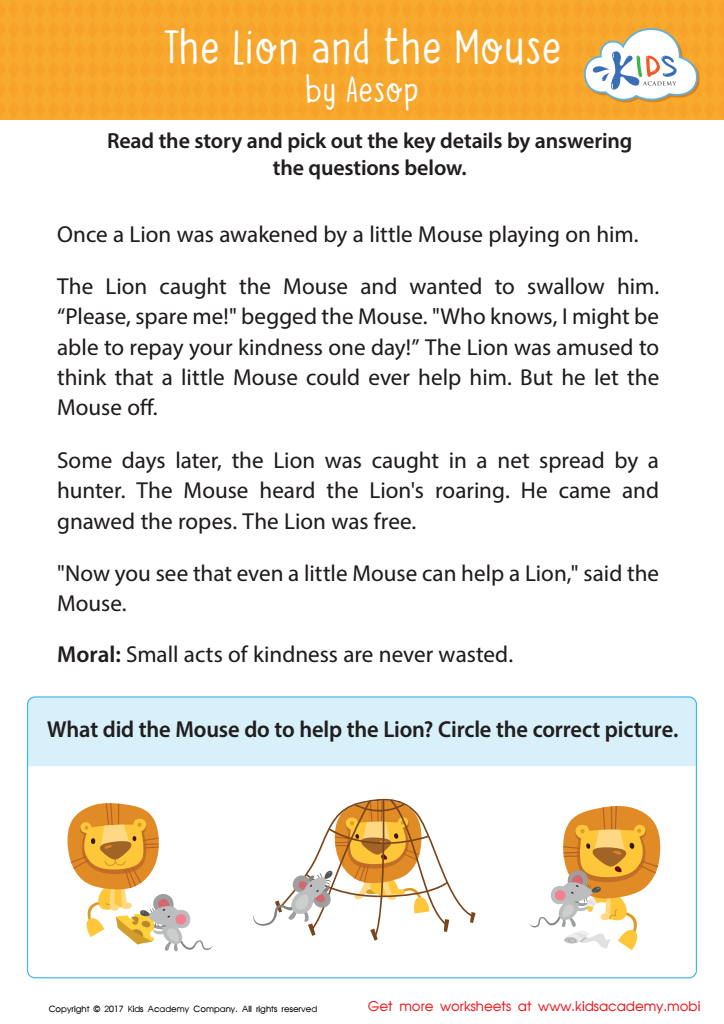
The Lion and The Mouse Sequencing Worksheet
 Assign to My Students
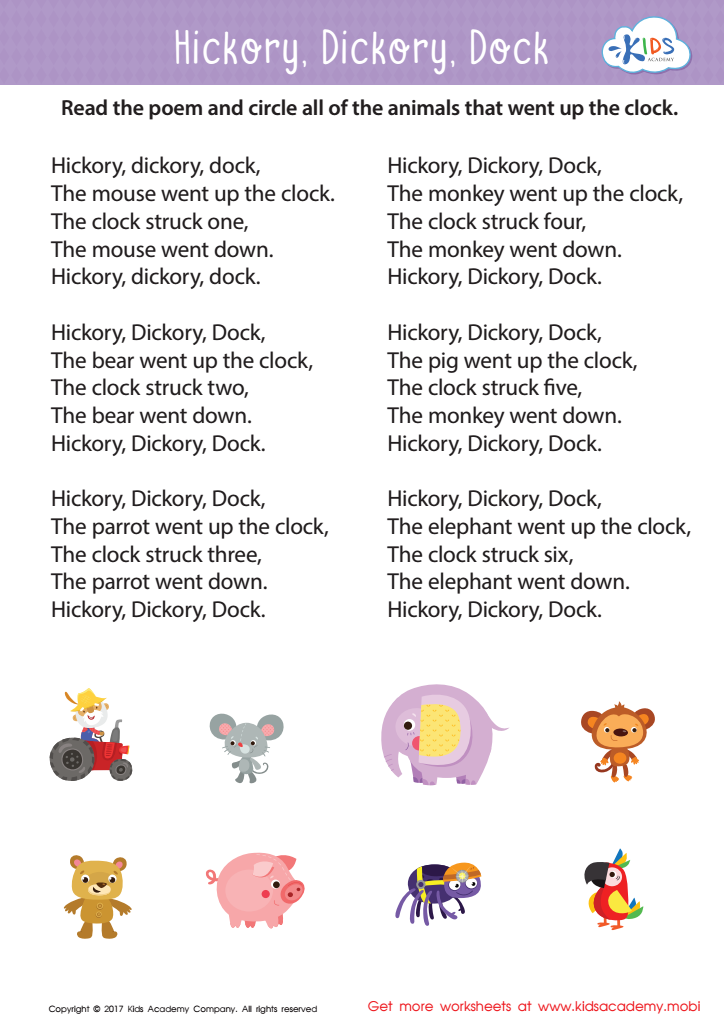
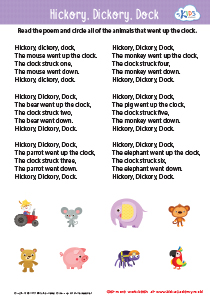
Hickory Dickory Dock Sequencing Worksheet
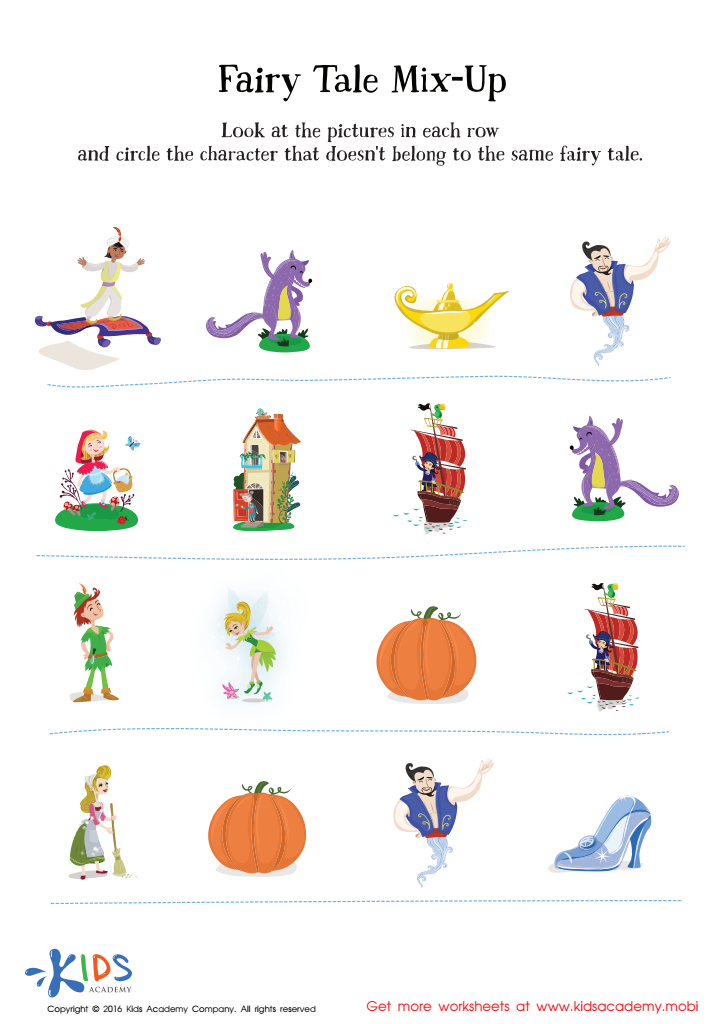
Fairy Tale Worksheet: Story Mix Up








Story sequencing is an essential component of early reading comprehension that involves understanding the order of events in a narrative. For children aged 3-9, mastering story sequencing develops critical thinking and cognitive skills that are foundational for literacy. When parents and teachers prioritize story sequencing, they empower children to follow and comprehend stories more effectively, enhancing their overall reading abilities.
This skill encourages active engagement with texts. As children learn to identify beginning, middle, and end events in stories, they also practice predictions, inferences, and summarization—skills necessary for analyzing literature. Moreover, story sequencing aids in vocabulary development and enhances memory retention as children recall details in the correct order.
For educators, incorporating story sequencing activities into lessons can foster collaboration and discussion among peers, enriching the learning experience. Parents can reinforce these skills at home by encouraging children to retell favorite stories in sequence, which promotes creativity and oral language skills.
Ultimately, focusing on story sequencing not only supports literacy development but also nurtures a child’s confidence and enthusiasm for reading, paving the way for a lifelong love of literature. By fostering these skills during the critical early years, parents and teachers set the stage for academic success.