Critical Thinking Extra Challenge Social Studies Worksheets for Ages 3-9
3 filtered results
-
From - To
Nurture young minds with our "Critical Thinking Extra Challenge Social Studies Worksheets for Ages 3-9." Designed to stimulate curiosity and sharpen problem-solving skills, these engaging worksheets introduce children to essential social studies concepts using age-appropriate activities. Each worksheet presents unique challenges that encourage analytical thinking, decision-making, and thoughtful reflection. Perfect for home or classroom use, our resources support foundational learning and foster an early love for history, geography, and cultures. Empower your child with the tools they need to think critically and explore the world around them with Kids Academy's expertly crafted worksheets.
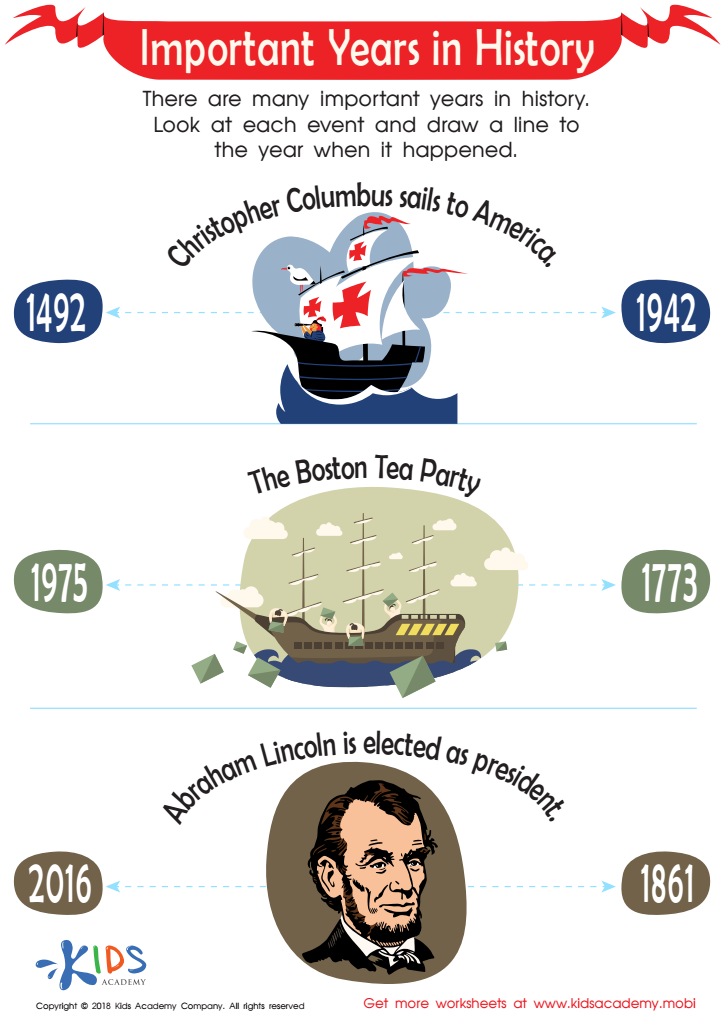
Important Years in History Worksheet
 Assign to My Students
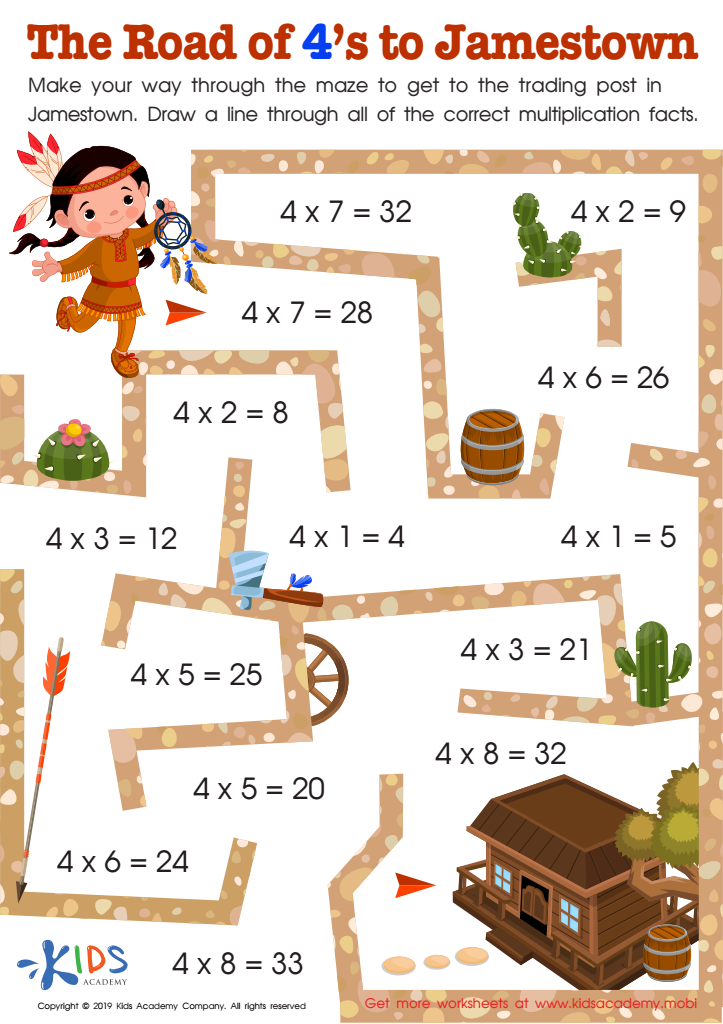
The Road of 4’s to Jamestown Worksheet
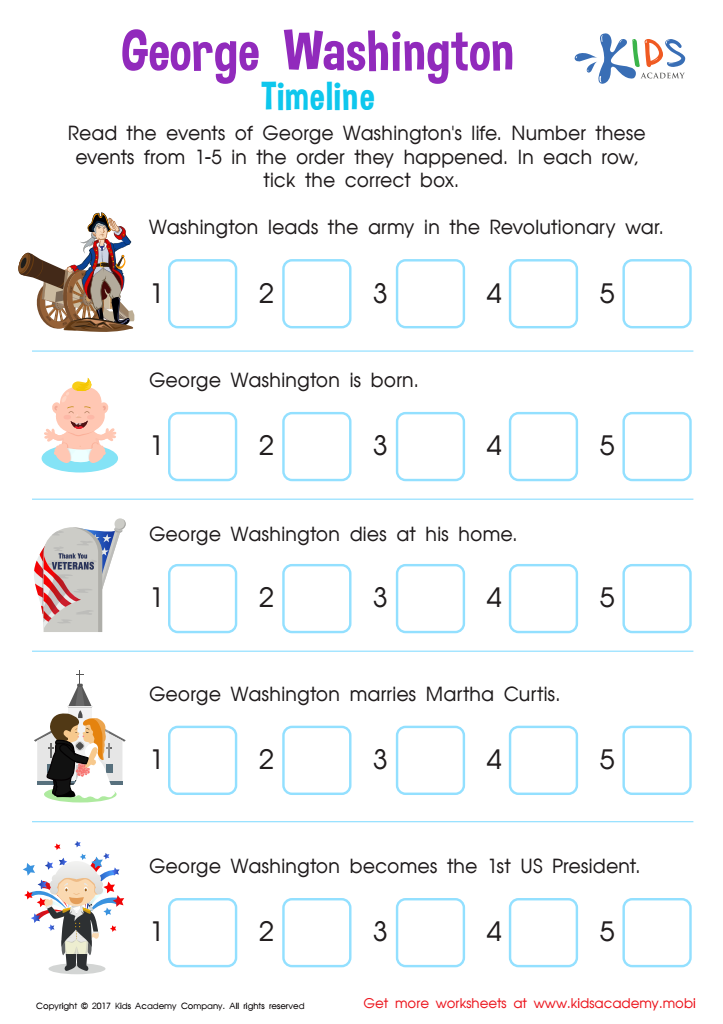
George Washington Timeline Worksheet







Critical thinking is the cornerstone of effective learning and problem-solving, which makes incorporating Critical Thinking Extra Challenges in Social Studies for children ages 3-9 crucial. At this formative period, young minds are exceptionally malleable and receptive to developing foundational cognitive skills. These challenges engage children in tasks that require analysis, evaluation, and synthesis of information, promoting a deeper understanding of concepts beyond rote memorization.
When parents or teachers introduce critical thinking activities early on, they foster curiosity and a love for learning. These skills are not isolated to social studies; they transfer across all subjects, enhancing overall academic performance and day-to-day decision-making. Furthermore, critical thinking exercises enhance children’s abilities to understand different perspectives, an important social-emotional skill that aids in building empathy and cooperation with peers.
Beyond academic benefits, critical thinking prepares children for real-world scenarios. It helps them to question assumptions, consider the credibility of sources, and make reasoned decisions. Empowering children with these capabilities ensures they grow up to be independent thinkers and informed citizens. In an age ever more rife with information, the ability to scrutinize, reason, and evaluate is invaluable. Therefore, integrating these activities into early education sets a robust foundation for lifelong learning and democratic participation.