Alphabet Recognition Extra Challenge Tracing Letters Worksheets for 3-Year-Olds
3 filtered results
Difficulty Level
Grade
Age
-
From - To
Subject
Activity
Standards
Boost your toddler's alphabet skills with our "Alphabet Recognition Extra Challenge Tracing Letters Worksheets for 3-Year-Olds." Designed for advanced pre-readers, these engaging worksheets make letter learning fun and effective through tracing activities that reinforce letter shapes and sounds. Each colorful worksheet offers extra practice, helping young learners confidently recognize and write the alphabet while developing fine motor skills. Suitable for preschool classes or home learning, these printable resources support early literacy in an enjoyable, interactive way. Get started today and watch your child's alphabet mastery soar! Perfect for curious little minds who thrive on challenges.
Favorites
With answer key
Interactive
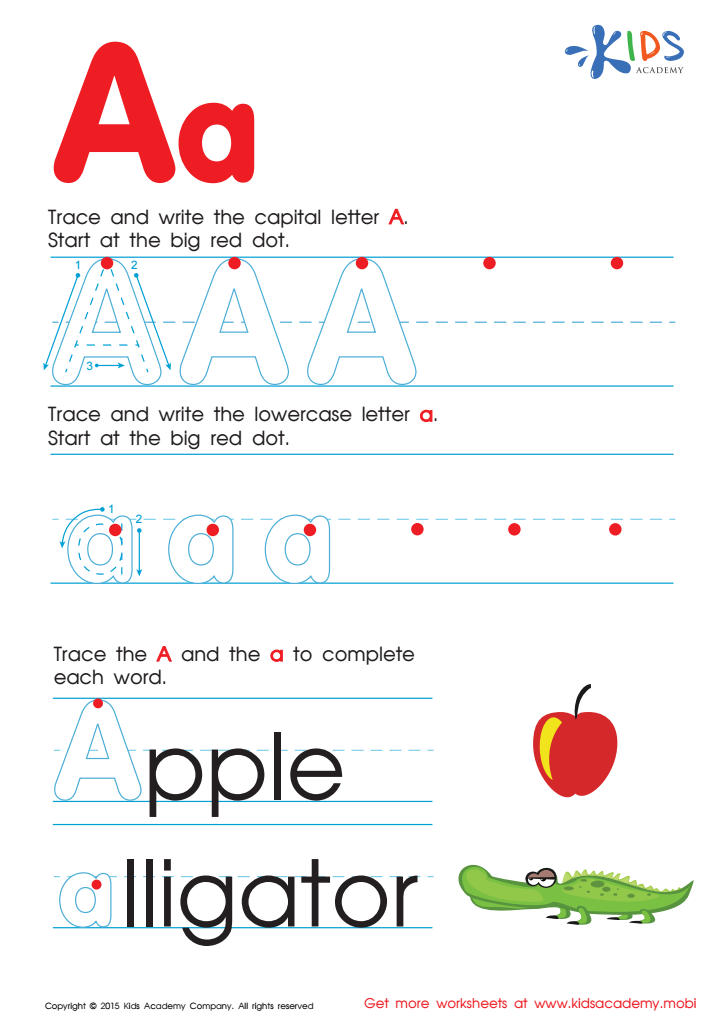
Letter A Tracing Page
Trace and write the letter "A"! Start with the big red dot, then do the capital and lowercase versions. Then write it again with two words - apple and alligator. Download more tracing worksheets at Kids Academy.
 Assign to My Students
Letter A Tracing Page
Worksheet
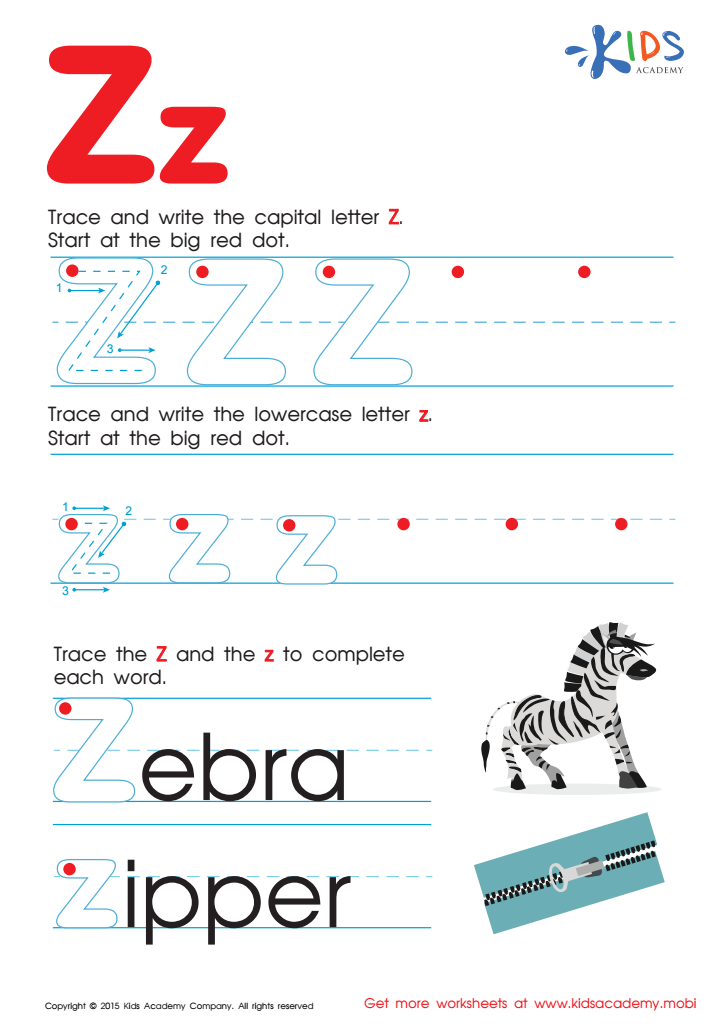
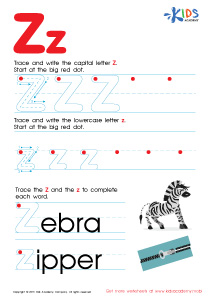
Letter Z Tracing Page
Trace and write capital "Z" and lowercase "z". Complete words "zebra" and "zipper". Be attentive and have fun! (80 words)
Letter Z Tracing Page
Worksheet
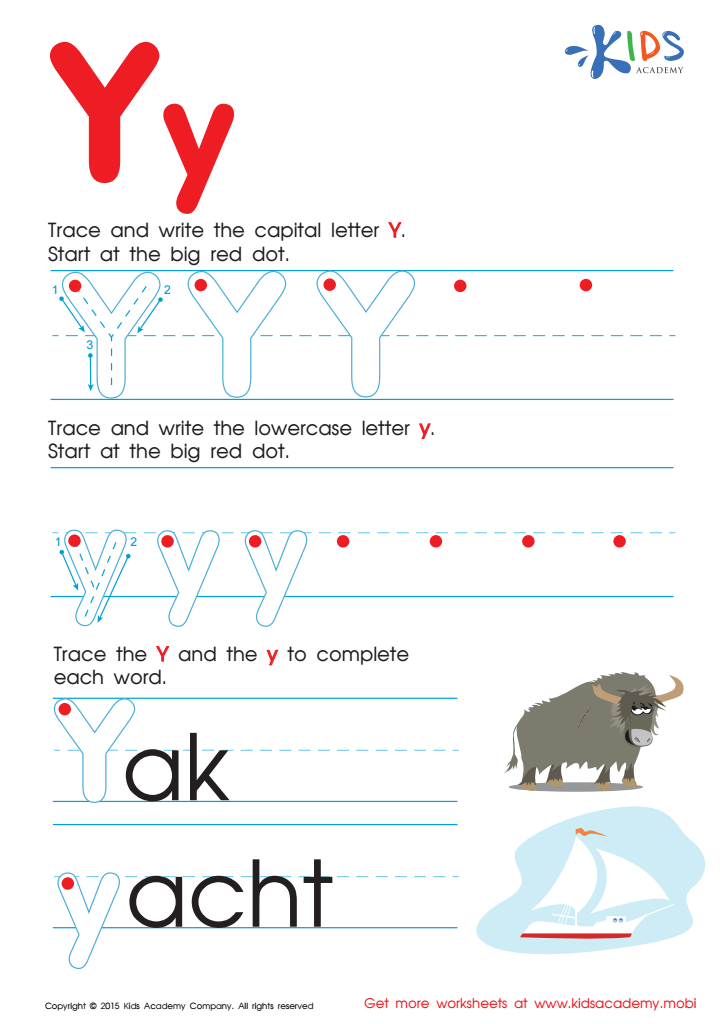
Letter Y Tracing Page
Trace the capital letter "Y" on the red dot, then trace and write the lowercase letter. Complete the words to help the Yak walk and the yacht swim. More worksheets at Kids Academy.
Letter Y Tracing Page
Worksheet
Join Kids Academy for Free
Who is primarily going to use this learning content?








Alphabet recognition is foundational in early literacy development, and introducing extra challenges such as tracing letters for 3-year-olds can significantly benefit their learning journey. At this age, children's brains are particularly receptive to language acquisition and fine motor skills development, making letter tracing an effective educational tool.
Parents and teachers should care about these activities as they foster improved hand-eye coordination and muscle memory, essential skills for writing. When children trace letters, they learn to recognize shapes, lines, and patterns associated with each alphabet, strengthening their visual and cognitive associations.
Moreover, engaging in these exercises can increase a child's confidence and interest in learning. Positive reinforcement and successful completion of manageable tasks encourage a growth mindset and a sense of accomplishment. These small wins lay the groundwork for more advanced literacy skills, such as phonemic awareness and reading fluency.
Furthermore, introducing tracing activities at an early age can help identify any learning delays or challenges early on, allowing for timely interventions. Effective alphabet recognition programs support both parents and teachers in creating a structured, enjoyable, and enriching educational environment, crucial for a child's long-term academic success and development.