Basic Math Skills Extra Challenge Money Worksheets for 3-Year-Olds
3 filtered results
-
From - To
Introducing our "Basic Math Skills Extra Challenge Money Worksheets for 3-Year-Olds"! Designed to engage and excite young learners, these worksheets provide an excellent way for children to explore the world of money while enhancing their foundational math skills. Through fun activities, kids will practice counting coins, recognizing values, and making simple comparisons. Each worksheet is crafted to cater to the developmental needs of 3-year-olds, helping them build confidence in their mathematical abilities. Encourage your little one's love for learning with these innovative resources, perfect for at-home or classroom use. Grab our worksheets and watch their skills flourish while having fun!
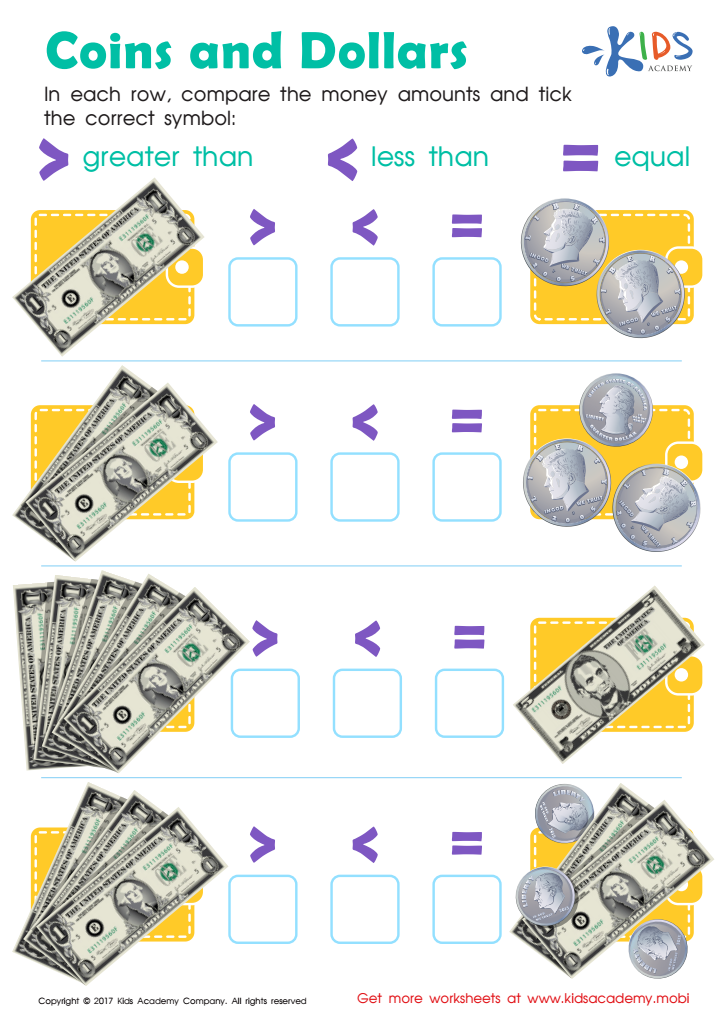
Money: Coins Dollars Printable
 Assign to My Students
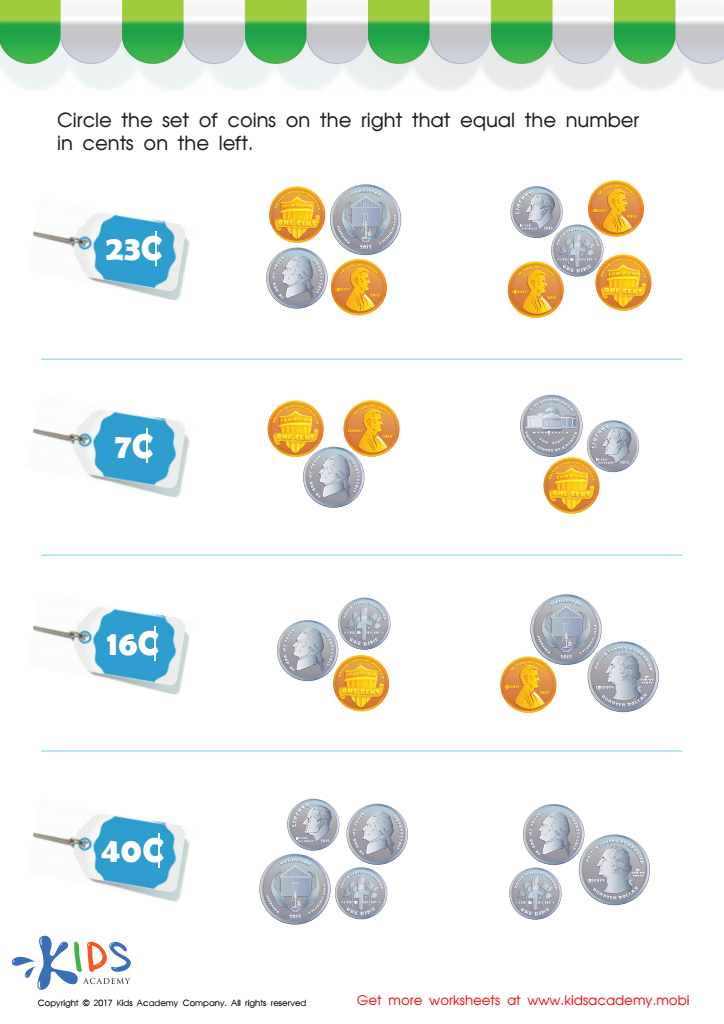
Picking the Coins You Need Money Worksheet
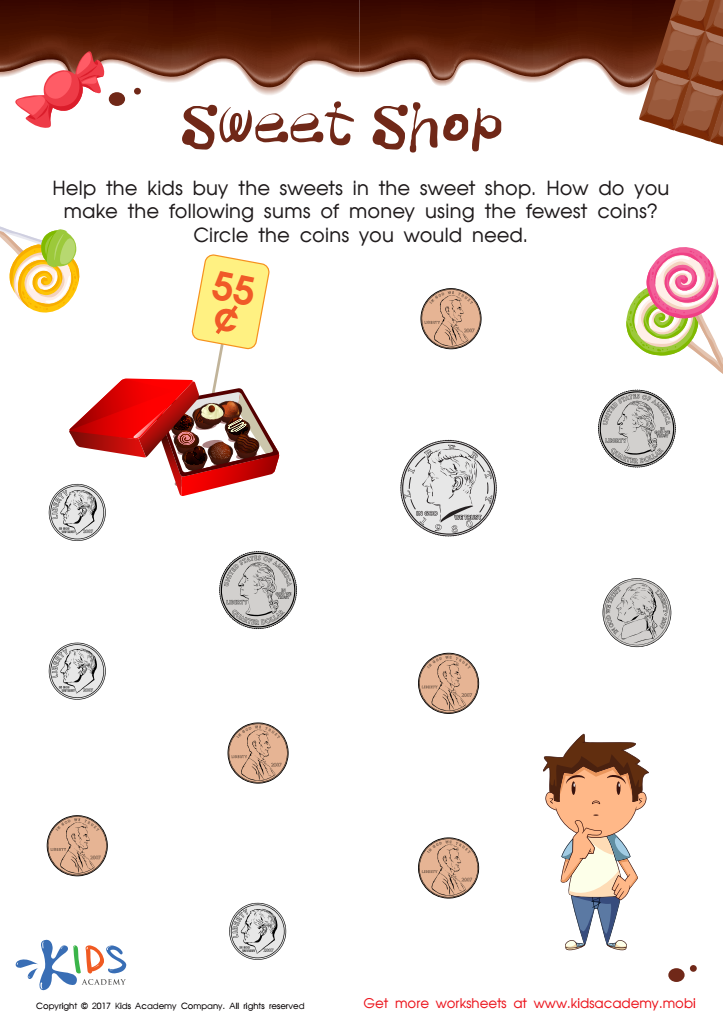
Sweet Shop – Counting Coins Worksheet



.jpg)




Basic math skills are essential for early childhood development, and incorporating money-related activities for 3-year-olds can significantly enhance these skills. At this age, children are naturally curious and eager to explore their surroundings, making it the perfect opportunity to introduce them to concepts of counting, addition, and perception of value through play.
This early engagement with money-based activities helps children grasp fundamental math concepts in a fun and relatable way. For instance, sorting coins, imitating transactions, or playing store can improve object recognition, counting proficiency, and basic problem-solving abilities. These activities also foster fine motor skills and boost cognitive development.
Moreover, lessons involving money can nurture critical social skills as children learn to cooperate during play and understand the importance of sharing and communicating. Involving parents or teachers in these exercises ensures consistent learning experiences and opens pathways for ongoing dialogue about money management.
By focusing on basic math skills related to money, parents and teachers prepare children for future academic success and everyday financial literacy. Early exposure sets the groundwork for a child's confidence in math, helping them navigate more complex concepts in later schooling. Ultimately, it supports the holistic development of the child, enriching their learning journey.








