Letter recognition Extra Challenge Reading Worksheets for 3-Year-Olds
3 filtered results
Difficulty Level
Grade
Age
-
From - To
Subject
Activity
Standards
Enhance your 3-year-old's reading skills with our Letter Recognition Extra Challenge Reading Worksheets! Designed for young learners ready to advance, these worksheets offer engaging and fun exercises to master letter identification and phonics. Each activity stimulates curiosity while improving attentiveness and comprehension. Perfect for home or classroom use, our expertly crafted materials support early literacy development by blending play with education, ensuring a smooth introduction to reading. Equip your child with the confidence and foundation they need for future academic success. Discover our comprehensive collection now and watch as your little learner excels!
Favorites
With answer key
Interactive
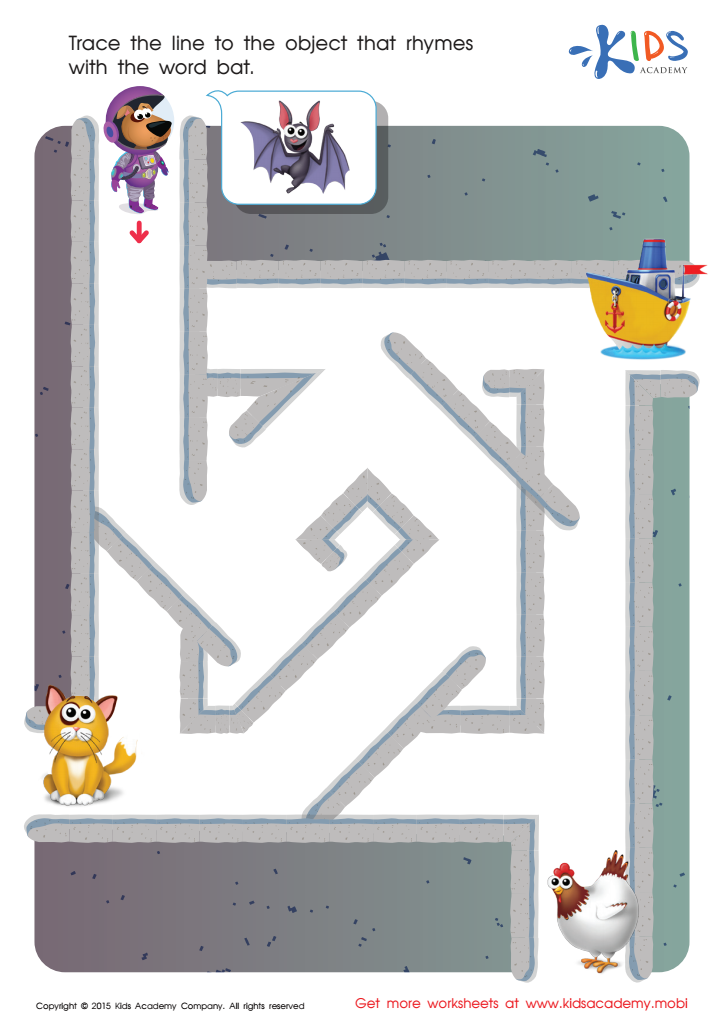
Bat Rhyming Words Worksheet
Get new reading and vocabulary worksheets to help make learning enjoyable for you and your kids. Join the dog and match the objects that rhyme. Have a blast!
 Assign to My Students
Bat Rhyming Words Worksheet
Worksheet
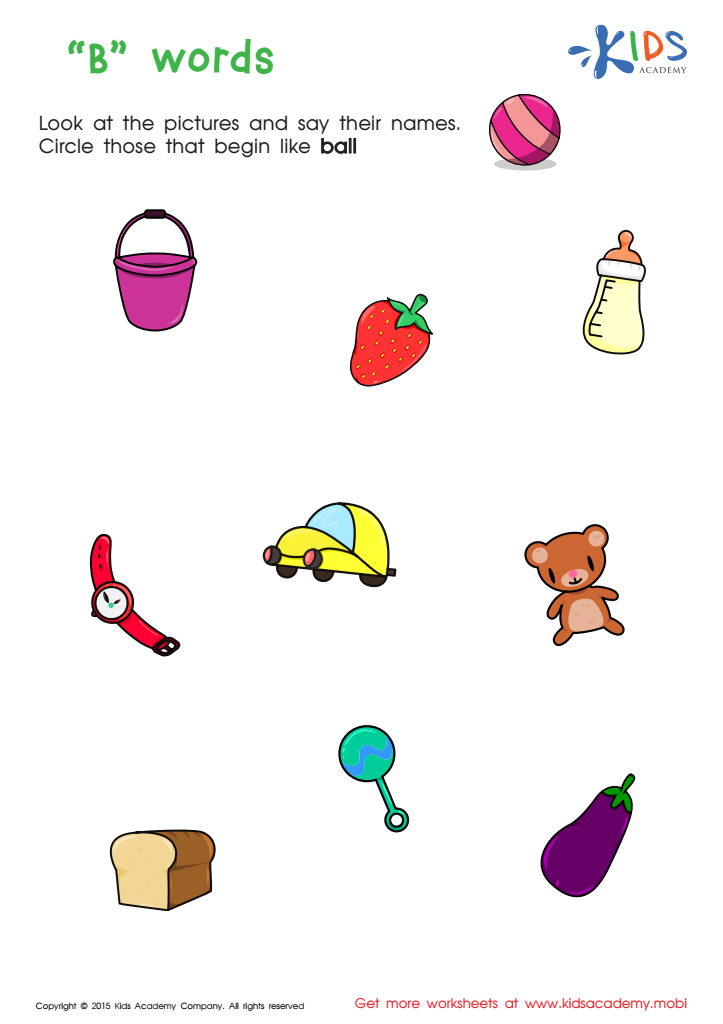
First Words Worksheet
Want to help your preschooler learn to read and write? Start with this 'B' words printable worksheet. It will help your child match pictures to the letters they know, sound out words, and build literacy. Once they understand the concept, they can start sounding out words and building reading skills.
First Words Worksheet
Worksheet
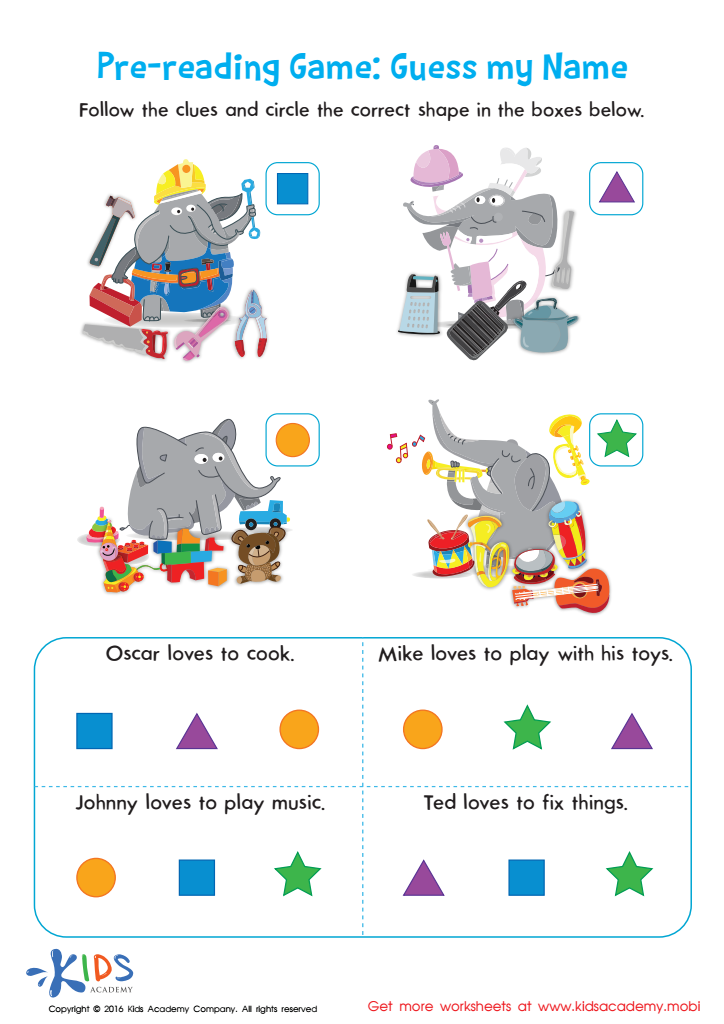
Pre Reading Worksheet Guess My Name
Guess My Name is a fun way to practice inference skills.
Guess My Name is a fun pre-reading game to help your child practice drawing inferences from clues. With colorful illustrations, they'll use clues to match each elephant with its sentence and sharpen their inference skills.
Pre Reading Worksheet Guess My Name
Worksheet
Join Kids Academy for Free
Who is primarily going to use this learning content?








Parents and teachers should care about letter recognition for 3-year-olds because it forms the cornerstone of early literacy, setting the stage for future academic success. During this formative period, a child's brain is highly adaptable and can absorb information rapidly. Introducing letter recognition at this age helps children become familiar with the building blocks of language, enhancing their ability to decode and comprehend written text as they grow.
Letter recognition fosters early reading skills by enabling children to associate letters with their corresponding sounds, a critical component of phonemic awareness. This, in turn, aids in word formation and early reading comprehension. Moreover, strong letter recognition skills are linked to enhanced vocabulary and communication abilities, empowering children to express themselves more effectively.
Besides academic benefits, early literacy strengthens cognitive skills such as memory, attention, and critical thinking. Activities centered around letter recognition also encourage fine motor skills development through writing and drawing letters, providing a foundation for overall learning.
In essence, investing time and effort in letter recognition for 3-year-olds can yield considerable long-term benefits, equipping children with essential skills for their educational journey while fostering a love for reading and learning that can last a lifetime.