Reading comprehension Extra Challenge Writing Worksheets for 3-Year-Olds
2 filtered results
-
From - To
Introduce your 3-year-old to the world of literacy with our Reading Comprehension Extra Challenge Writing Worksheets. Specially crafted for early learners, these engaging printables are designed to develop foundational reading skills and enhance comprehension. Each activity promotes cognitive growth while keeping little ones intrigued and excited about reading. Perfect for preschoolers, these worksheets feature age-appropriate content that encourages critical thinking and fosters a love for reading and writing. Check out our selection at Kids Academy to give your child a head start on their literacy journey with fun and challenging exercises they'll look forward to exploring every day!
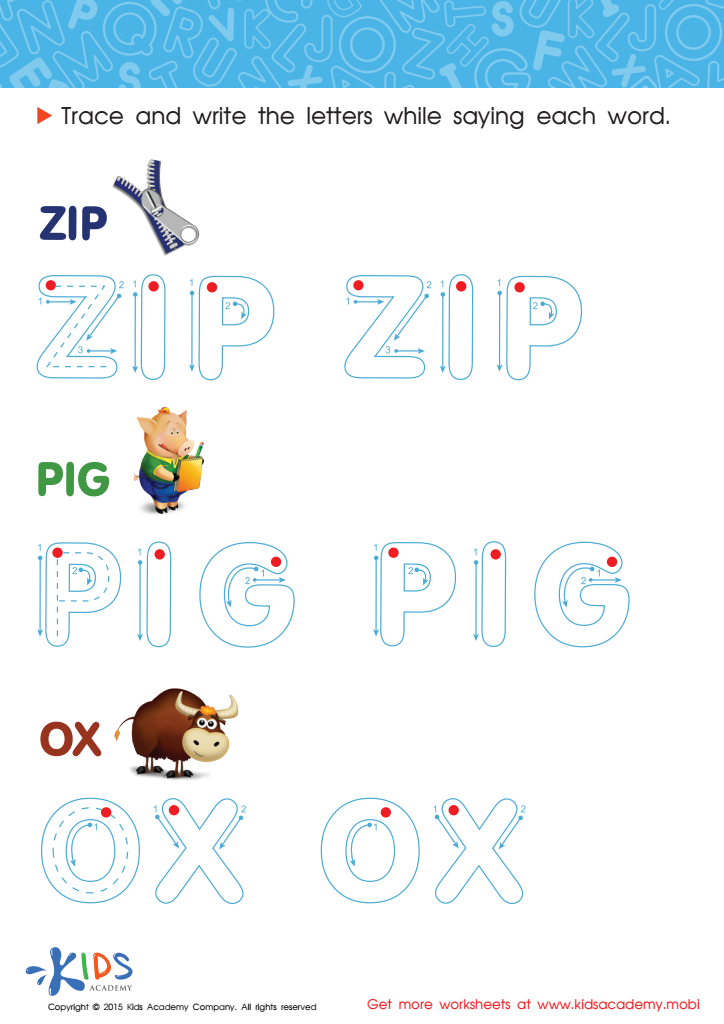
A Zip, a Pig and an Ox Spelling Worksheet
 Assign to My Students
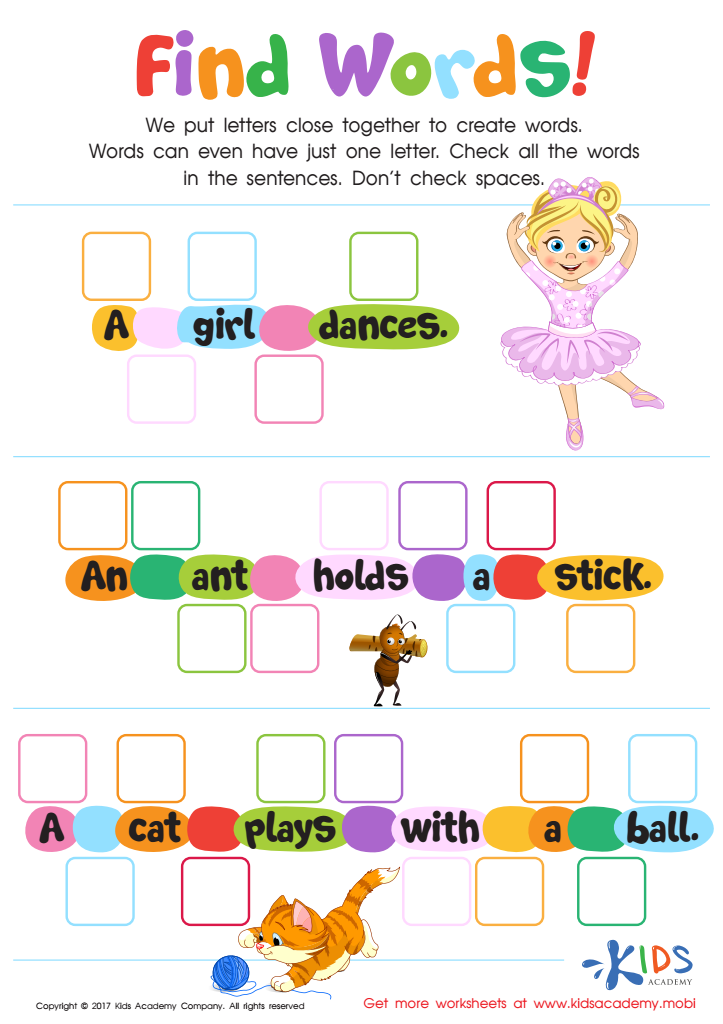
Find Words Worksheet







Reading comprehension and writing skills are foundational elements in a child's educational journey, even for 3-year-olds encountering "extra challenge" tasks. Early engagement in these areas plays a crucial role for several reasons.
Firstly, fostering reading comprehension at an early age enhances language acquisition. Children who are exposed to challenging reading materials develop a broader vocabulary and a better understanding of sentence structures, promoting advanced communication skills. Reading comprehension activities stimulate cognitive skills such as critical thinking, problem-solving, and memory retention, all of which are vital for lifelong learning.
Secondly, early writing experiences contribute significantly to fine motor skills development. When three-year-olds engage in age-appropriate writing challenges, they refine their hand-eye coordination and muscle control, setting a strong foundation for future handwriting proficiency. These activities also encourage creativity and self-expression, helping children to convey their thoughts and emotions effectively.
Moreover, offering an extra challenge aligns with differentiated learning techniques, accommodating the varying capabilities of young learners. This ensures that children who exhibit early proficiency are not stifed, but instead continue to grow intellectually.
In essence, caring about reading comprehension and advanced writing tasks for young children is about laying the groundwork for academic success and personal growth. By nurturing these skills early on, parents and teachers help children to build confidence and curiosity in their learning adventures.