Vocabulary expansion Extra Challenge Short Vowels Worksheets for Ages 4-5
3 filtered results
-
From - To
Boost your child's language skills with our "Vocabulary Expansion Extra Challenge Short Vowels Worksheets" designed specifically for ages 4-5. These engaging and interactive worksheets focus on short vowels, providing young learners with the perfect opportunity to enhance their vocabulary. Featuring fun activities and colorful images, your child will explore words and concepts in an enjoyable way. Intended to reinforce phonemic awareness, these worksheets make learning enjoyable and effective. Ideal for both classroom and at-home learning, our resources encourage independent thinking and creativity in early reading. Perfect for parents and educators seeking to nurture a love of language in young children!
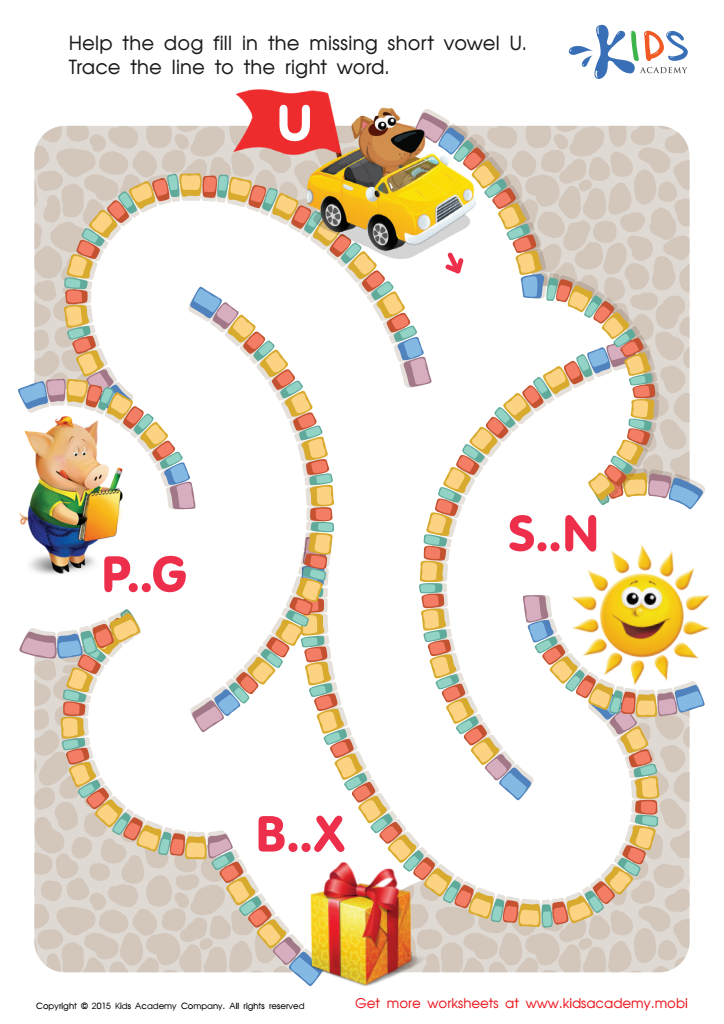
Short Vowel Sound U Worksheet
 Assign to My Students
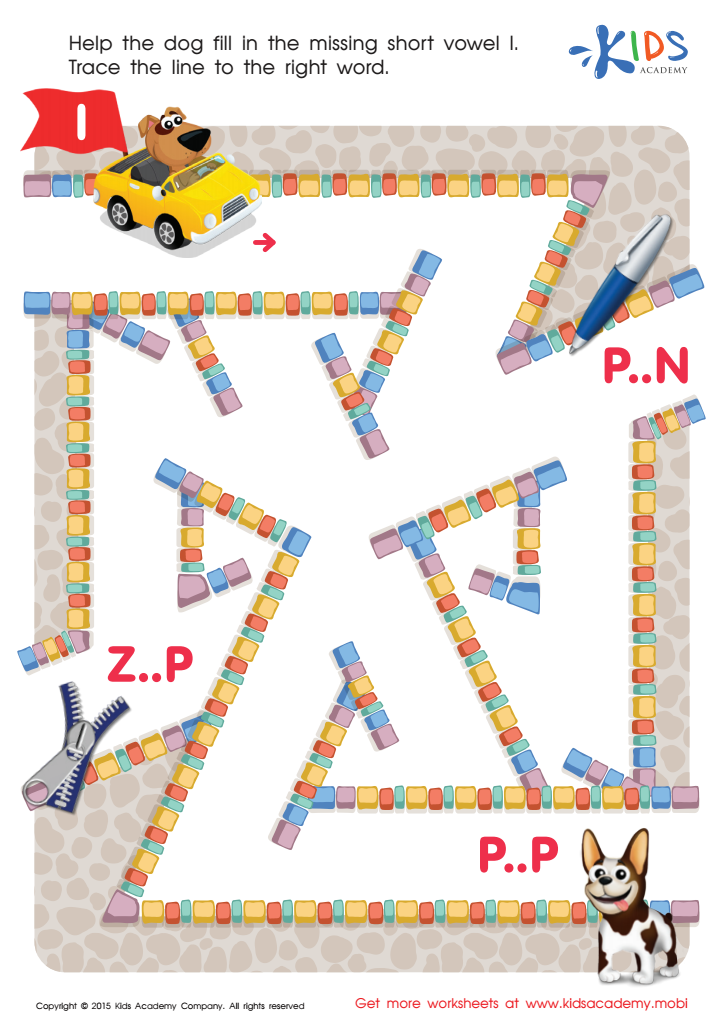
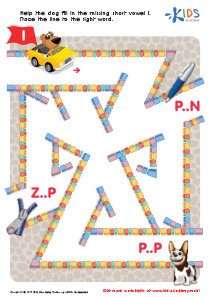
Short Vowel Sound I Worksheet
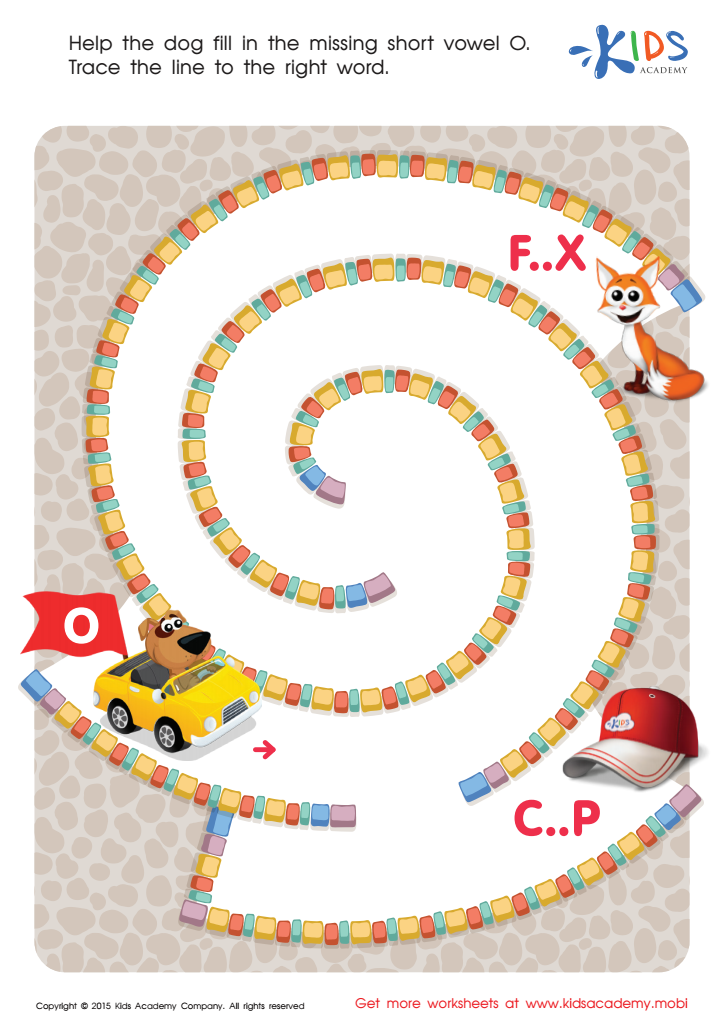
Short Vowel Sound O Worksheet



Vocabulary expansion, particularly through the focus on short vowels for ages 4-5, is crucial for several reasons. First, this age group is at a pivotal stage in language development where foundational skills in reading and writing are established. Short vowels are among the first sounds children learn, serving as a building block for their literacy skills. By concentrating on these sounds, parents and teachers can effectively support children’s ability to decode words, enabling them to read independently and with confidence.
Moreover, vocabulary expansion enhances communication skills. By introducing new words associated with short vowel sounds, children can express themselves more clearly and understand spoken language better. This not only fosters effective social interactions but also boosts self-esteem and encourages active participation in discussions.
Additionally, a strong vocabulary is linked to overall academic success. Early exposure to rich language experiences can lead to better performance in future learning, setting the stage for lifelong educational engagement. For parents and teachers, investing time in vocabulary activities that focus on short vowels creates meaningful learning moments, facilitating a love for words and reading that will benefit children throughout their lives. Thus, fostering vocabulary at this stage is not just important—it’s essential.