Alphabet Recognition Extra Challenge English for Beginners Worksheets for Ages 4-5
3 filtered results
-
From - To
Enhance your child's English learning journey with our "Alphabet Recognition Extra Challenge" worksheets, specially designed for beginners aged 4-5. These engaging activities focus on reinforcing letter recognition through fun exercises and challenges. Ideal for young learners, these worksheets incorporate colorful illustrations and interactive tasks that stimulate curiosity and provide ample practice. By using these resources, children will develop essential literacy skills, boosting their confidence in recognizing letters and sounds. Perfect for both classroom settings and home learning, these worksheets will make mastering the alphabet an enjoyable adventure for your little ones. Start their journey towards reading success today!
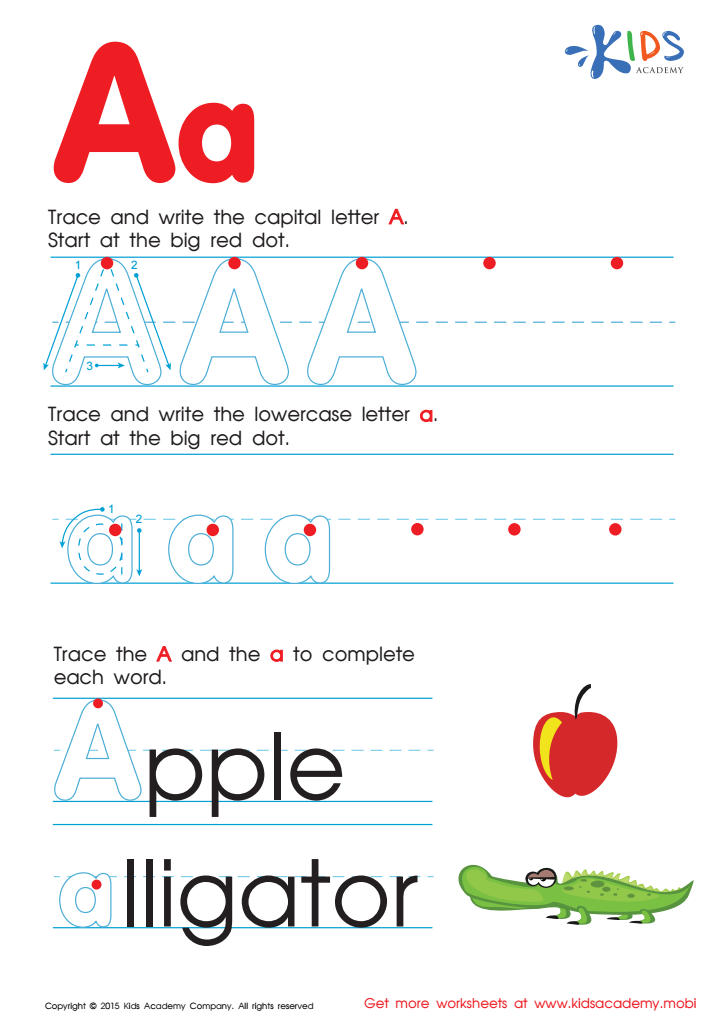
Letter A Tracing Page
 Assign to My Students
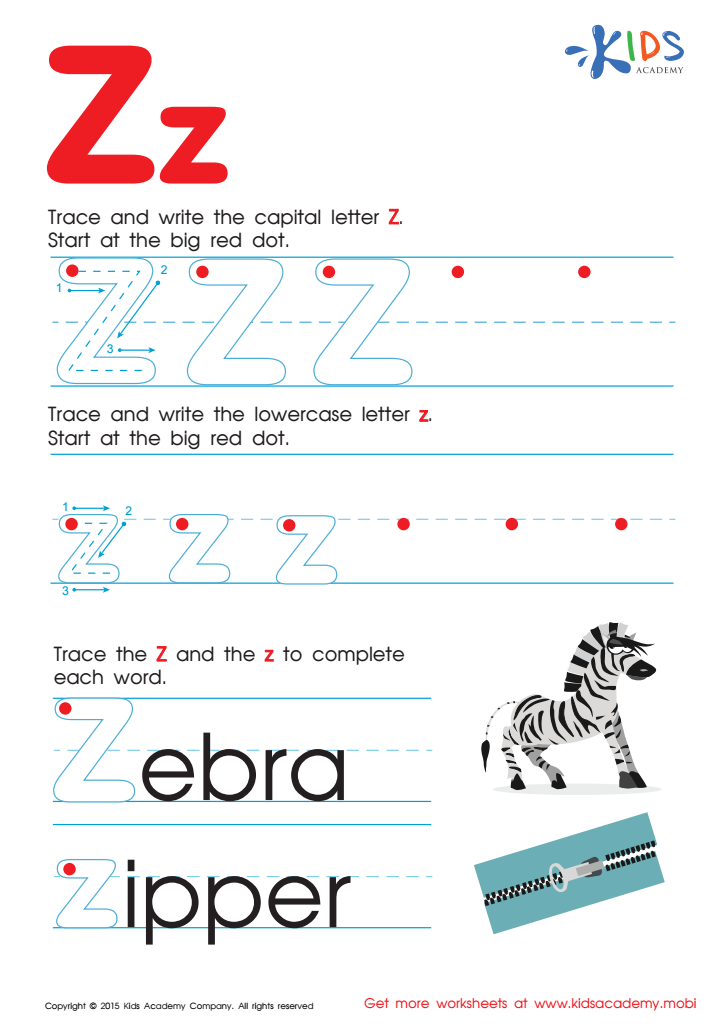
Letter Z Tracing Page
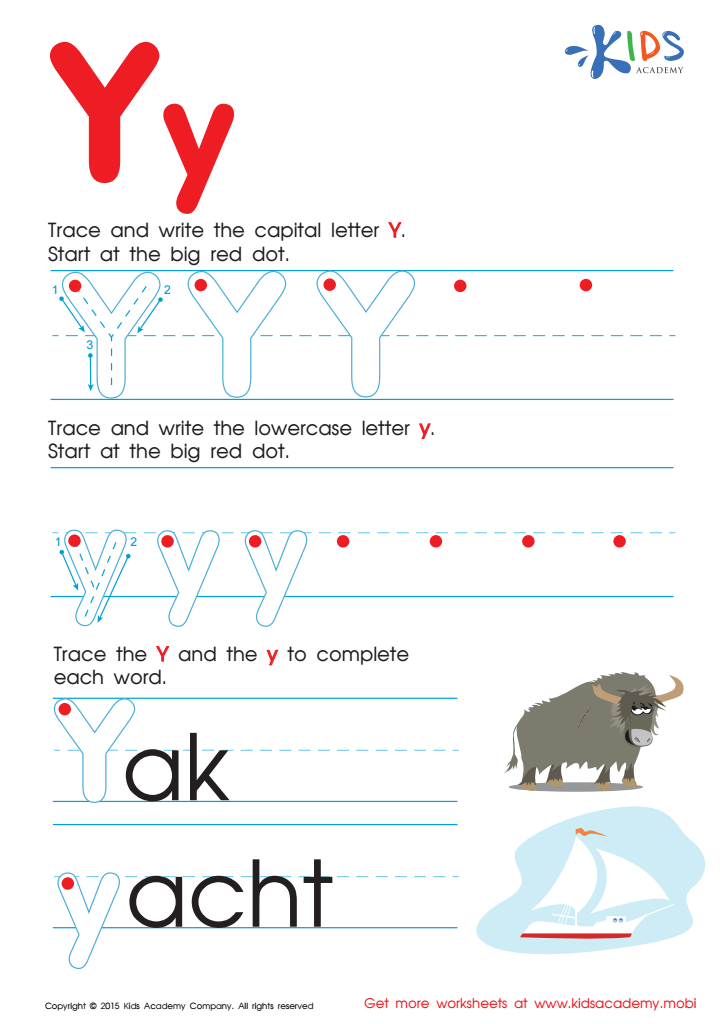
Letter Y Tracing Page





Alphabet recognition is a foundational skill for early literacy, essential for young learners aged 4-5. Parents and teachers should prioritize programs like "Alphabet Recognition Extra Challenge: English for Beginners" for several reasons. First, mastering the alphabet is crucial for language development, enabling children to read and write effectively in future academic pursuits. An early grasp of letter recognition supports phonemic awareness, which is integral to the reading process.
Additionally, this program often employs engaging, interactive activities tailored to young learners, fostering an enjoyable learning atmosphere. Such environments enhance motivation and retention, maximizing learning outcomes. For children who may struggle with letters, the extra challenge provides necessary reinforcement and individual attention, promoting confidence and reducing frustration.
Moreover, early literacy skills have been linked to long-term academic success. By emphasizing alphabet recognition, parents and teachers equip children with the tools they'll need for future reading comprehension and communication. Finally, fostering these skills lays the groundwork for self-expression and critical thinking as children grow. Investing time and resources in alphabet recognition early on nurtures a love for learning and sets the stage for a lifetime of academic achievement.








