Phonics practice Extra Challenge Worksheets for Ages 4-5
4 filtered results
-
From - To
Boost your child's reading skills with our Phonics Practice Extra Challenge Worksheets for ages 4-5. These engaging, expertly crafted worksheets help young learners master essential phonics concepts through fun and interactive activities. Perfect for advanced early readers, each sheet enhances letter recognition, sound blending, and word formation. Watch your child gain confidence and become a fluent reader with exercises designed to challenge and delight. Ideal for reinforcing classroom lessons or providing additional practice at home. Give your child the head start they deserve with these comprehensive and stimulating phonics worksheets! Visit our website to download and get started today.
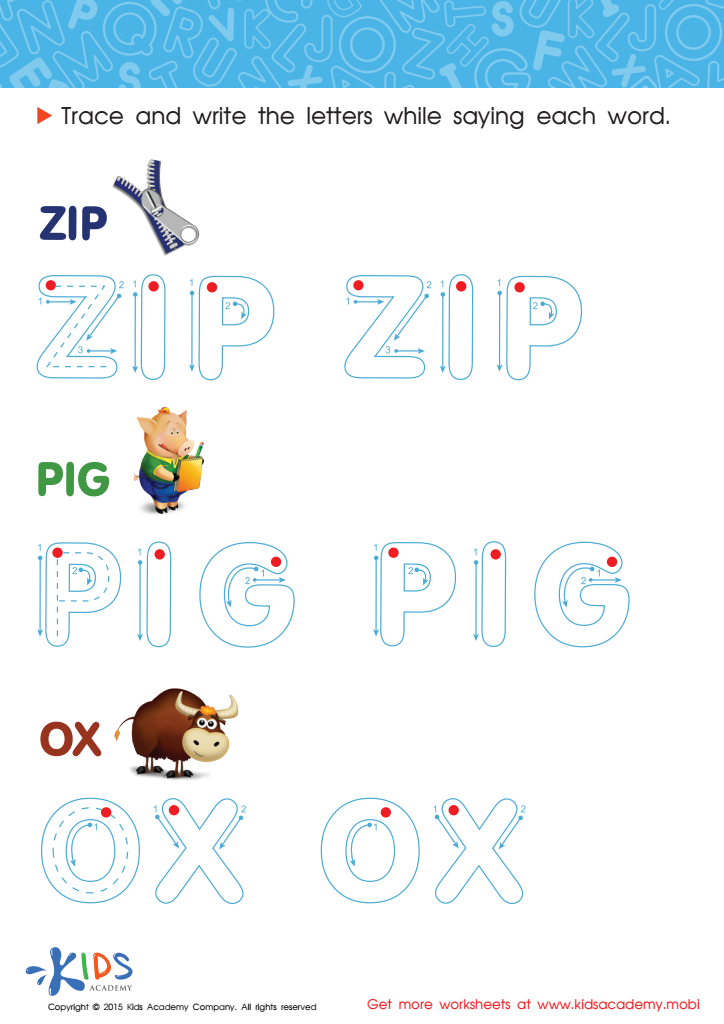
A Zip, a Pig and an Ox Spelling Worksheet
 Assign to My Students
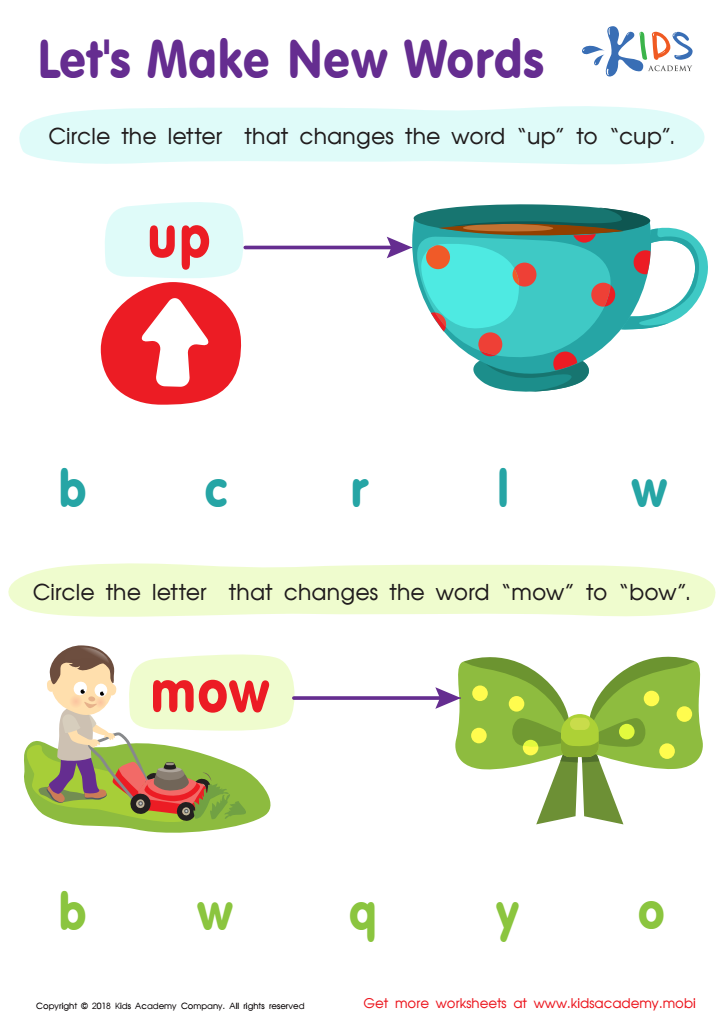
Let's Make New Words Worksheet
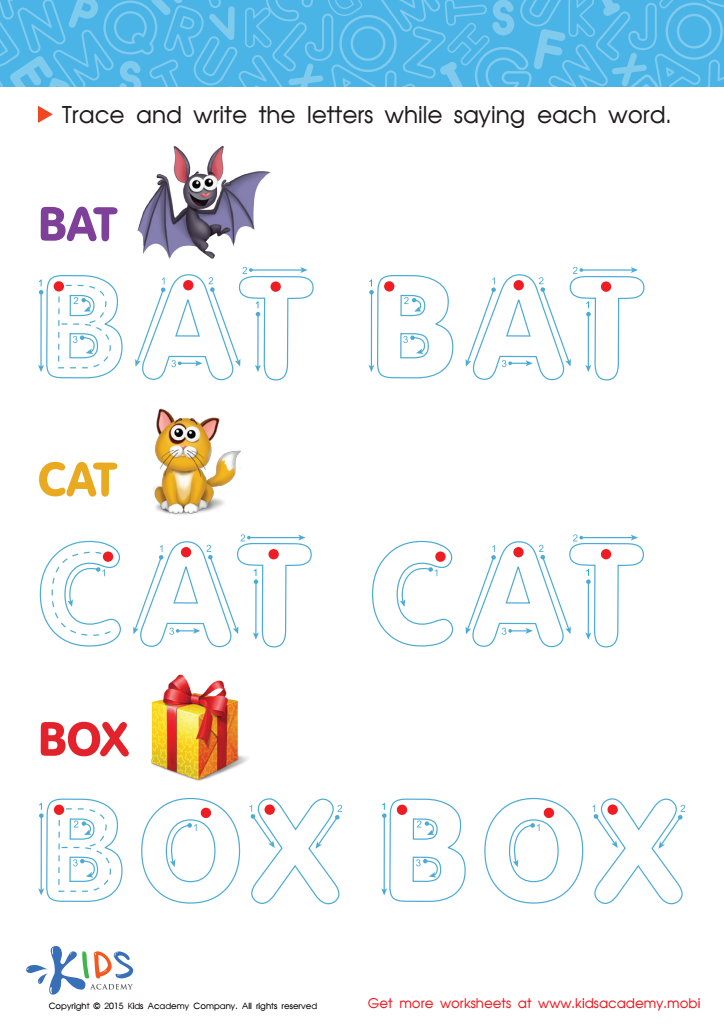
A Bat, a Cat and a Box Spelling Worksheet
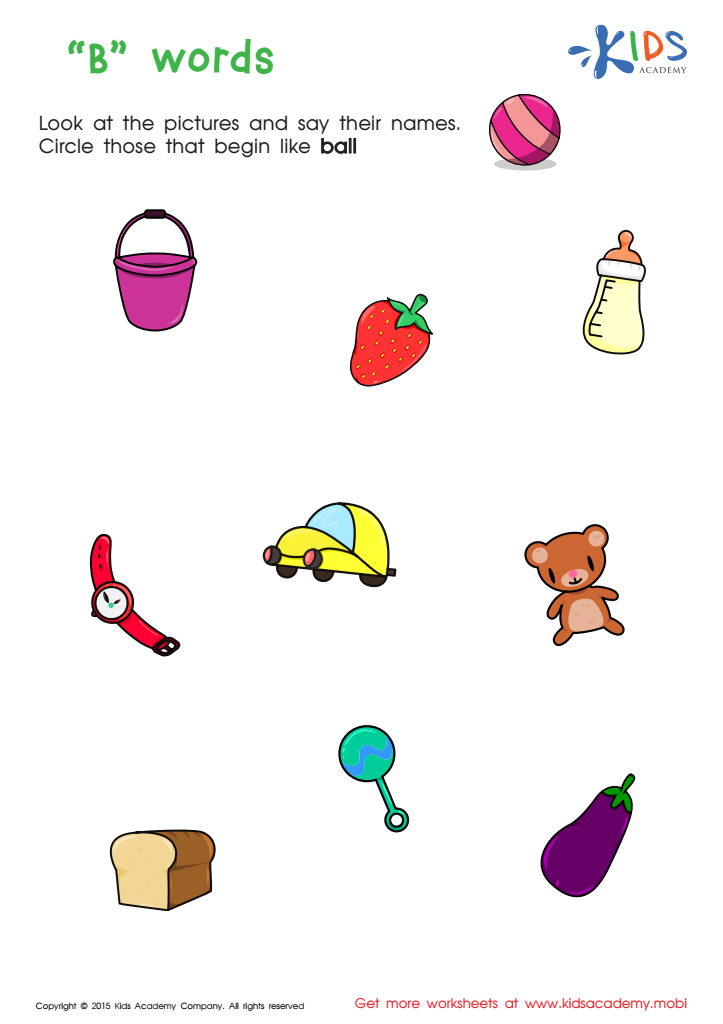
First Words Worksheet







Phonics practice is crucial for young learners, particularly ages 4-5, as it builds the foundation for reading and writing skills. At this critical developmental stage, children are highly receptive to language acquisition. Engaging in phonics activities helps them understand the relationship between letters and sounds, a fundamental step toward decoding words. Parents and teachers should care about incorporating extra phonics challenges because it boosts early literacy, essential for academic success.
Phonics practice enhances phonemic awareness, enabling children to recognize and manipulate sounds in words. This auditory skill is vital for reading fluency and spelling accuracy. An extra challenge in phonics helps motivate and maintain children’s interest in learning, preventing stagnation and promoting cognitive development. It fosters a sense of achievement as they master increasingly complex tasks.
Additionally, early exposure to phonics supports language development and comprehension skills. It leads to greater confidence in communications, enriching vocabulary, and overall expressive and receptive language skills. Furthermore, engaging phonics exercises can strengthen fine motor skills through early writing practices, contributing to better handwriting.
In summary, parents and teachers should prioritize phonics practice because it lays a strong literacy foundation, promotes cognitive development, boosts confidence, and equips young learners with essential language and communication skills.








