
Sorting skills Extra Challenge Worksheets for Ages 4-5
3 filtered results
Difficulty Level
Grade
Age
-
From - To
Subject
Activity
Standards
Enhance your child’s early cognitive development with our “Sorting Skills Extra Challenge Worksheets” designed for ages 4-5. These engaging worksheets are perfect for preschoolers looking to master sorting concepts while having fun! Featuring exciting themes and vibrant illustrations, these activities encourage children to categorize objects by color, shape, size, and type. Each worksheet promotes critical thinking and fine motor skills, making learning enjoyable and interactive. With various levels of difficulty, these challenges are perfect for young learners who are ready to progress. Download now to give your child an exciting and educational sorting adventure they won’t forget!
Favorites
With answer key
Interactive
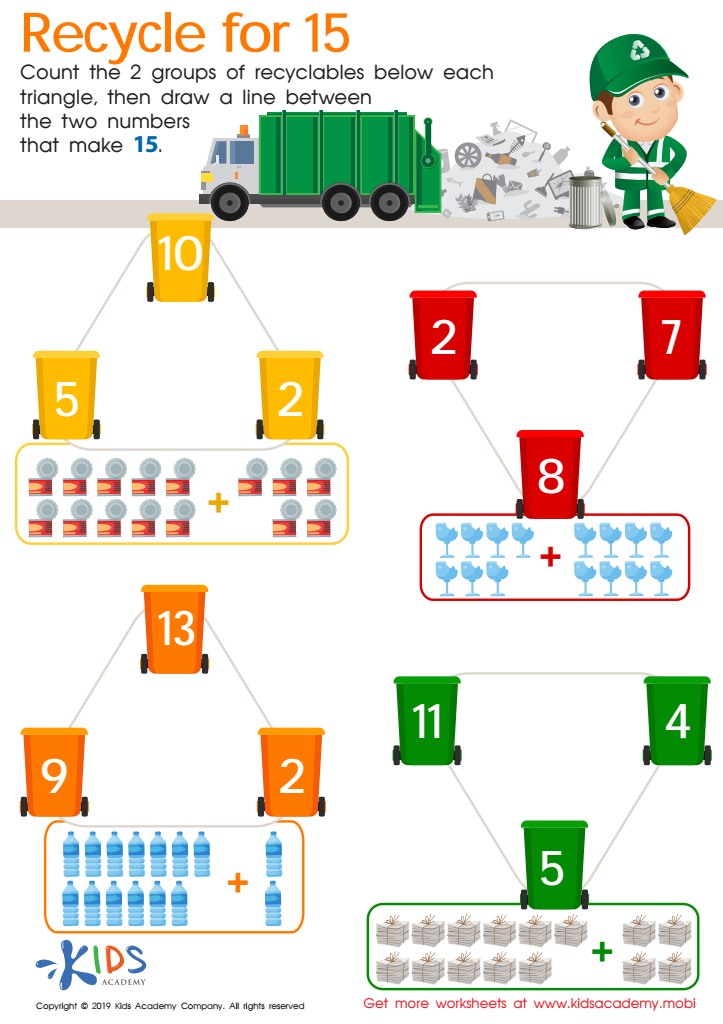
Recycle for 15 Worksheet
Recycle to help the planet! Have students count the recyclables and draw a line between the two numbers that make 15. This will help them understand the importance of recycling.
 Assign to My Students
Recycle for 15 Worksheet
Worksheet
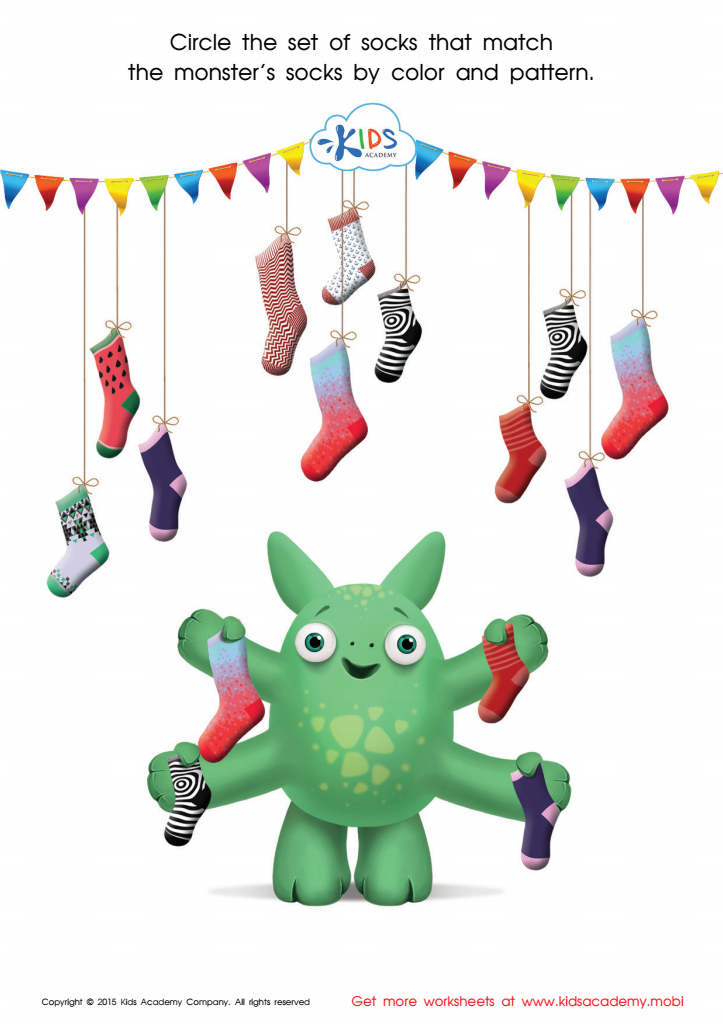
Sort the Monster's Socks Worksheet
Let your little one challenge herself and practice with matching Monster socks. She must be very attentive to match the same socks and draw a line connecting them!
Sort the Monster's Socks Worksheet
Worksheet
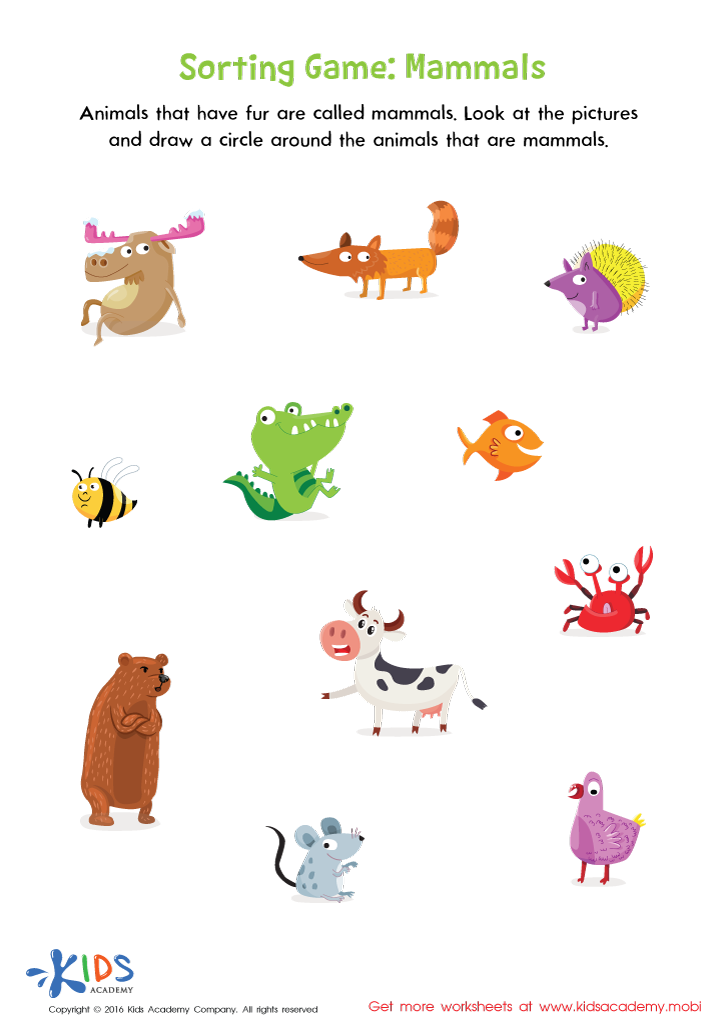
Mammals Sorting Worksheet
They'll practice sorting animals and learn their features with this fun worksheet.
Kids can test their scientific knowledge with this fun worksheet! They'll view pictures of animals, identify mammals based on their fur, and practice sorting them. This colorful worksheet is a great way for kids to learn about the differences between mammals and other animals.
Mammals Sorting Worksheet
Worksheet
Join Kids Academy for Free
Who is primarily going to use this learning content?







Sorting skills are a fundamental part of early childhood education, and they hold significant importance for children aged 4-5. First and foremost, sorting helps develop critical thinking and cognitive skills. By categorizing objects based on characteristics such as color, shape, size, or type, children learn to recognize similarities and differences, which is essential for problem-solving and logical reasoning.
Additionally, sorting skills promote language development. As children explain their sorting criteria, they practice articulating ideas and expanding their vocabulary. This communication reinforces their ability to express thoughts clearly and engage in conversations.
Furthermore, sorting activities encourage fine motor development as children manipulate objects using their hands. This not only enhances dexterity but also prepares them for more complex tasks like writing and self-care routines.
Sorting activities can also foster social skills. When children work together to organize materials, they learn to share, cooperate, and resolve differences, essential for building relationships.
Finally, incorporating sorting into play can make learning fun and engaging, helping to cultivate a love for learning. Overall, investing time in sorting skills for young children lays a strong foundation for their academic success and personal development. Parents and teachers play a crucial role in nurturing these skills through thoughtful activities and guidance.








