
Understanding measurements Extra Challenge Worksheets for Ages 4-5
4 filtered results
Difficulty Level
Grade
Age
-
From - To
Subject
Activity
Standards
Explore our "Understanding Measurements Extra Challenge Worksheets for Ages 4-5," designed to engage young minds and nurture their foundational math skills. These worksheets offer exciting activities that help children grasp essential measurement concepts, such as length, weight, and volume, through fun and interactive exercises. By encouraging hands-on exploration, these worksheets enhance critical thinking and problem-solving abilities, making learning enjoyable. Ideal for home or classroom use, these supplemental challenges provide the perfect blend of education and entertainment. Boost your child's confidence in math with our expertly crafted, age-appropriate worksheets tailored to spark curiosity and make measurements easy to understand!
Favorites
With answer key
Interactive
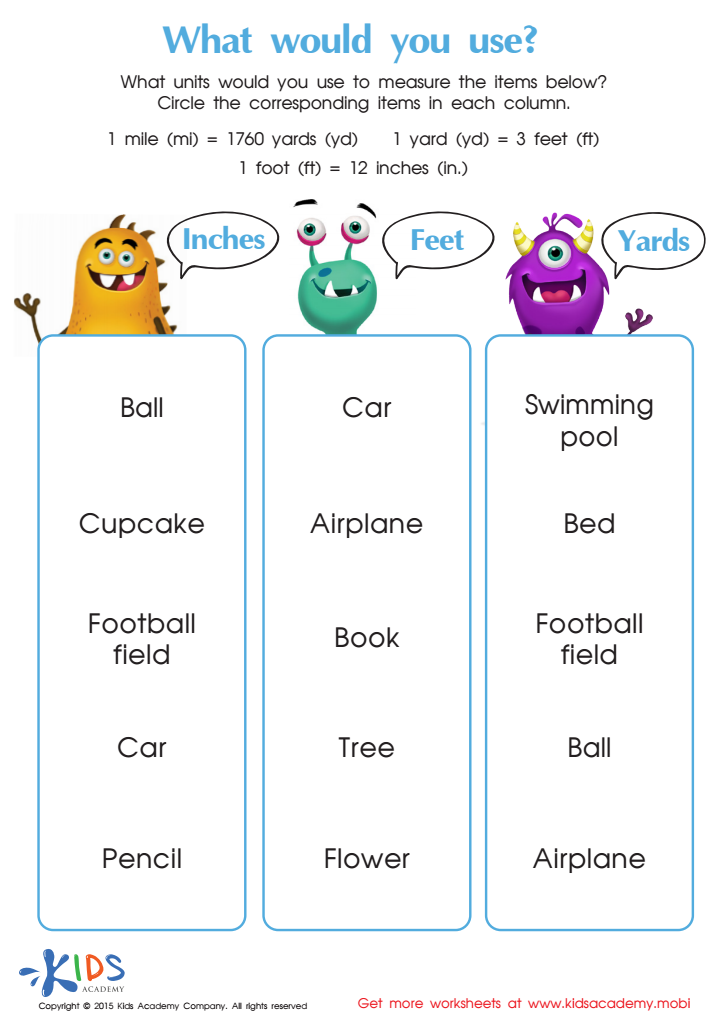
Learning about measuring objects in inches, feet and yards Worksheet
Download, cut and let your preschoolers learn and have fun estimating objects like pencils, airplanes and swimming pools in inches, feet and yards!
 Assign to My Students
Learning about measuring objects in inches, feet and yards Worksheet
Worksheet
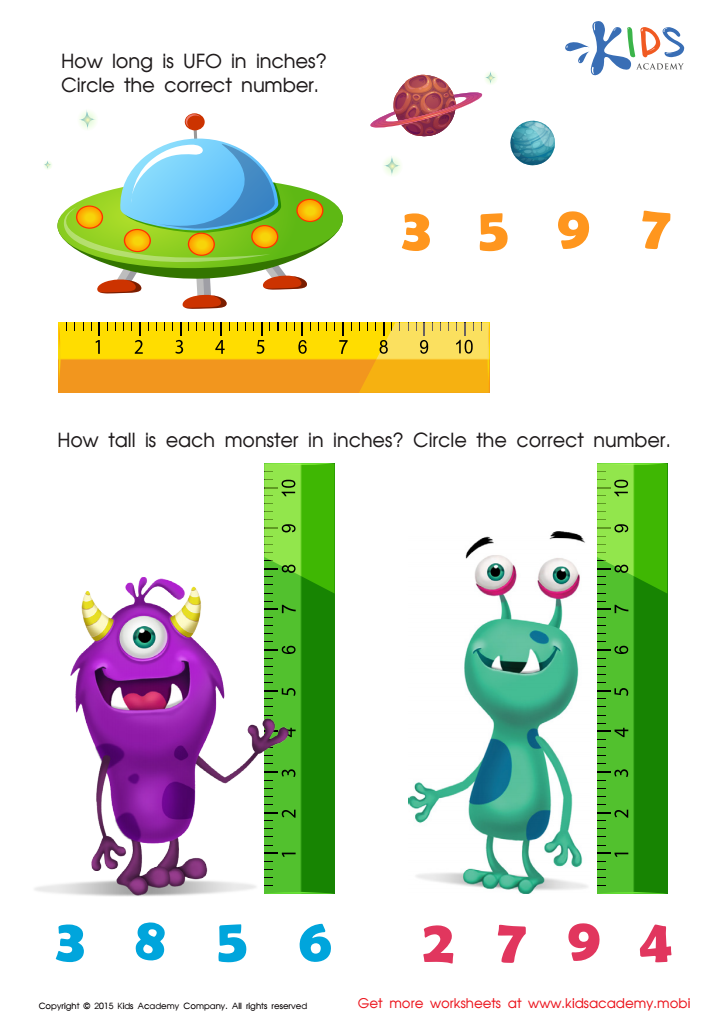
Measuring in Inches Worksheet
Look at the picture, can you measure the UFO & monsters? Write down how long each is. Which is tallest? Circle it. Get more free printable math worksheets for kindergarten at our website.
Measuring in Inches Worksheet
Worksheet
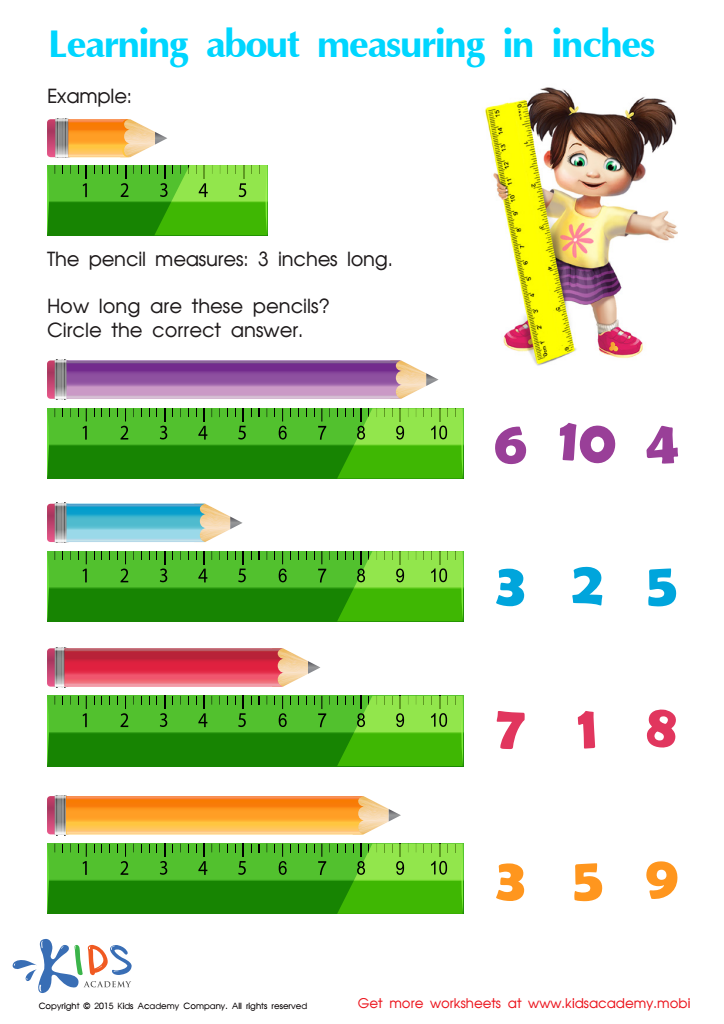
Learning About Measuring In Inches Printable
Print this free worksheet and measure pencils together with kids. See who finds the longest and the shortest! Enjoy learning math with your kids.
Learning About Measuring In Inches Printable
Worksheet
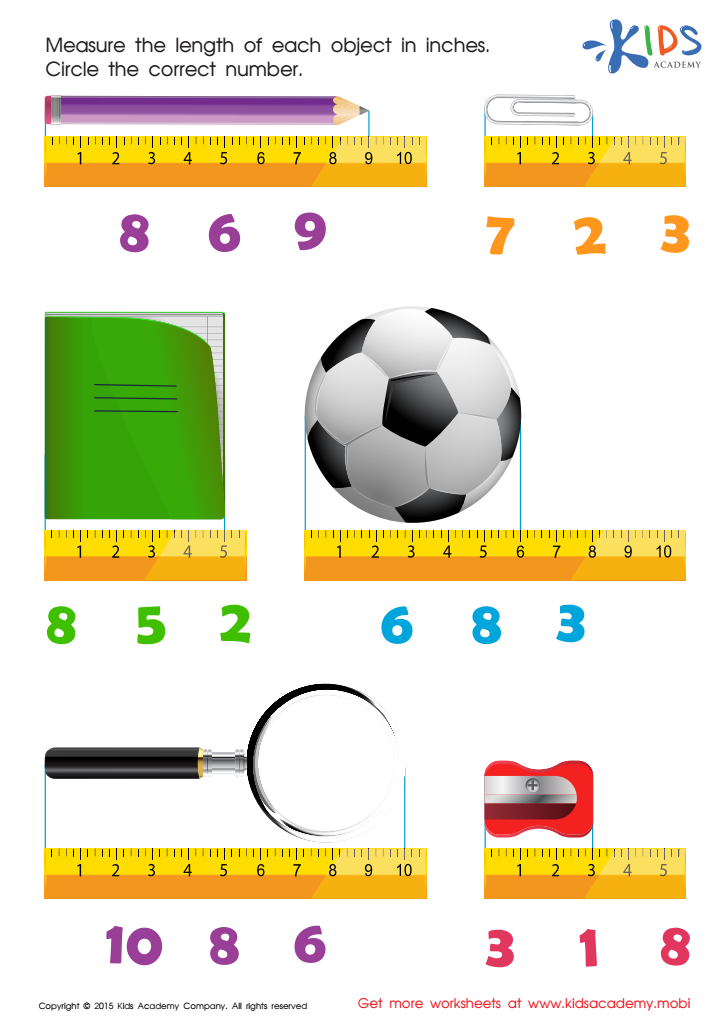
Learning measuring objects in inches Worksheet
Help your little learners gain confidence in using a ruler! Print out our free worksheet, cut out the inch ruler, and let them measure and record objects' width and length. Kids Academy has a variety of math worksheets to make learning math fun! Check out our website for more free printables!
Learning measuring objects in inches Worksheet
Worksheet
Join Kids Academy for Free
Who is primarily going to use this learning content?







Understanding measurements is crucial for young learners aged 4-5 for several compelling reasons. Firstly, grasping basic concepts of measurement helps children develop important math skills. When they comprehend concepts like length, weight, and volume, they build a solid foundation for future mathematical learning. Measurements encourage critical thinking, as children evaluate and compare different dimensions and properties in everyday contexts.
Moreover, measurements are integral to fostering science literacy. When kids engage with activities that involve measuring—whether estimating how tall they are, measuring ingredients for a recipe, or comparing the sizes of toys—they deepen their understanding of the physical world. This hands-on approach cultivates curiosity and promotes inquiry-based learning.
Additionally, the act of measuring reinforces communication skills as children learn to express their findings and describe objects using specific vocabulary. Engaging in extra challenges further nurtures persistence and problem-solving abilities, encouraging a growth mindset.
Lastly, teaching measurement concepts through play and exploration nurtures social skills, as children often collaborate on measurement tasks. By emphasizing the importance of understanding measurements, parents and teachers can enhance students' cognitive, social, and emotional development, setting the stage for academic successes in later years.








