Money recognition Extra Challenge Money Worksheets for Ages 4-5
4 filtered results
-
From - To
Unlock your preschooler's potential with our "Money Recognition Extra Challenge" worksheets designed for ages 4-5. These engaging and educational printables help young learners identify and understand various coins and bills. With fun, age-appropriate exercises, your child will develop essential money recognition skills that lay the foundation for future math success. Perfect for adding an extra challenge to their learning routine, our worksheets ensure an enjoyable and fruitful experience. Download today to give your child a head start in financial literacy, enhancing both their cognitive abilities and confidence. Visit Kids Academy for more interactive learning resources.
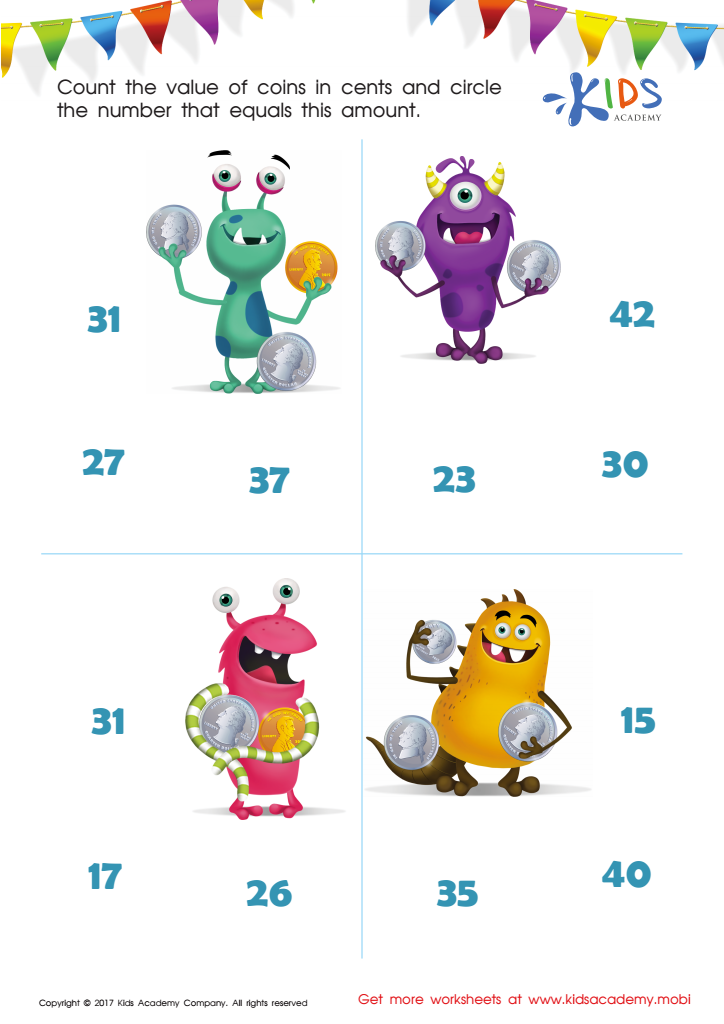
How Many Coins Money Worksheet
 Assign to My Students
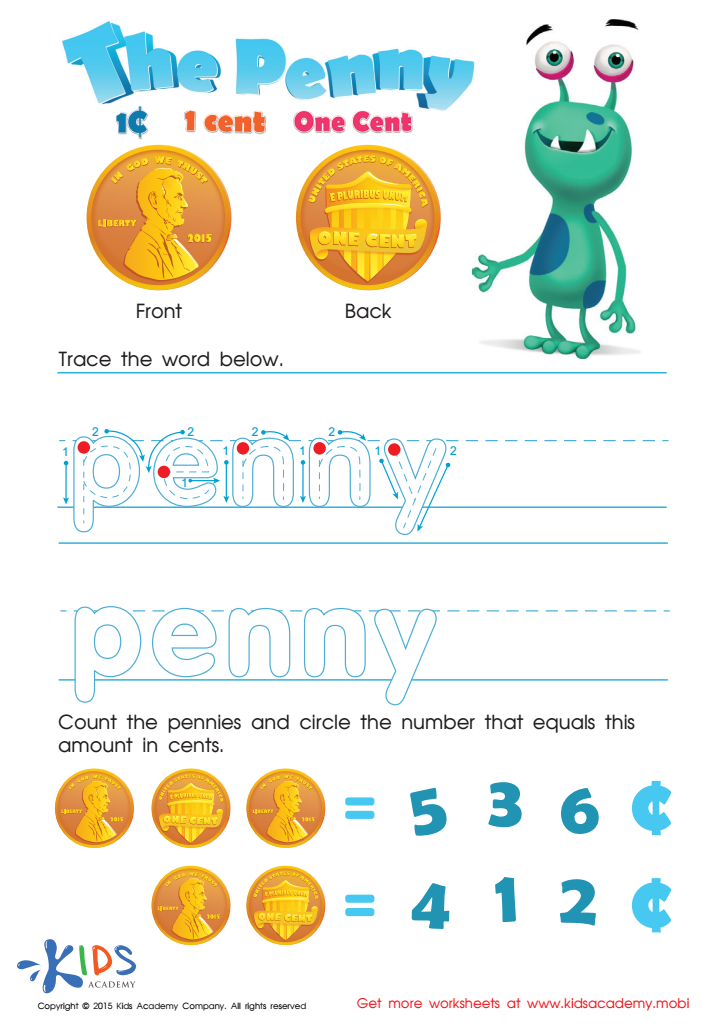
One Cent or the Penny Money Worksheet
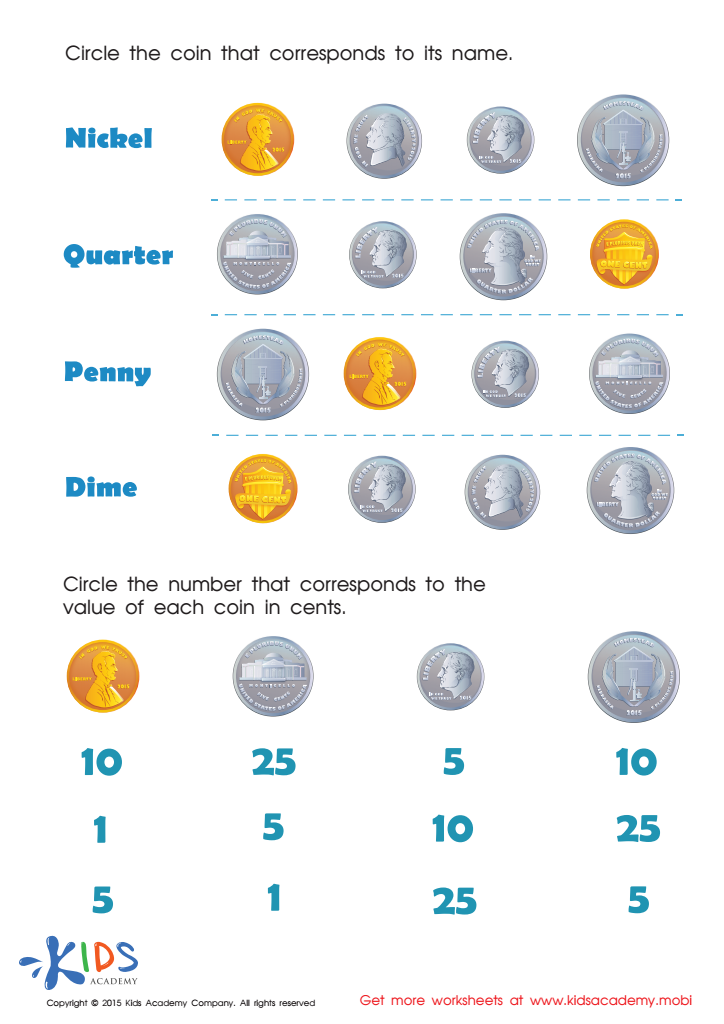
Coin Names and Values Money Worksheet
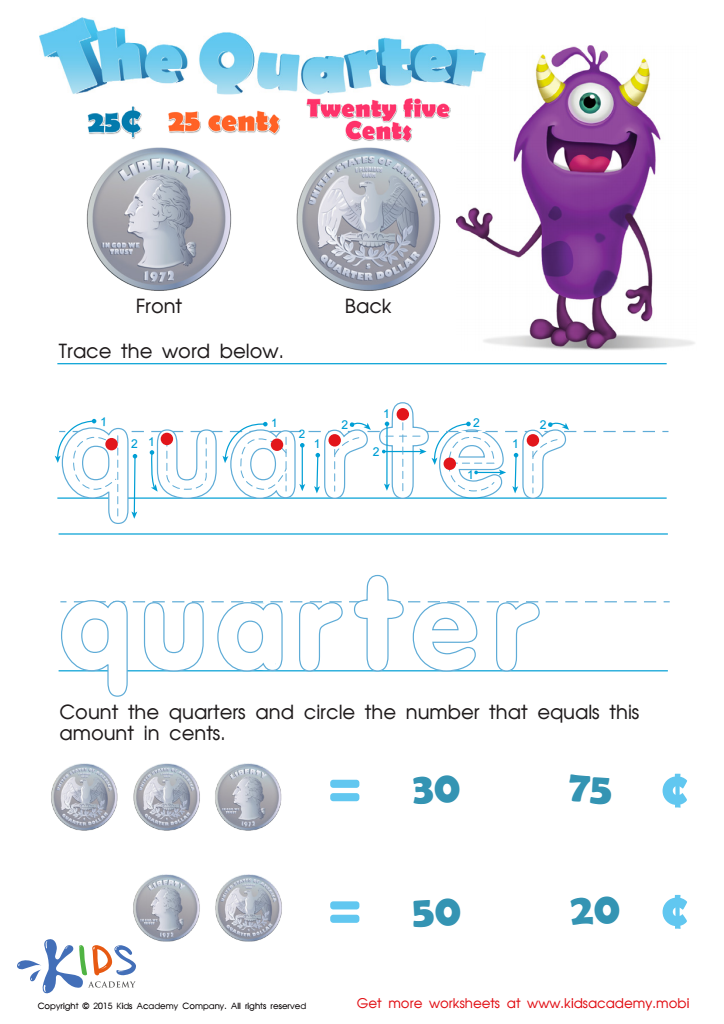
Twenty Five Cents or the Quarter Money Worksheet






.jpg)

Money recognition is a fundamental skill for young children, and engaging them with early learning tools like the Extra Challenge Money for Ages 4-5 can be immensely beneficial. First, understanding money is a vital life skill, promoting financial literacy from a young age. By familiarizing children with different denominations and the concept of money, they begin to grasp basic math skills like counting, addition, and subtraction in an engaging, practical context.
For parents and teachers, integrating money recognition games provides children with hands-on, meaningful learning experiences. These games make abstract concepts more concrete, visually reinforcing numbers and values. Early exposure to such concepts builds a strong foundation for future academic success, particularly in math.
Furthermore, involving children in money-related activities supports cognitive development, enhancing critical thinking, problem-solving, and decision-making skills. These activities are also excellent for improving fine motor skills, as kids handle play money, practice sorting, and engage in tasks requiring hand-eye coordination.
Parents and teachers should be proactive in providing these enriching opportunities as part of a balanced educational environment. The playful nature of money recognition games fosters a love of learning, encouraging curiosity and engagement that can translate into long-lasting academic and personal benefits.