Listening skills Extra Challenge Alphabet Worksheets for Ages 4-6
3 filtered results
Difficulty Level
Grade
Age
-
From - To
Subject
Activity
Standards
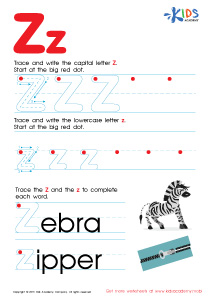
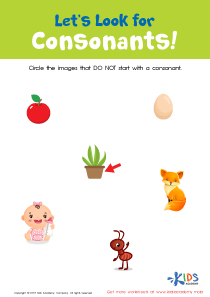
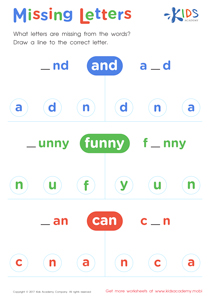
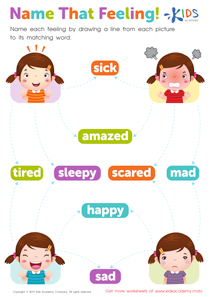
Enhance your child's auditory learning and letter recognition with our Listening Skills Extra Challenge Alphabet Worksheets, designed specifically for ages 4-6. These engaging worksheets are crafted to boost listening abilities through interactive activities, helping young learners distinguish alphabet sounds while practicing concentration and attention to detail. Each worksheet features captivating exercises that pair auditory directions with fun tasks, ensuring an enjoyable and educational experience. By fostering essential listening skills, these worksheets support early literacy development and prepare children for future academic success. Make learning the alphabet exciting and effective with our expertly designed resources!
Favorites
With answer key
Interactive
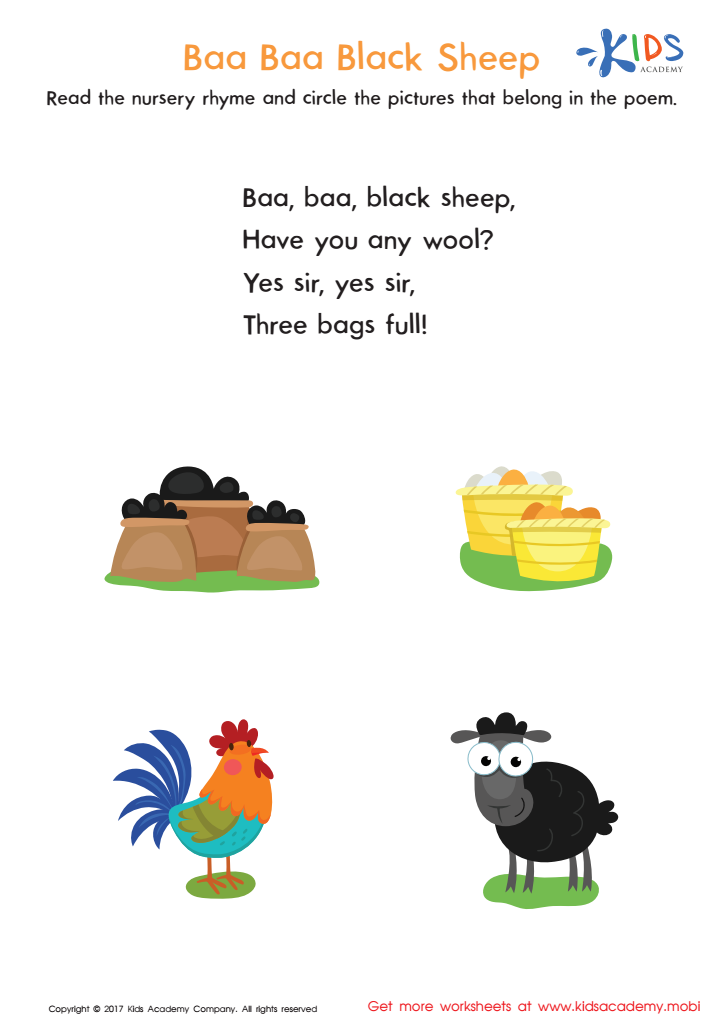
Baa Baa Black Sheep Printable
Jumpstart your child's reading skills with this printable Baa Baa Black Sheep worksheet! Recite the lines with them, then have them select the pictures associated with the poem to test comprehension. Fun and educational!
 Assign to My Students
Baa Baa Black Sheep Printable
Worksheet
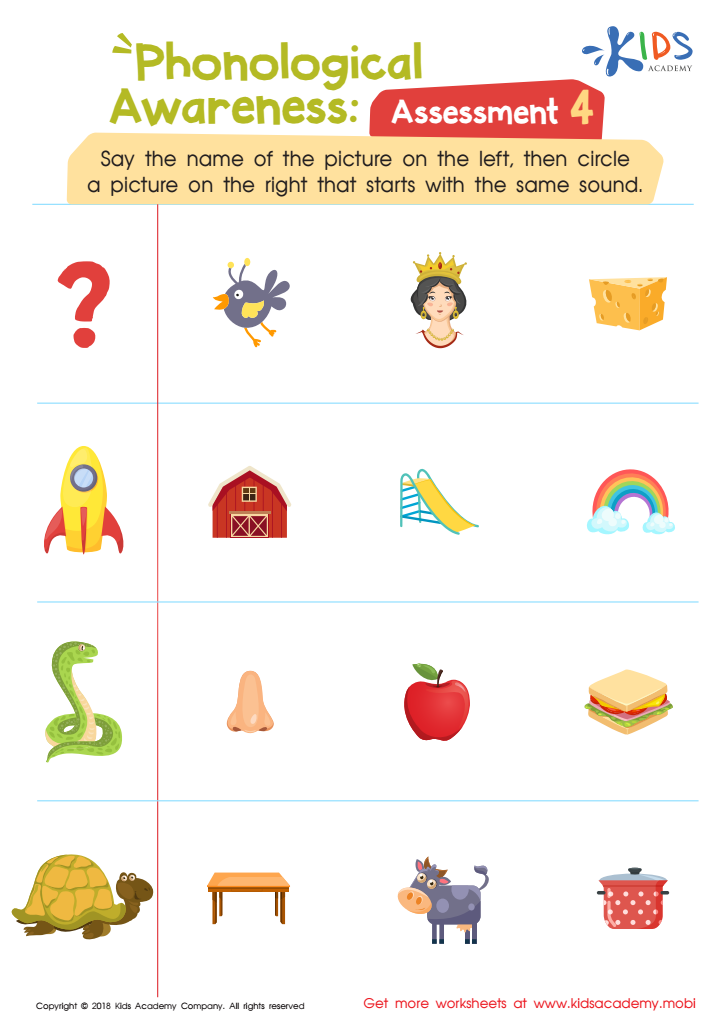
Phonological Awareness: Assessment 4 Worksheet
It can be tricky for young readers to differentiate between sounds in words. Make it fun with this downloadable worksheet! Ask your child to name each picture on the left and match the starting sound with an image on the right. This helps assess their phonics skills and make learning enjoyable.
Phonological Awareness: Assessment 4 Worksheet
Worksheet
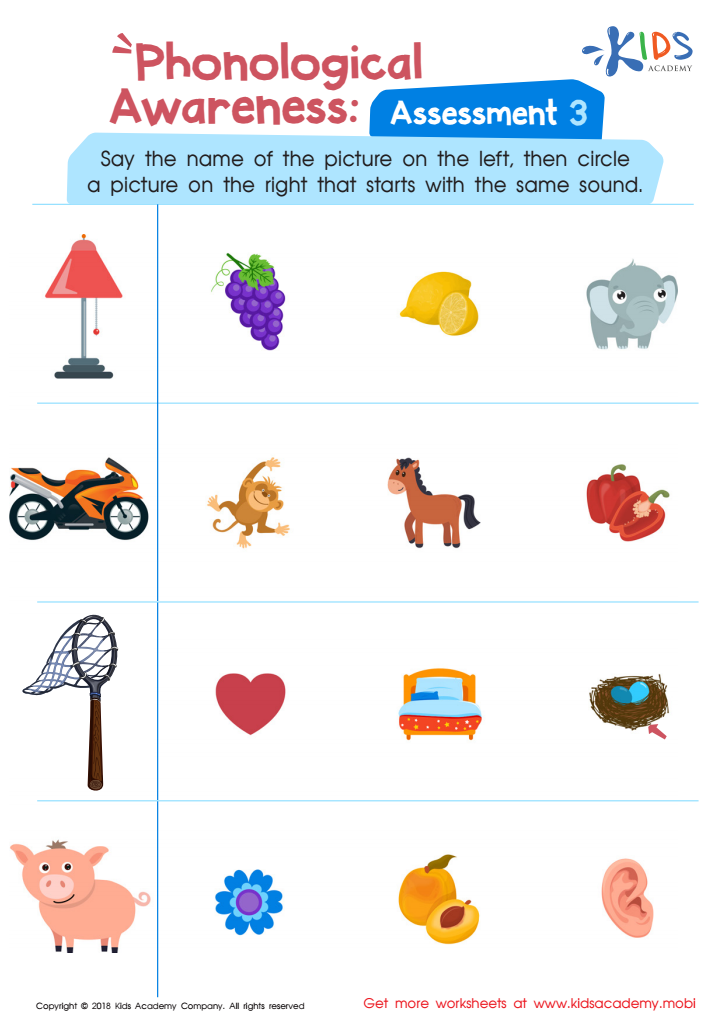
Phonological Awareness: Assessment 3 Worksheet
Test kids' reading readiness with a phonological awareness worksheet! With this PDF exercise, encourage children to name each picture aloud and match left to right. Help them learn to recognize word sounds at the start, middle and end of words. They'll be sure to remember that lamp doesn't sound like elephant!
Phonological Awareness: Assessment 3 Worksheet
Worksheet
Join Kids Academy for Free
Who is primarily going to use this learning content?








Parents and teachers should care about the Listening Skills Extra Challenge Alphabet for ages 4-6 because these foundational skills are crucial for early childhood development. At this young age, children are rapidly building their language and communication abilities, which are the bedrock for future academic success and effective social interaction.
Listening challenges focused on the alphabet help young learners to connect sounds with letters, enhancing their phonemic awareness. This is a critical step in learning to read, as it enables children to understand that words are made up of individual sounds that correspond to letters and letter combinations. Phonemic awareness, in turn, contributes to reading fluency and comprehension.
Moreover, listening skills support overall cognitive development, allowing children to follow instructions, engage in conversations, and develop concentration and memory. When children participate in structured listening activities that involve the alphabet, they also practice patience and the ability to focus on auditory inputs—skills that are beneficial in both academic settings and daily life.
An emphasis on listening not only supports literacy but also fosters a positive learning environment. By developing strong listening skills early on, children are better equipped to understand and internalize new information, follow classroom routines, and engage meaningfully with their peers and educators. In essence, nurturing listening skills through alphabet challenges sets a strong foundation for lifelong learning.