Alphabet Recognition Extra Challenge Tracing Letters Worksheets for Ages 4-6
3 filtered results
-
From - To
Boost your child's alphabet recognition skills with our extra challenge tracing worksheets, designed specifically for ages 4-6! These engaging worksheets provide a fun and interactive way for young learners to practice tracing letters, enhancing their fine motor skills and letter recognition. With a variety of activities that include both uppercase and lowercase letters, children will gain confidence as they trace, color, and identify letters in a playful context. Ideal for homeschooling, supplementary learning, or classroom activities, these worksheets promote essential foundational skills. Help your little ones become proficient in letter recognition today with our exciting tracing challenges!
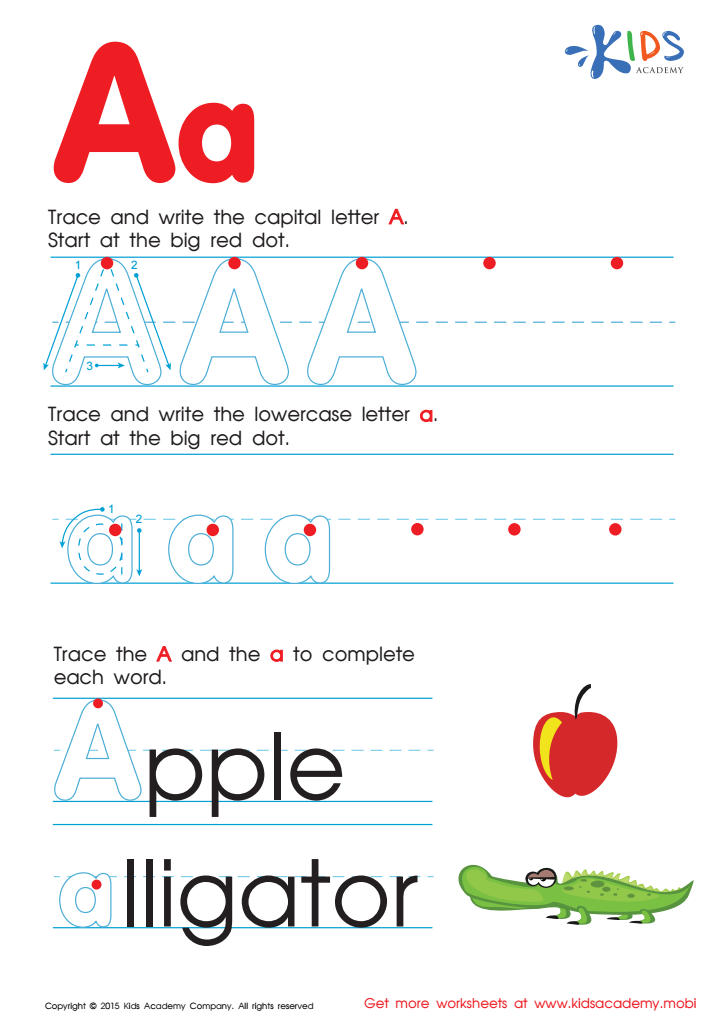
Letter A Tracing Page
 Assign to My Students
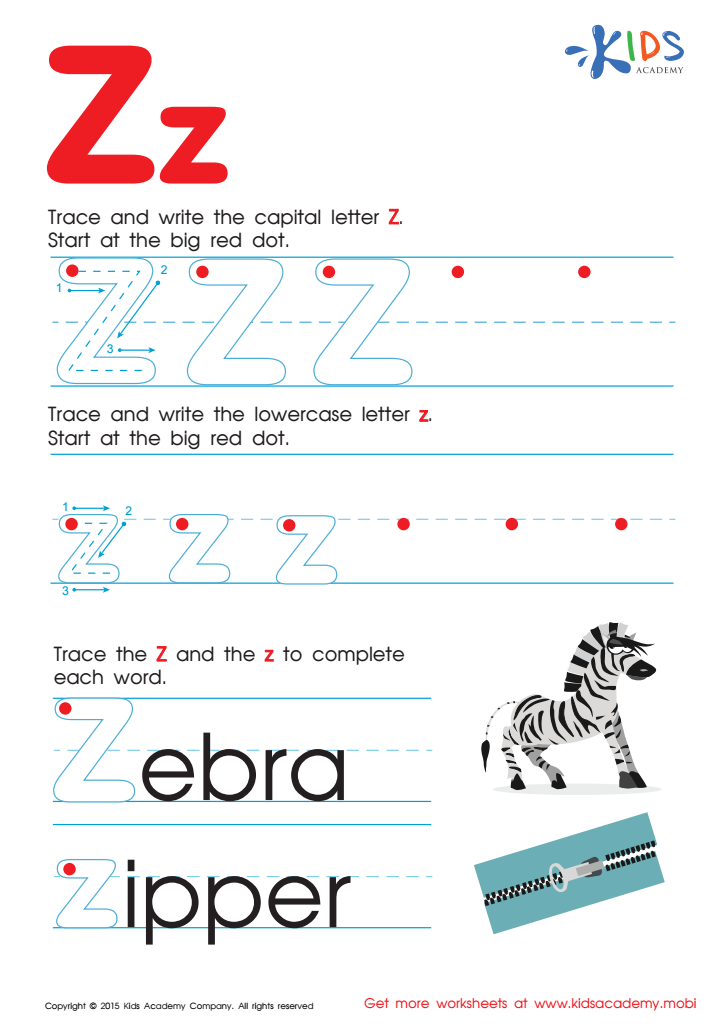
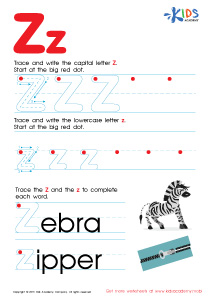
Letter Z Tracing Page
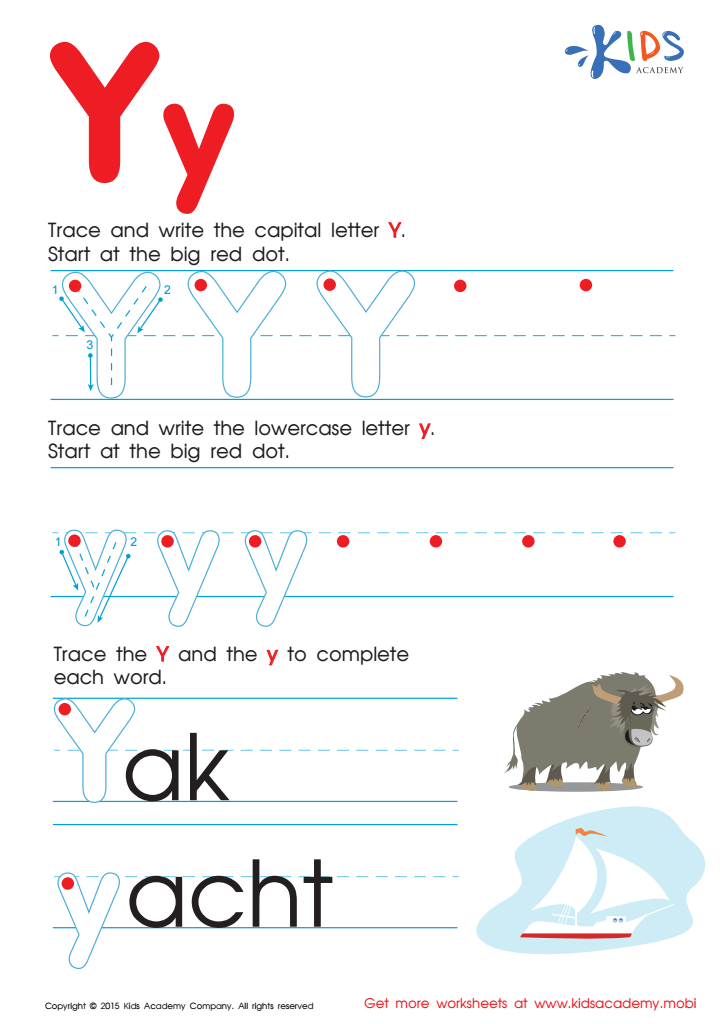
Letter Y Tracing Page







Alphabet Recognition Extra Challenge Tracing Letters for Ages 4-6 is an essential early literacy tool that promotes foundational skills critical for a child's academic success. Parents and teachers should prioritize this activity as it reinforces letter recognition, a cornerstone of reading and writing development. When children trace letters, they engage in fine motor skills enhancement, crucial for tasks such as holding a pencil and writing clearly.
Furthermore, tracing letters aids in memory retention. The tactile experience of tracing helps infants solidify their understanding of each letter’s shape and structure, which can make them more confident readers and writers as they advance. This activity also encourages letter-sound association, an essential step in phonics that prepares children for reading proficiency.
Additionally, these tracing exercises can be fun and interactive, allowing parents and teachers to bond with children while making learning enjoyable. Engaging in letter tracing together can inspire conversations about letter sounds, words, and even storytelling, enriching a child's language development.
In summary, Alphabet Recognition Extra Challenge Tracing Letters supports early literacy, motor skill development, and enjoyment in learning, making it a vital component in a child's educational journey. By prioritizing this activity, parents and teachers pave the way for future reading success.