Alphabet Recognition Extra Challenge English for Beginners Worksheets for Ages 4-6
3 filtered results
-
From - To
Introducing our "Alphabet Recognition Extra Challenge English for Beginners Worksheets," specially designed for young learners aged 4-6! These engaging worksheets provide an exciting opportunity for children to strengthen their alphabet recognition skills in a fun and interactive way. Tailored for beginners, these activities encourage independent learning through colorful illustrations and diverse exercises. From tracing letters to matching uppercase and lowercase, each worksheet is aimed at enhancing literacy comprehension. Perfect for home or classroom use, our extra challenges will keep kids motivated while building essential language skills. Dive into a world of letters and help your child become a confident reader!

Letter A Tracing Page
 Assign to My Students
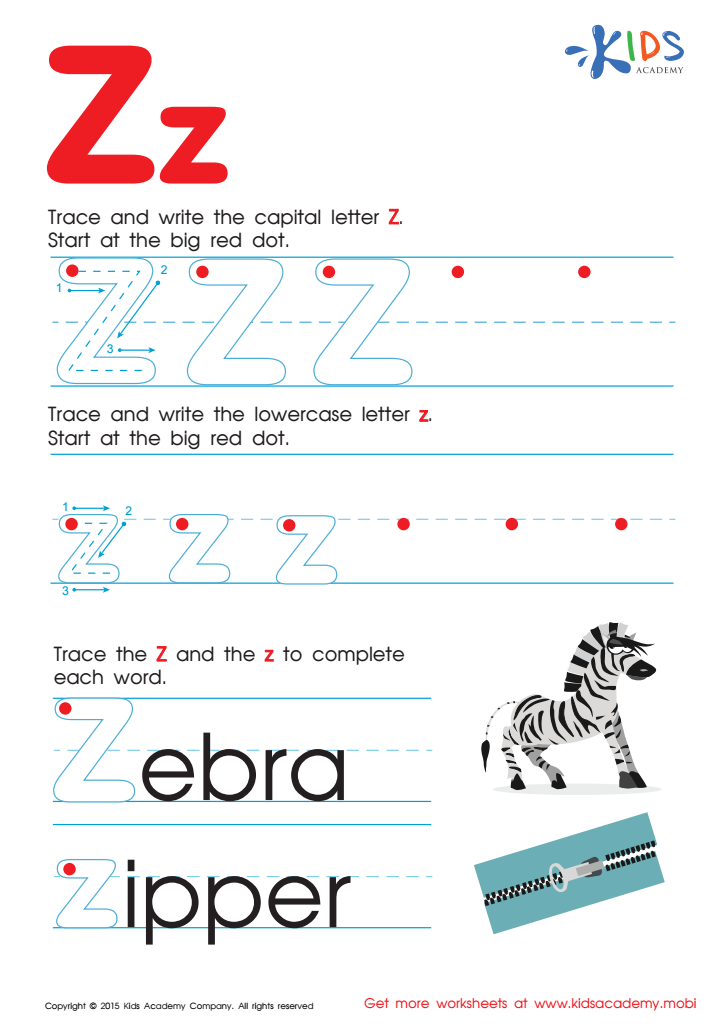
Letter Z Tracing Page
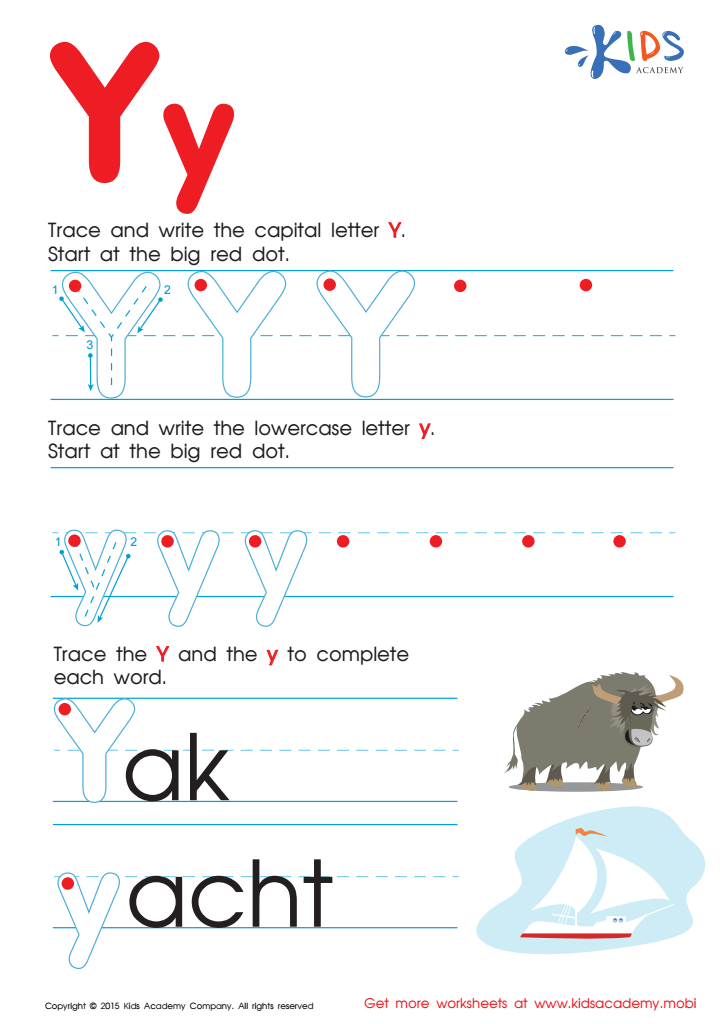
Letter Y Tracing Page





Alphabet Recognition Extra Challenge English for Beginners caters specifically to children aged 4-6, a critical developmental stage for literacy skills. During these formative years, children start to associate letters with sounds, paving the way for reading and writing competence. This program offers parents and teachers a structured, engaging approach to enhance alphabet familiarity beyond standard instructions, ensuring that young learners are not just passive recipients of information but active participants in their literacy journey.
The extra challenges provided help reinforce recognition through fun activities, games, and assessments, making learning enjoyable and sustainable. Kids gain confidence as they master the alphabet, which contributes to their overall self-esteem and success in school. Furthermore, being proficient in recognizing letters lays a foundation for phonemic awareness, spelling, and language comprehension.
In a diverse learning environment, this program can cater to various learning styles, accommodating visual, auditory, and kinesthetic learners. By actively investing in such initiatives, parents and educators are equipping children with essential skills that foster lifelong learning. Ultimately, understanding the significance of alphabet recognition can significantly impact children's future academic trajectories, making it crucial for caregivers and educators to champion such programs.








