Chess strategy learning Extra Challenge Worksheets for Ages 4-6
7 filtered results
-
From - To
Unlock your child's potential with our Chess Strategy Learning Extra Challenge Worksheets designed for ages 4-6! These engaging and interactive worksheets offer young learners a fun introduction to chess concepts while enhancing critical thinking and problem-solving skills. Each worksheet features colorful illustrations and age-appropriate challenges that captivate children's attention and imagination. Perfect for parents and educators, these resources encourage strategic planning and concentration, laying the foundation for future chess mastery. With a variety of activities to choose from, kids will enjoy honing their skills and gaining confidence in their decision-making abilities. Start their chess journey today with our extra challenge worksheets!
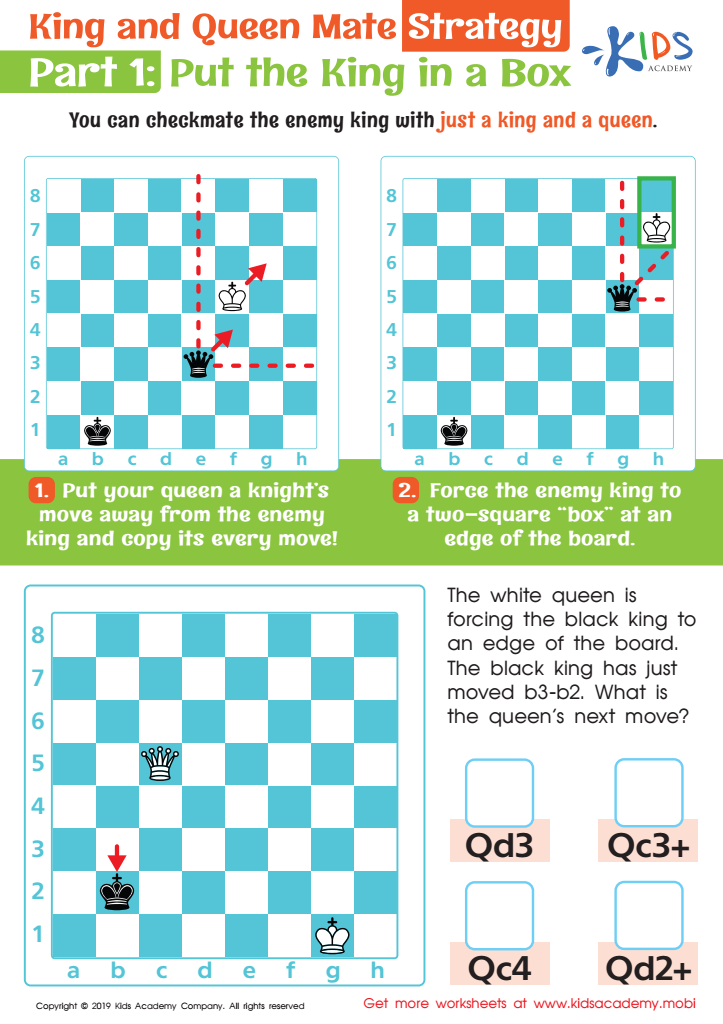
King and Queen Mate Strategy: Part 1 Worksheet
 Assign to My Students
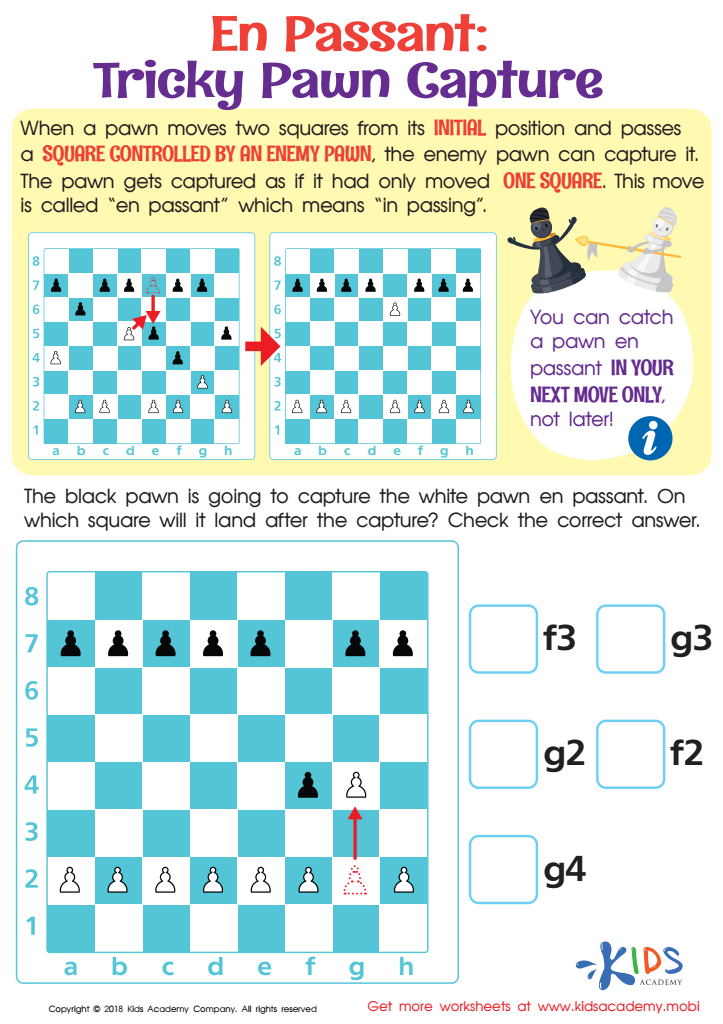
En Passant: Tricky Pawn Capture Worksheet
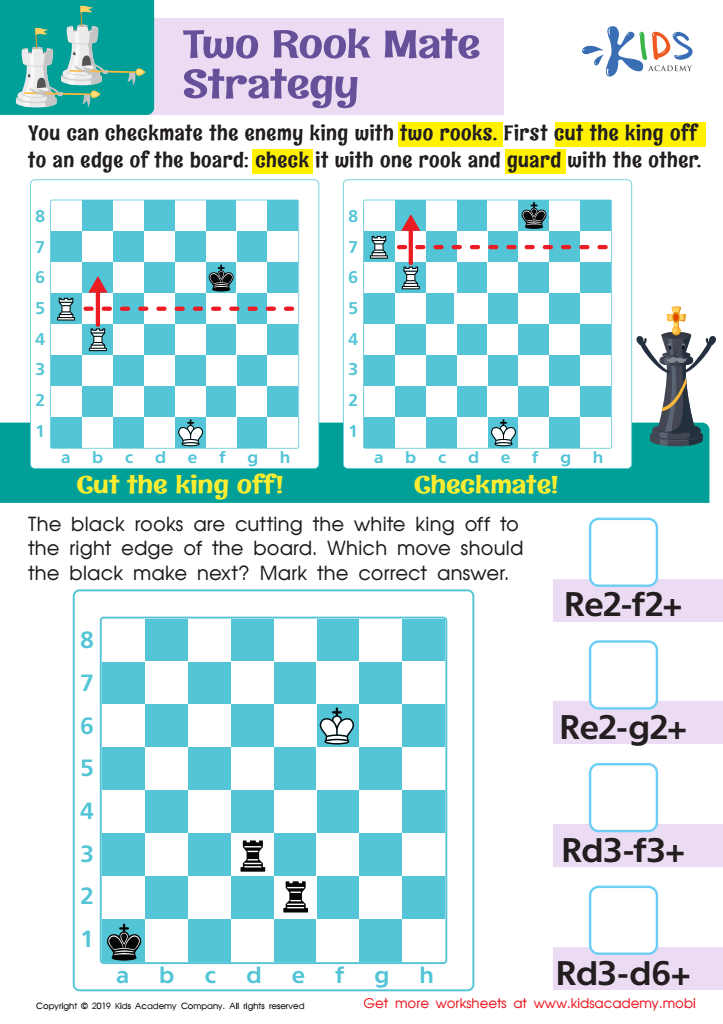
Two Rook Mate Strategy Worksheet
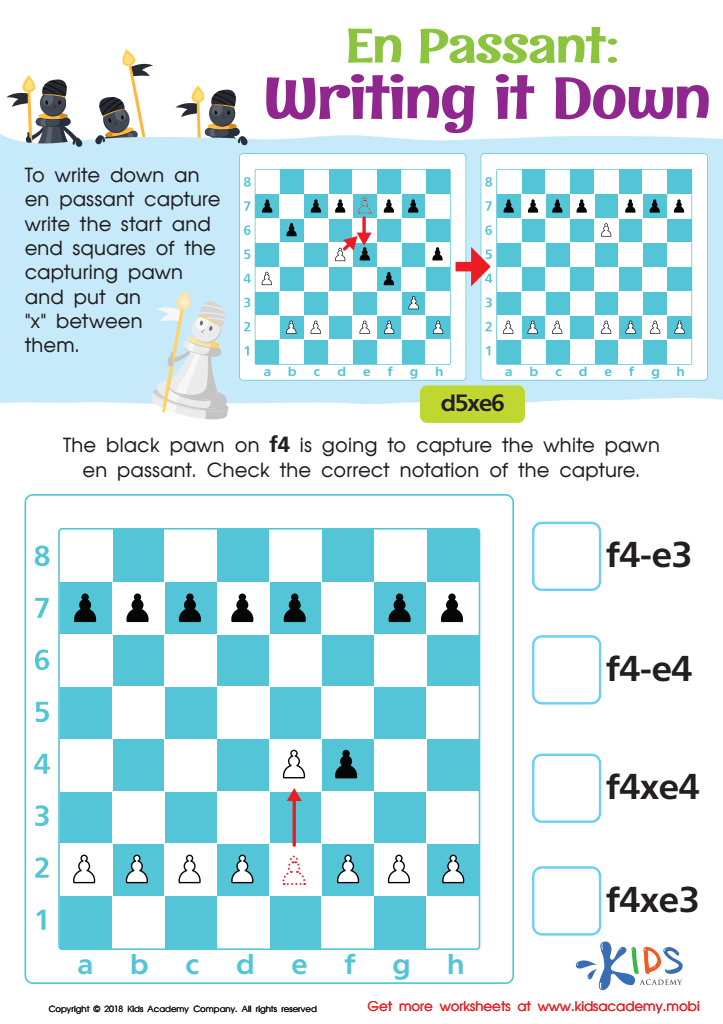
En Passant: Writing it Down Worksheet
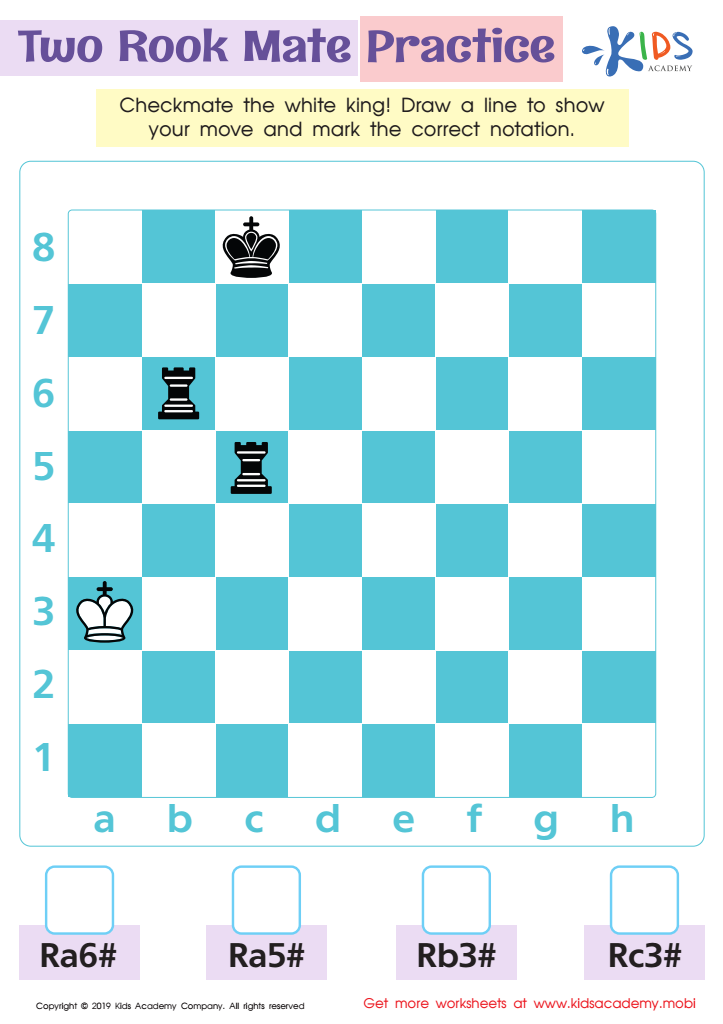
Two Rook Mate Practice Worksheet
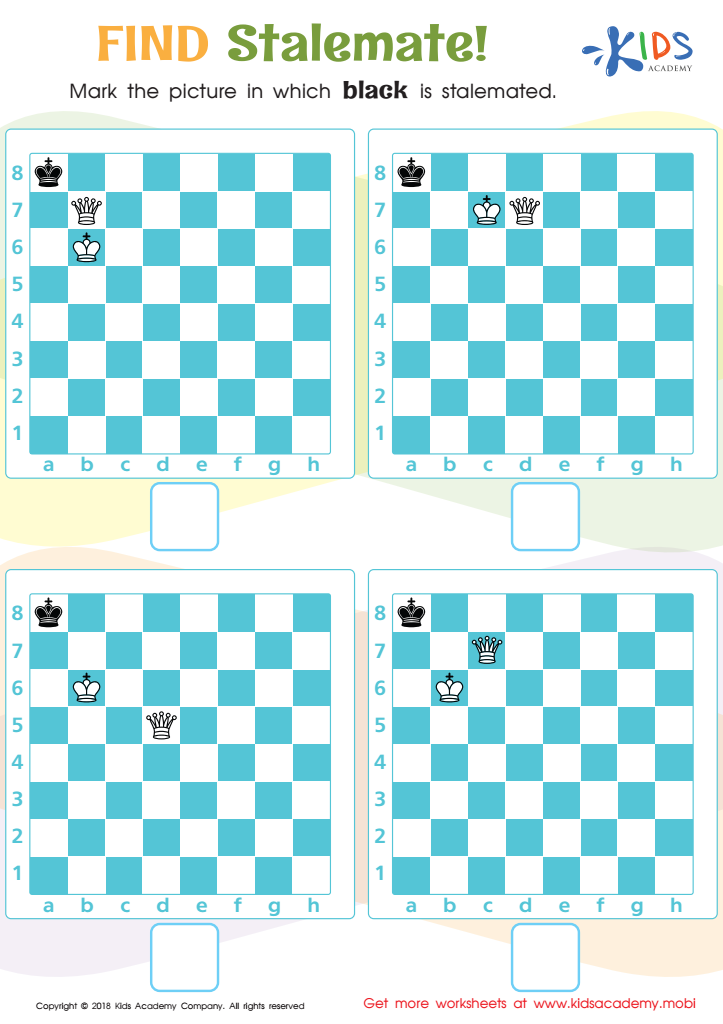
Find Stalemate! Worksheet
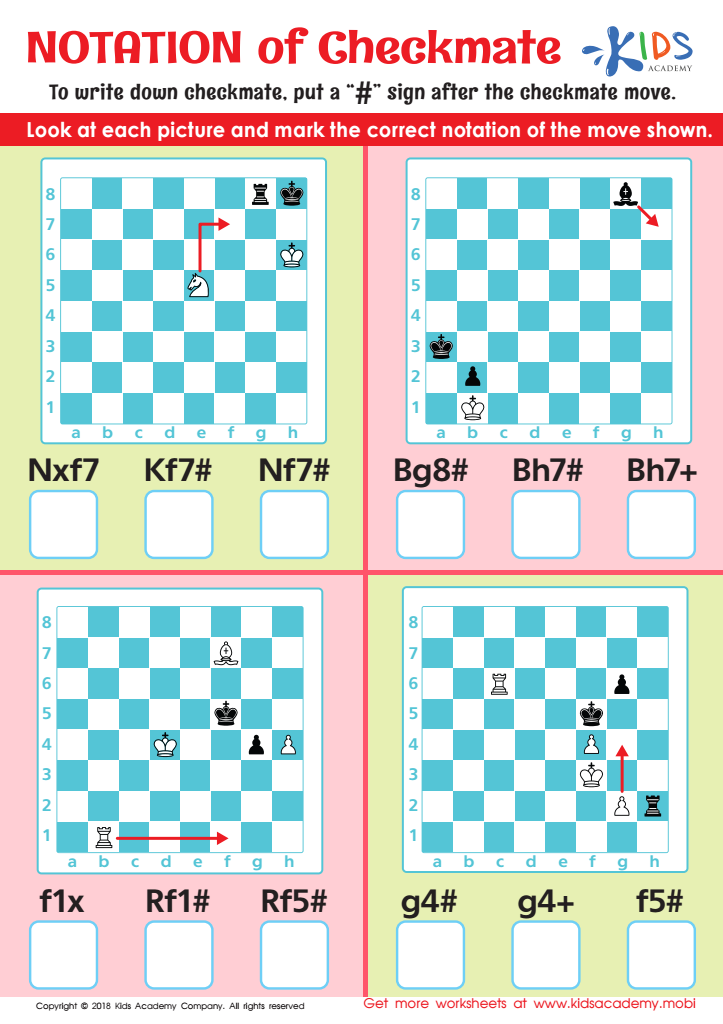
Notation of Checkmate Worksheet







Introducing chess strategy to children aged 4-6 can greatly benefit their cognitive and social development, making it an excellent extra challenge. Firstly, chess enhances critical thinking skills. Each move requires children to evaluate options, anticipate consequences, and develop decision-making strategies—skills that are invaluable in everyday life and academic learning.
Secondly, chess fosters patience and concentration. At this young age, children often have shorter attention spans. Engaging them in chess can help improve their ability to focus on a single task for longer periods, which is essential for future learning environments. Moreover, the game encourages problem-solving abilities; children learn to analyze challenging positions, consider multiple solutions, and think creatively.
Equally important is the social aspect of chess. Playing with peers can improve communication and cooperation skills. Children learn the importance of good sportsmanship, whether winning or losing, fostering resilience and emotional intelligence.
Incorporating chess into early education offers not just amusement but also valuable lessons that transcend the game itself. By supporting chess strategy learning, parents and teachers are contributing to the holistic development of children, equipping them with skills that will serve them well throughout their educational journey and beyond.








