Counting skills Extra Challenge Worksheets for Ages 4-6 - Page 3
50 filtered results
-
From - To
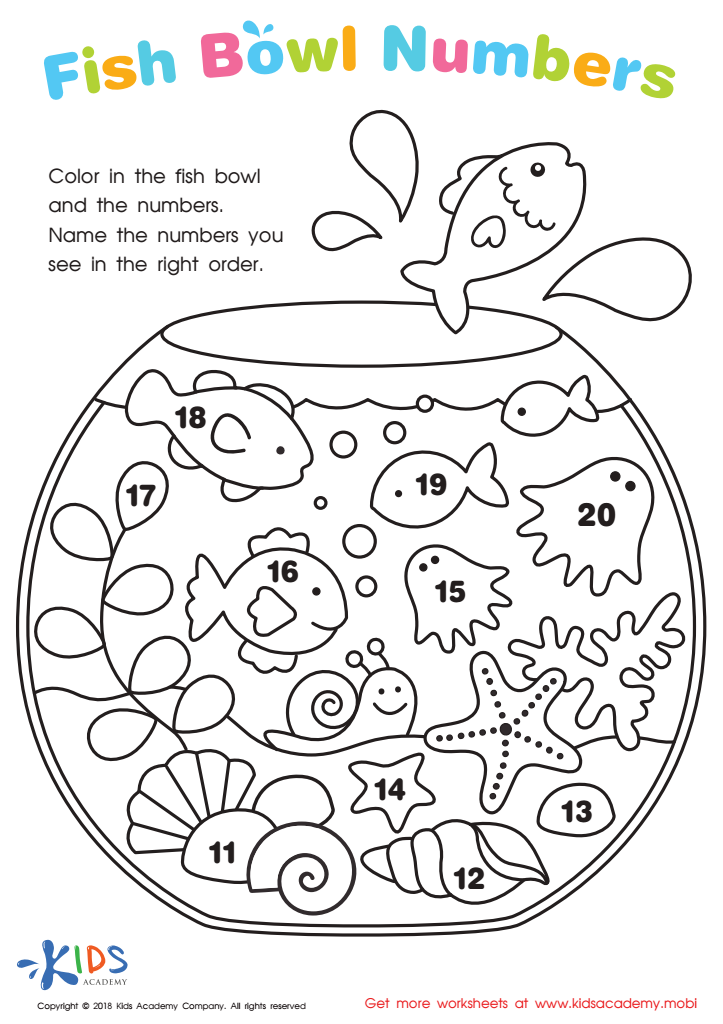
Fish Bowl Numbers Worksheet
 Assign to My Students
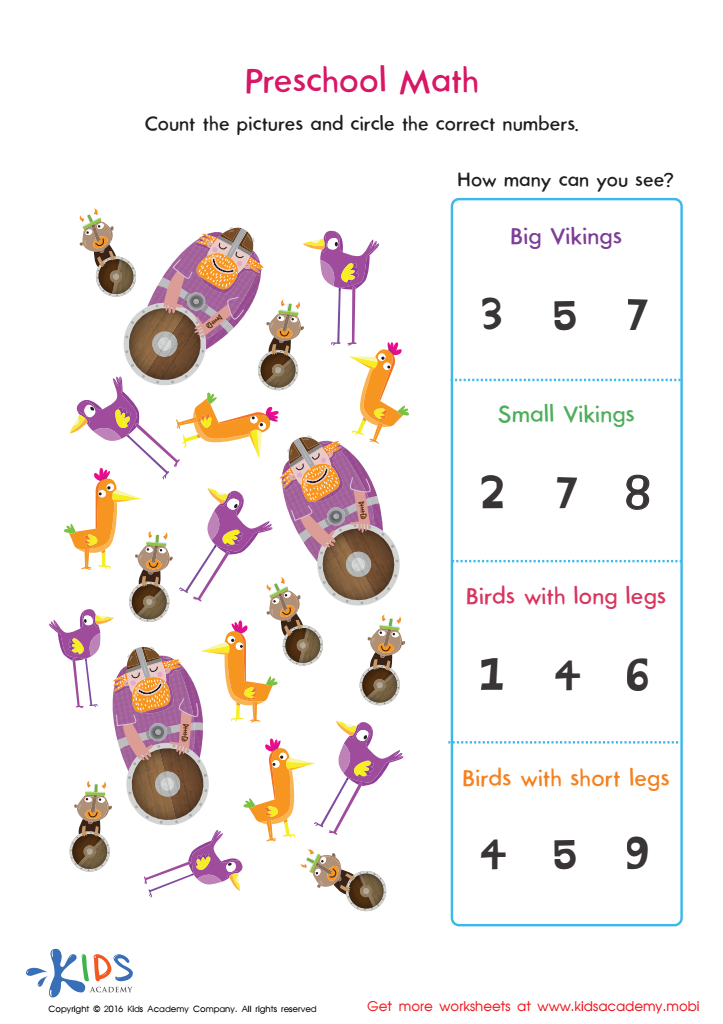








Counting skills form the foundation of early mathematics and support cognitive development in young children. For ages 4-6, honing these skills through extra challenges is particularly beneficial as it enhances number sense, promotes problem-solving, and fosters a positive attitude toward learning.
First, strong counting abilities enable children to understand basic concepts of quantity, sequencing, and place value. It allows them to integrate advanced numerical operations with ease later in their academic journey. Addressing these skills at an early age helps identify and intervene with potential learning difficulties, ensuring that no child falls behind.
Furthermore, engaging children in counting extra challenges promotes critical thinking and concentration. These activities encourage perseverance and adaptability, empowering children to approach problems creatively. Such cognitive exercises improve memory and attention span, which are vital for overall academic performance.
Parents and teachers should also prioritize these skills because they foster early independence and self-confidence in children. Successfully tackling challenging tasks provides a sense of accomplishment, motivating them to embrace new academic challenges.
Incorporating counting challenges in the early years lays down a strong educational foundation, nurturing not only foundational math skills but also a lifelong love for learning, critical thinking, and resilience. Thus, investing time and attention in these early skills armors children with core competencies essential for future academic and personal success.








