Logical thinking development Extra Challenge Worksheets for Ages 4-6
4 filtered results
-
From - To
Unlock your child's potential with our Logical thinking development Extra Challenge Worksheets for Ages 4-6. Designed to stretch young minds, these engaging activities cultivate problem-solving skills, enhance cognitive abilities, and promote critical thinking. Each worksheet presents fun and educational challenges, tailored specifically for preschoolers and kindergarteners. Through puzzles, matching games, and pattern recognition exercises, children will develop a solid foundation in logical reasoning in a playful and supportive environment. Ideal for parents and educators eager to nurture future thinkers, our expertly crafted worksheets ensure learning is both effective and enjoyable.
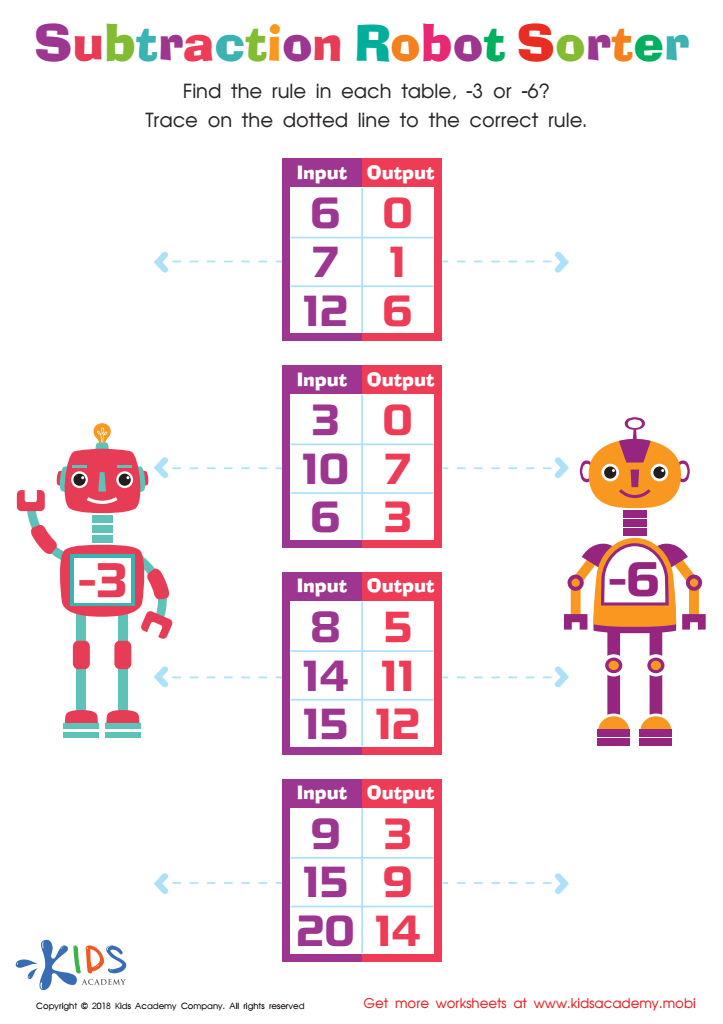
Subtraction Robot Sorter Worksheet
 Assign to My Students
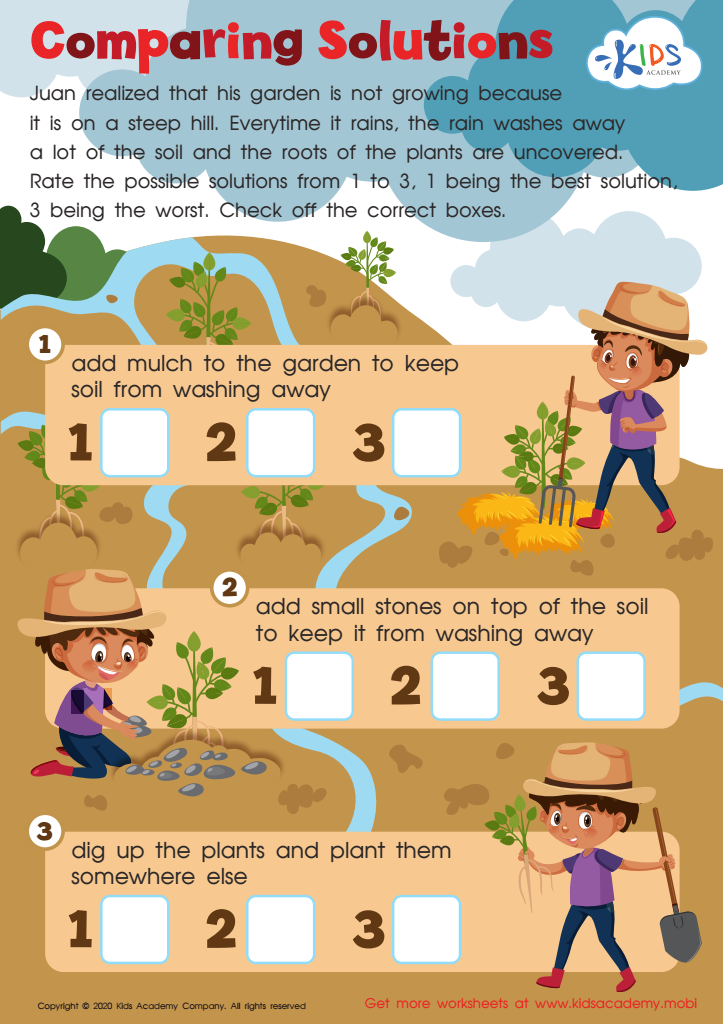
Comparing Solutions Worksheet
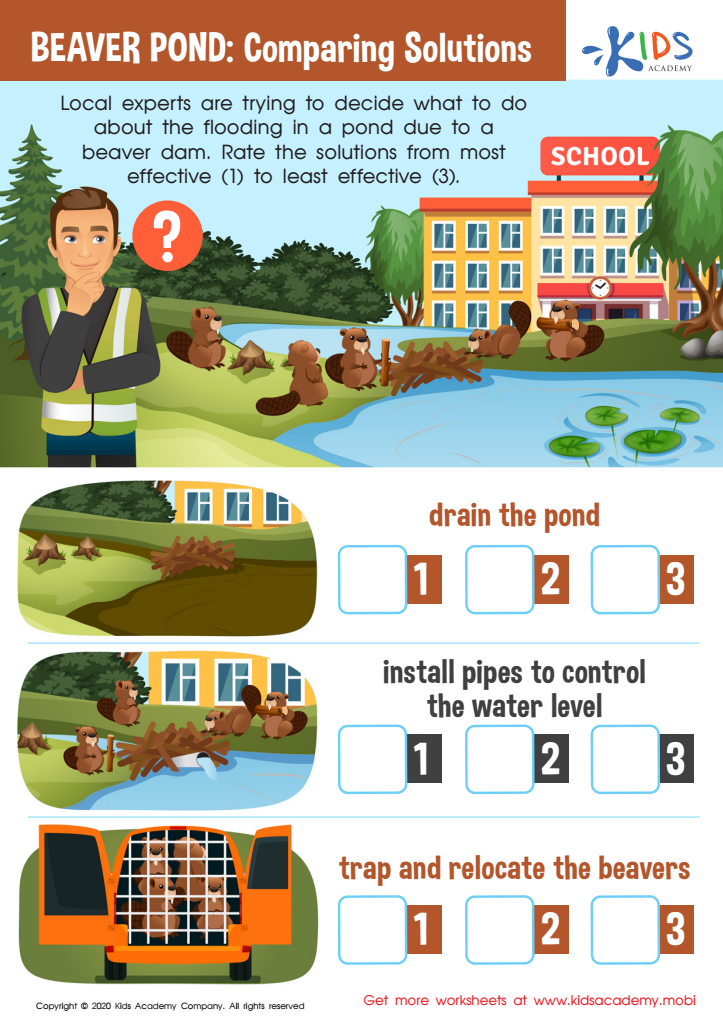
Beaver Pond: Comparing Solutions Worksheet
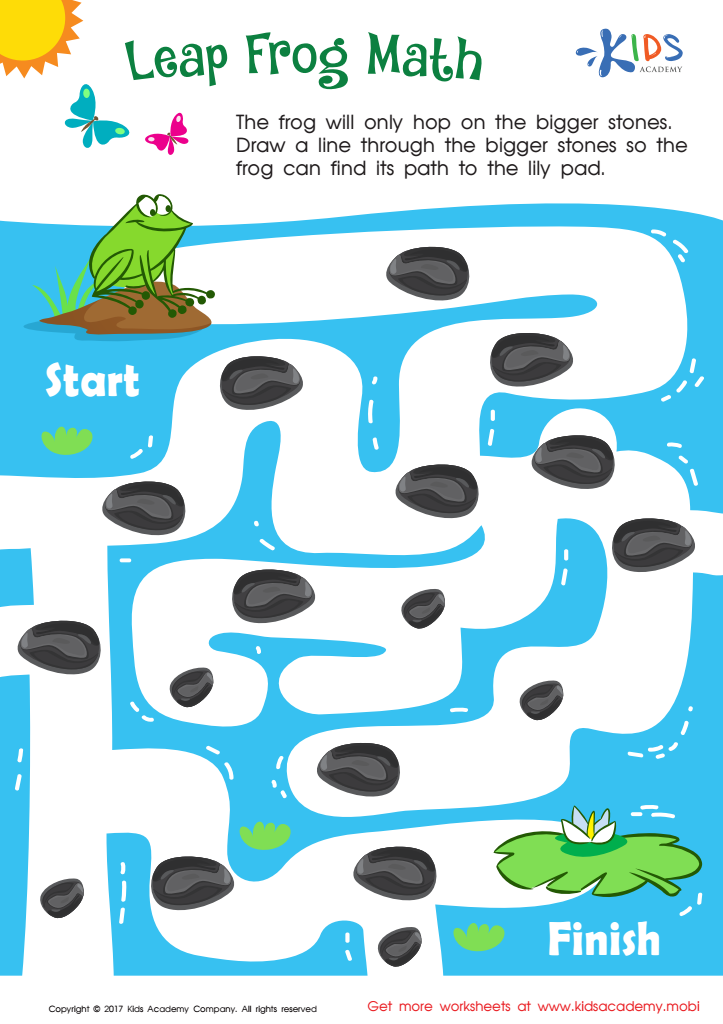
Math Puzzle Worksheet







Logical thinking is a foundational skill that significantly benefits children in multiple areas of their lives. For parents and teachers working with ages 4-6, actively promoting logical thinking through Extra Challenges can be immensely valuable. At this early age, children's brains are highly adaptable and capable of incredible growth, making it the perfect time to introduce complex cognitive skills.
Developing logical thinking helps children understand cause and effect, make connections between ideas, and improve their problem-solving abilities. This skill isn't just crucial for academic subjects like math and science, but it also enhances decision-making and social interactions. When young children engage in logical thinking tasks, such as puzzles, simple coding games, or reasoning games, they learn to approach problems systematically. They learn how to think critically rather than just memorizing facts.
Moreover, engaging in these extra challenges helps to foster persistence and resilience. Children learn that sometimes, solving a problem might require multiple attempts and creative thinking. This nurtures a growth mindset, the belief that intelligence and abilities can improve with effort, which is essential for lifelong learning.
In short, parents and teachers should care about nurturing logical thinking in young children because it builds a strong cognitive foundation, improves academic and social skills, and fosters a resilient and growth-oriented outlook.








