Logical thinking improvement Extra Challenge Worksheets for Ages 4-6
3 filtered results
-
From - To
Boost your child's cognitive skills with our "Logical Thinking Improvement Extra Challenge Worksheets for Ages 4-6." These engaging worksheets are designed to develop foundational problem-solving abilities in young learners. Each worksheet presents fun and stimulating activities, such as puzzles, matching games, and pattern recognition tasks, ensuring that learning remains enjoyable. Perfect for both classroom use and at-home practice, our carefully crafted worksheets aim to enhance critical thinking and logical reasoning skills in children, setting the stage for future academic success. Nurture your child's mind through play and discovery with these expertly designed, printable resources.
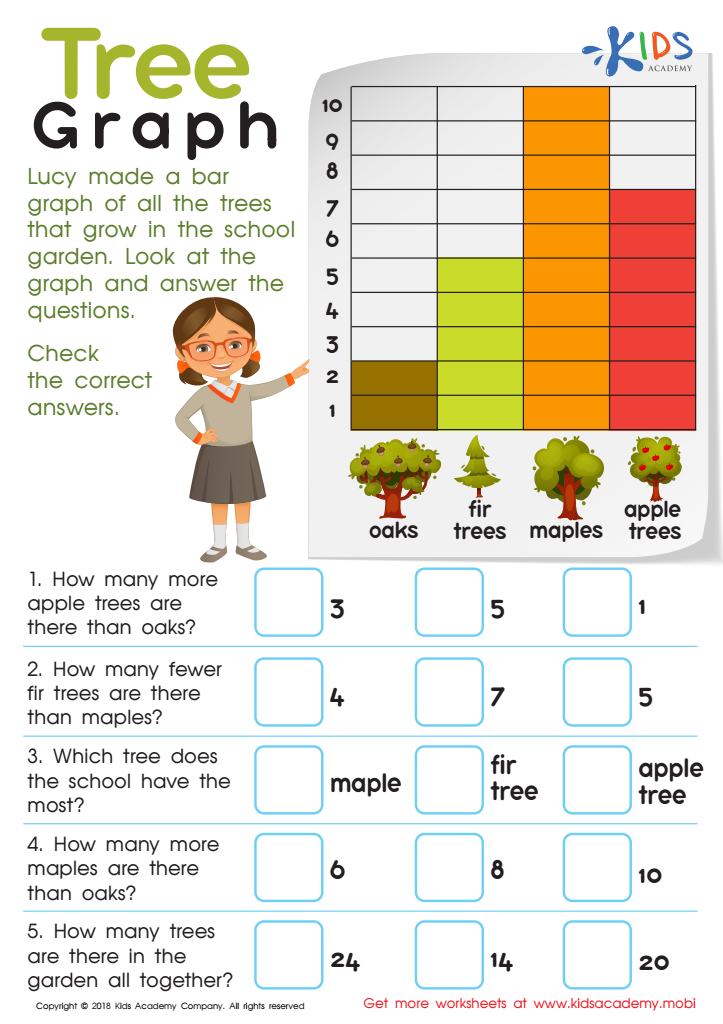
Tree Graph Worksheet
 Assign to My Students
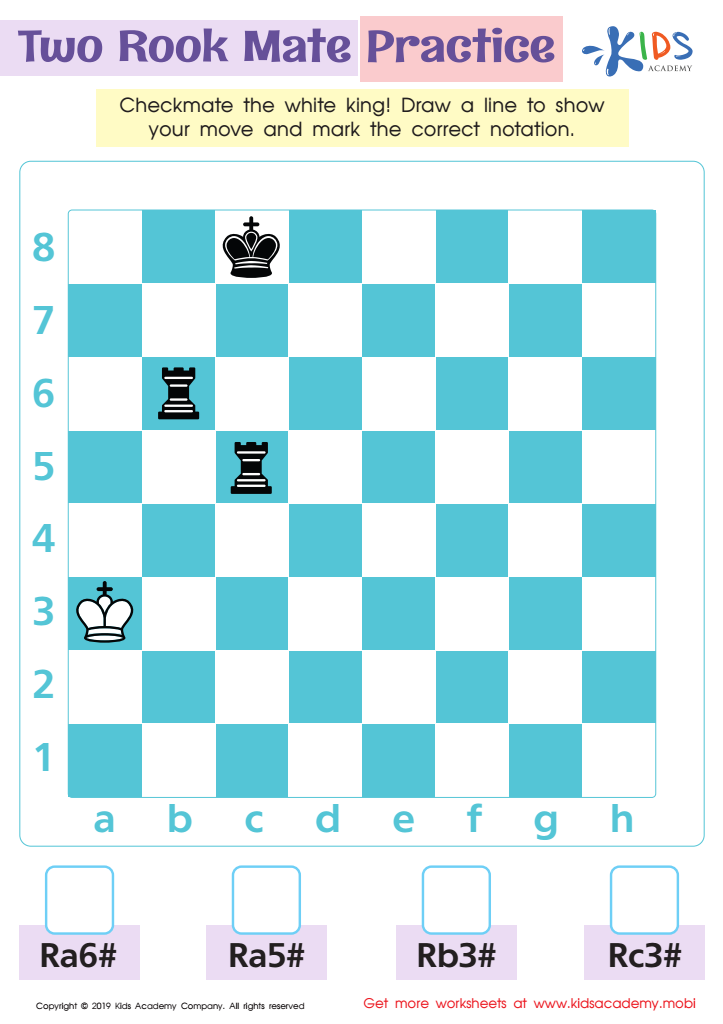
Two Rook Mate Practice Worksheet
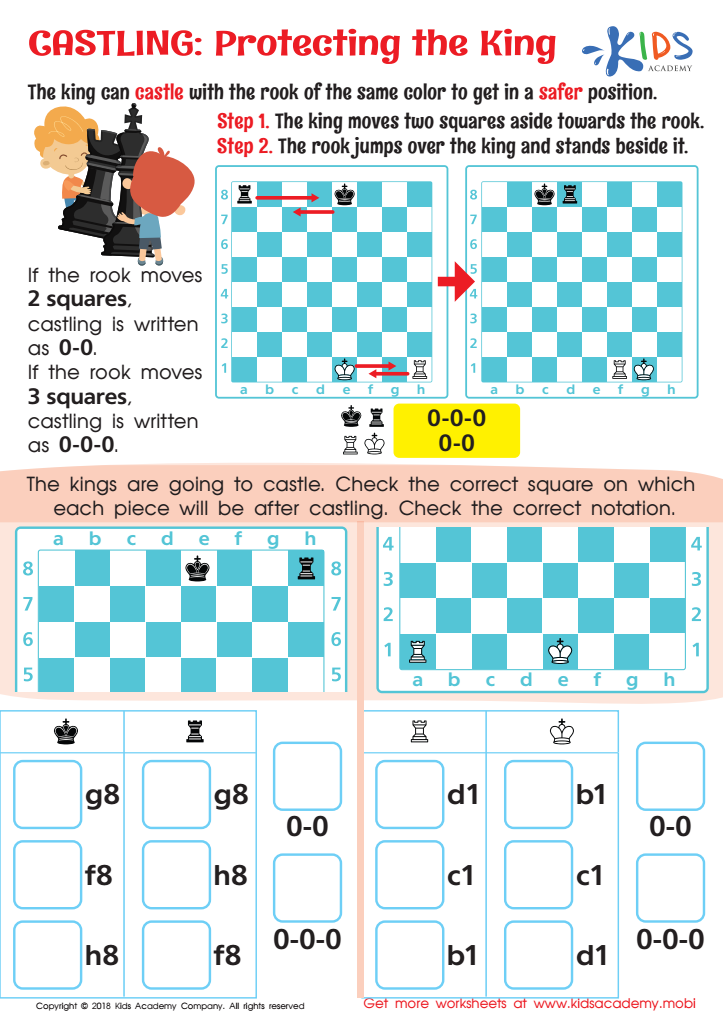
Castling: Protecting the King Worksheet







Logical thinking is the ability to analyze, evaluate, and systematically approach problems and situations. For young children aged 4-6, fostering this skill provides a foundation that benefits their academic and personal lives long-term. Parents and teachers should prioritize improving logical thinking for several reasons.
First, logical thinking enhances cognitive development. By engaging in activities like puzzles, matching games, and simple cause-and-effect tasks, children's brains are stimulated, improving their problem-solving skills and memory retention.
Second, it cultivates independence and confidence. Logical reasoning helps children make better-decisions and find solutions on their own, reducing their reliance on adults for problem-solving. This increased autonomy fosters self-confidence and a sense of responsibility.
Third, it prepares children for more complex academic challenges. Skills gained through logical thinking practice, such as sequencing, the ability to follow multi-step instructions, and pattern recognition, are crucial for subjects like math and science. These skills also enhance reading comprehension and critical thinking.
Lastly, improving logical thinking supports social and emotional development. Logical reasoning helps children understand consequences, recognize emotions, and resolve conflicts more effectively. This nurtures healthier relationships and emotional intelligence.
In essence, logical thinking is a crucial skill for young learners, promoting holistic development, academic readiness, and essential life skills. Investing time and resources into logical thinking activities offers robust benefits that extend far beyond the early years.








