
Mental math skills Extra Challenge Worksheets for Ages 4-6
3 filtered results
Difficulty Level
Grade
Age
-
From - To
Subject
Activity
Standards
Unlock the joy of learning math with our "Mental Math Skills Extra Challenge Worksheets" designed for ages 4 to 6! These engaging worksheets provide young learners with fun, age-appropriate challenges that encourage critical thinking and problem-solving. Perfect for enhancing mental math abilities, our activities include addition, subtraction, and number recognition exercises that stimulate cognitive growth. Ideal for both classroom settings and at-home learning, these worksheets promote confidence and independence in young mathematicians. Foster a love for math early on and watch your child excel with our captivating extra challenge resources. Start exploring and expanding your child's math skills today!
Favorites
With answer key
Interactive
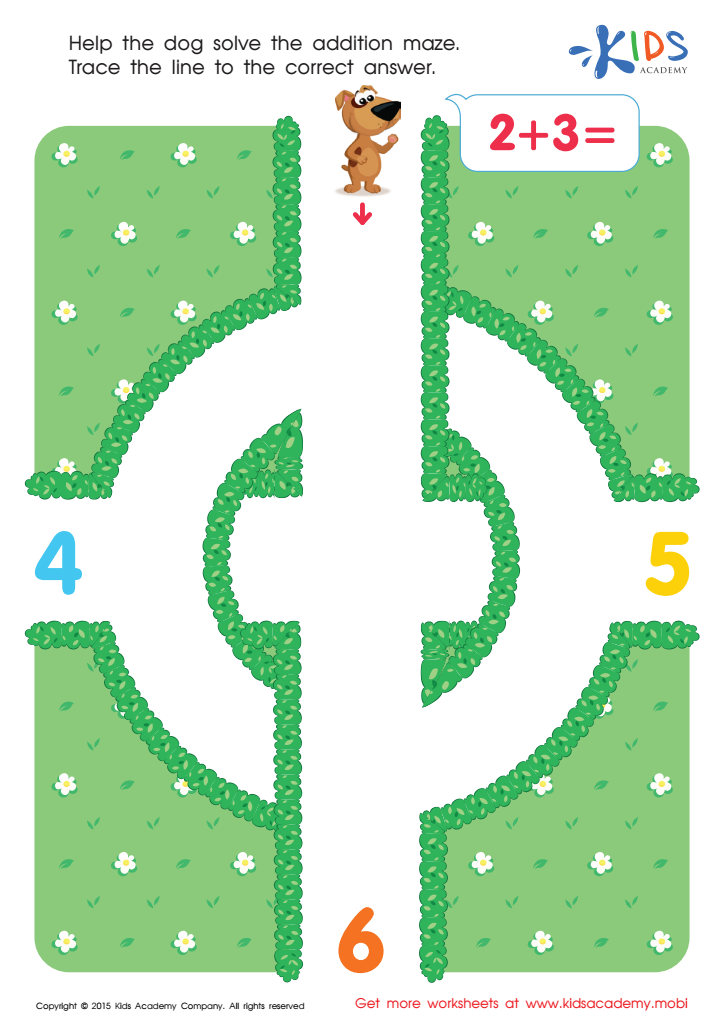
Two And Three Addition Worksheet
Give your children the task and let them find the path to the right answer while they make their way through the maze, and don't forget to let them trace the path.
 Assign to My Students
Two And Three Addition Worksheet
Worksheet
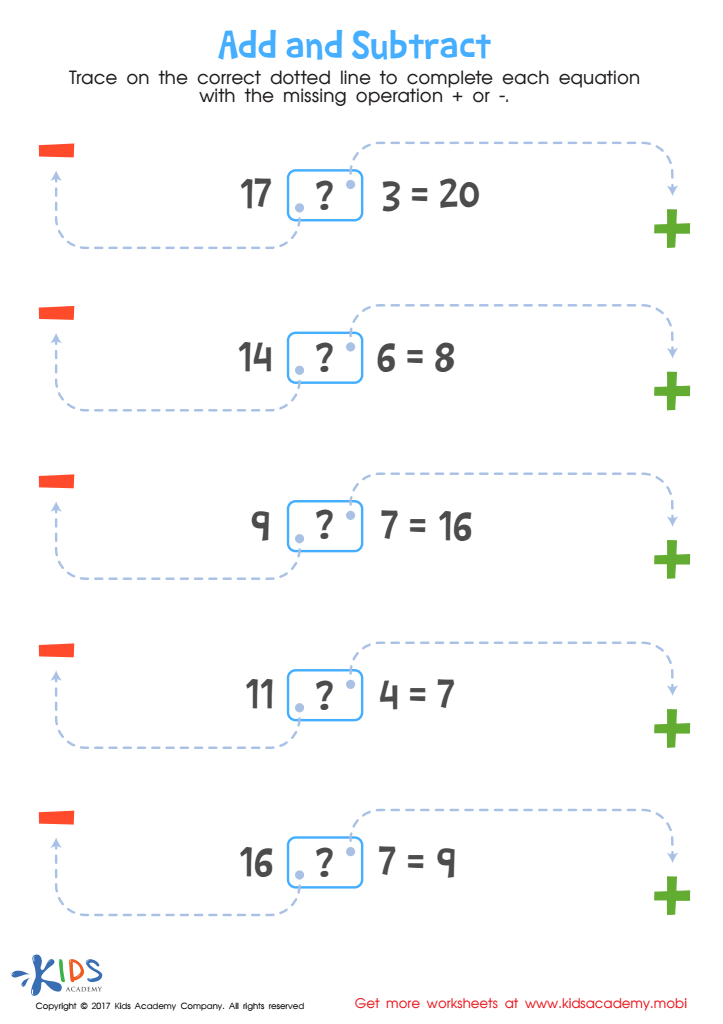
Add and Subtract Worksheet
Introduce your child to equations and advanced math concepts with this worksheet - designed to help them learn add and subtract up to 20. This logical reasoning exercise will help them gain a better understanding of math, preparing them for future success. Start early and watch them excel!
Add and Subtract Worksheet
Worksheet
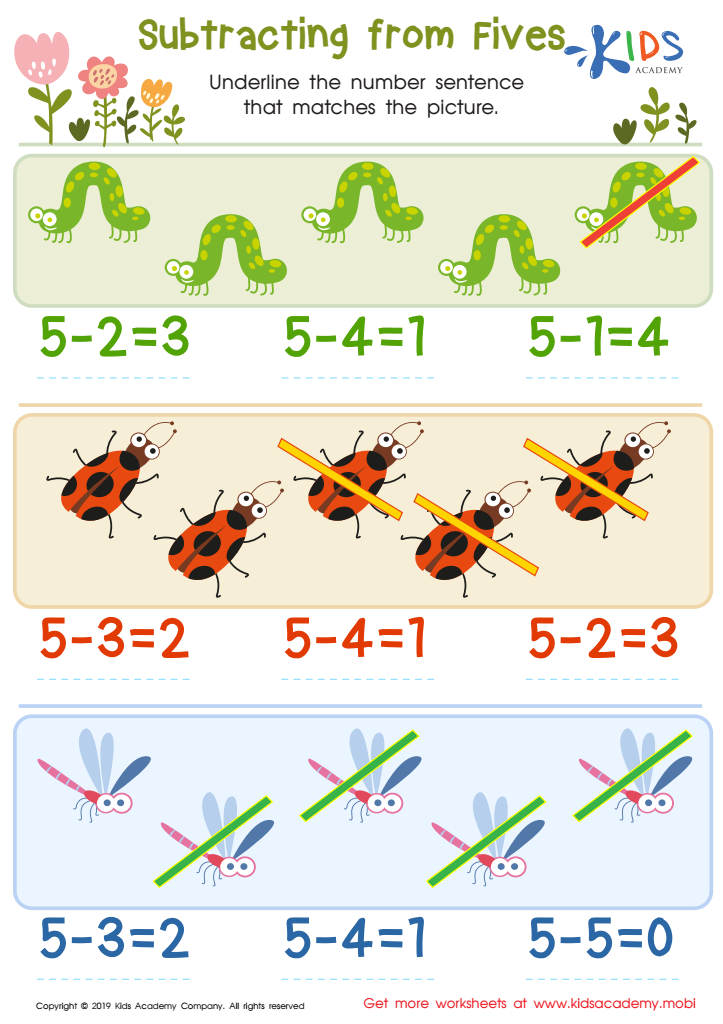
Subtracting From Fives Worksheet
Help your kids practice subtraction with this fun worksheet! Have them identify the insects, then solve the equations and find the matching number sentence. It's a great way to give them an edge in math and enjoy doing it!
Subtracting From Fives Worksheet
Worksheet
Join Kids Academy for Free
Who is primarily going to use this learning content?






Mental math skills are crucial for young learners aged 4-6 as they form the foundation for essential mathematical understanding and problem-solving abilities. Developing these skills early enhances a child's cognitive development and promotes logical thinking, which is vital for grasping more advanced mathematical concepts later on.
Parents and teachers should prioritize mental math because it boosts a child's confidence in their abilities, fostering a positive attitude toward math-related activities. Engaging in mental math challenges helps children develop number sense, improving their ability to visualize and manipulate numbers in their minds without reliance on calculators or writing.
Furthermore, mental math encourages creativity, as students often explore multiple ways to solve a single problem. This exploration reinforces critical thinking skills and nurtures a growth mindset, where children learn to embrace challenges rather than shy away from them.
Lastly, mental math activities can be fun and interactive, making learning enjoyable. Games, storytelling, and hands-on activities can be incorporated into lessons, making them appealing to young learners. Ultimately, nurturing mental math skills not only equips children with essential tools for future academic success but also fosters a love for learning and curiosity about the world around them.








