
Recognizing shapes Extra Challenge Worksheets for Ages 4-6
3 filtered results
Difficulty Level
Grade
Age
-
From - To
Subject
Activity
Standards
Unlock your child's creativity and critical thinking with our "Recognizing Shapes Extra Challenge Worksheets for Ages 4-6". These engaging, printable worksheets are designed to enhance shape recognition skills while providing a fun learning experience. Kids will explore various shapes through interactive activities, puzzles, and colorful illustrations. Ideal for preschoolers, our worksheets help build a strong foundation in geometry and early math concepts. Each activity is tailored to enrich cognitive development, boost problem-solving skills, and reinforce classroom learning. Perfect for home or classroom use, our shape worksheets make learning a joyful adventure for young minds! Download now and watch your little learners shine!
Favorites
With answer key
Interactive
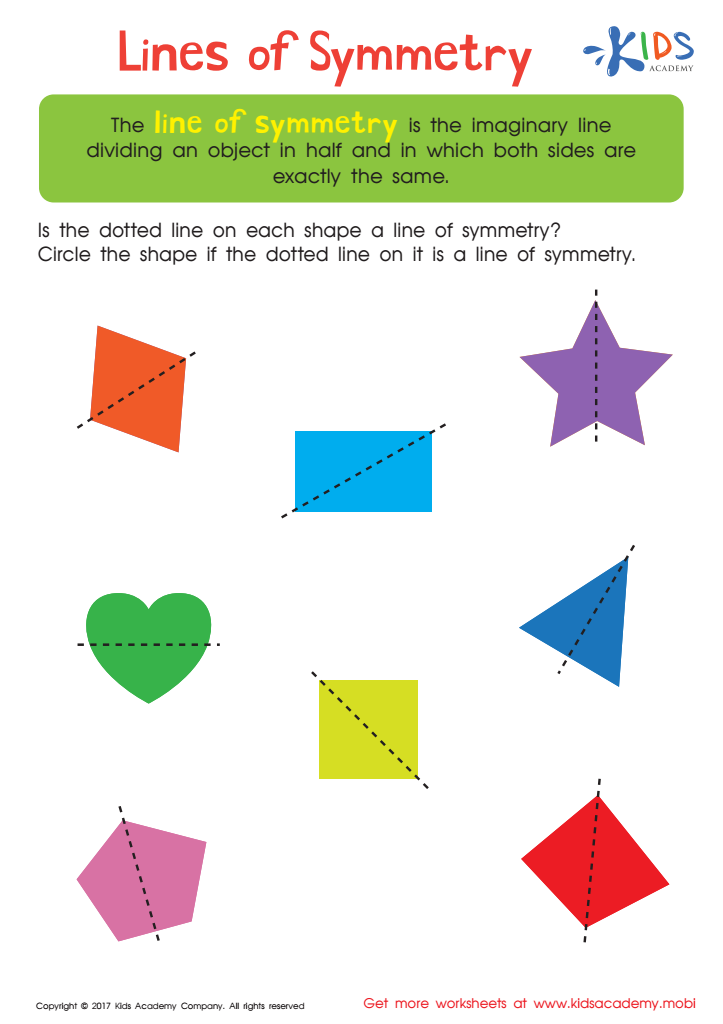
Lines of Symmetry Printable
Symmetry is a key math concept that kids must learn to develop their geometry skills. This fun worksheet helps build this skill, by encouraging kids to recognize symmetrical shapes and find equal parts.
 Assign to My Students
Lines of Symmetry Printable
Worksheet
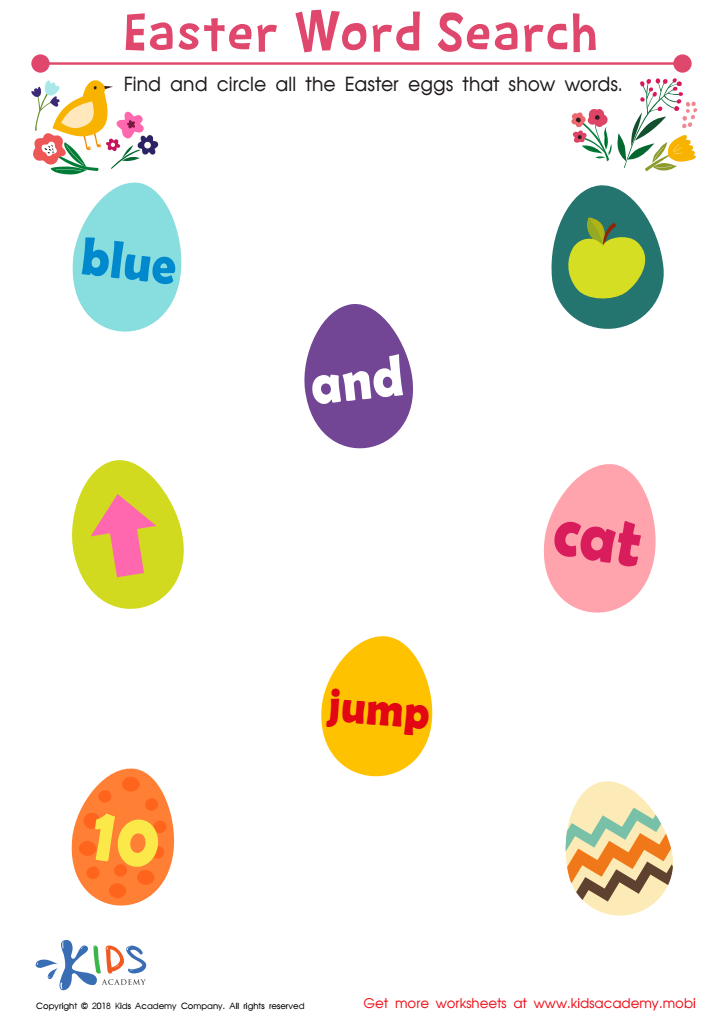
Easter Word Search Worksheet
Kids love Easter - food, picnics, games - and the egg hunt! Does your family celebrate Easter? Get your kids to find some of the Easter egg words in this word search. Ask them to read each word and circle the eggs. It's a fun way to celebrate the holiday!
Easter Word Search Worksheet
Worksheet
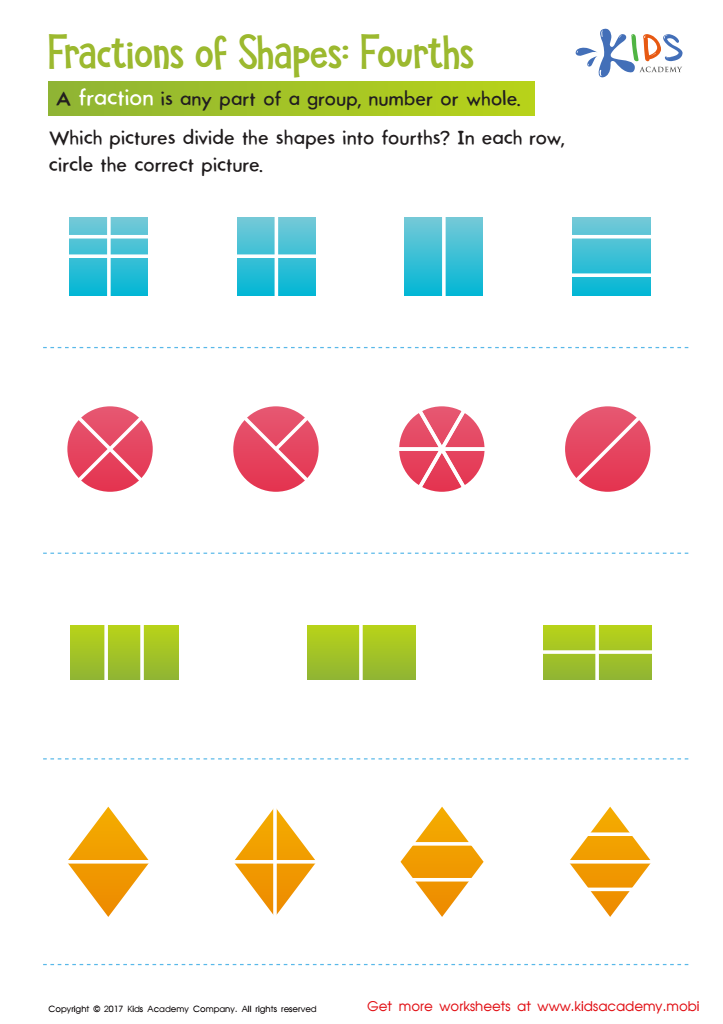
Fractions of Shapes Worksheet
It will also show them how fractions are represented in everyday shapes.
Fractions of Shapes Worksheet
Worksheet
Join Kids Academy for Free
Who is primarily going to use this learning content?







Recognizing shapes is a foundational skill in early childhood development that has far-reaching benefits for young learners aged 4-6. Parents and teachers should care about this concept because it forms the basis for various cognitive and social skills. When children learn to identify and differentiate shapes, they enhance their observational skills and develop critical thinking abilities as they begin to compare and contrast different forms in their environments.
Additionally, recognizing shapes supports early math skills, aiding children in understanding concepts like symmetry, spatial relationships, and geometry, which are integral to future mathematical learning. Moreover, this knowledge aids in developing language skills, as children learn to describe and categorize shapes, fostering their vocabulary.
Introducing challenges related to shape recognition, such as puzzles, games, or creative art projects, not only makes learning enjoyable but also boosts children's confidence as they master new concepts. Through shape recognition activities, children engage in problem-solving, enhance their fine motor skills, and improve hand-eye coordination, setting a solid foundation for lifelong learning. Therefore, by prioritizing shape recognition, parents and teachers play a crucial role in nurturing well-rounded, capable learners.








