Fine Motor Skills Extra Challenge Addition & Subtraction Worksheets for Ages 4-6
4 filtered results
Difficulty Level
Grade
Age
-
From - To
Subject
Activity
Standards
Strengthen your child's fine motor skills while enhancing their addition and subtraction abilities with our specially designed worksheets for ages 4-6. These extra challenge worksheets from Kids Academy help young learners develop precision and control as they practice key math concepts. With engaging and unique exercises, children will enjoy improving their hand-eye coordination while mastering addition and subtraction. Perfect for preschoolers and kindergarteners seeking an educational and fun challenge, these printables provide an excellent blend of motor skills development and math practice. Download now and support your child's growth in foundational mathematics and fine motor skills!
Favorites
With answer key
Interactive
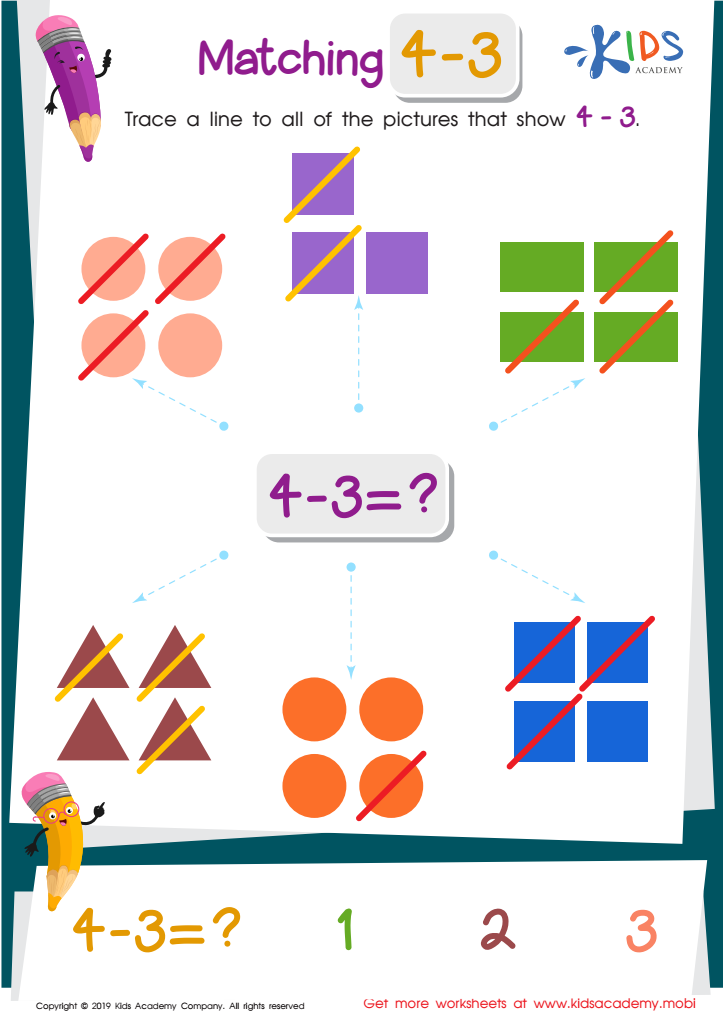
Matching 4 – 3 Worksheet
Help your kids master basic math concepts like addition and subtraction with fun exercises. Test their understanding with simple problems. For example, in this worksheet, ask them to count the objects in each picture and draw a line to the pictures that show 4 - 3 = 1. This will help them get better at solving equations.
 Assign to My Students
Matching 4 – 3 Worksheet
Worksheet
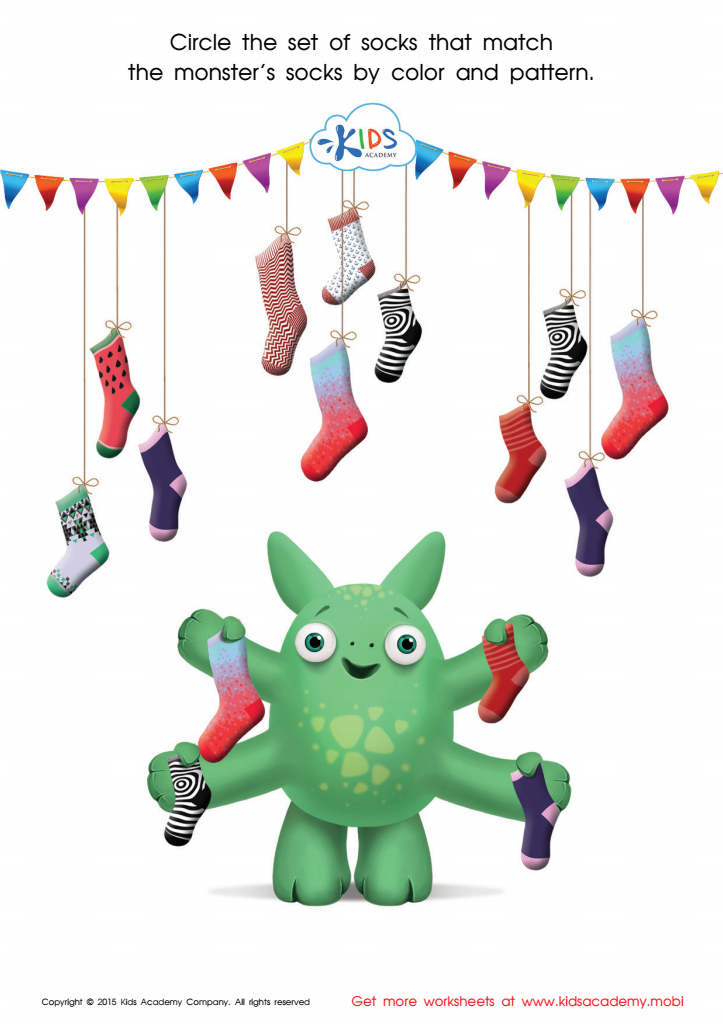
Sort the Monster's Socks Worksheet
Let your little one challenge herself and practice with matching Monster socks. She must be very attentive to match the same socks and draw a line connecting them!
Sort the Monster's Socks Worksheet
Worksheet
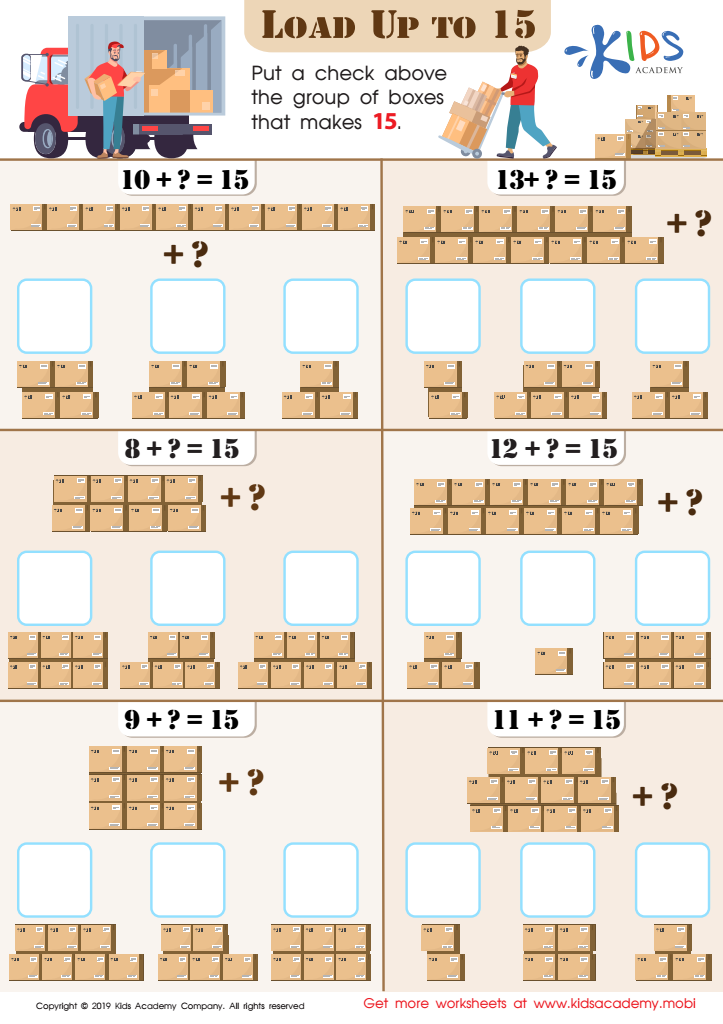
Load up to 15 Worksheet
Your students can practice addition and counting skills with this worksheet. Each equation has 6 boxes to count. Check the group that equals 15 to complete the exercise. Help your kindergartners if they need it.
Load up to 15 Worksheet
Worksheet
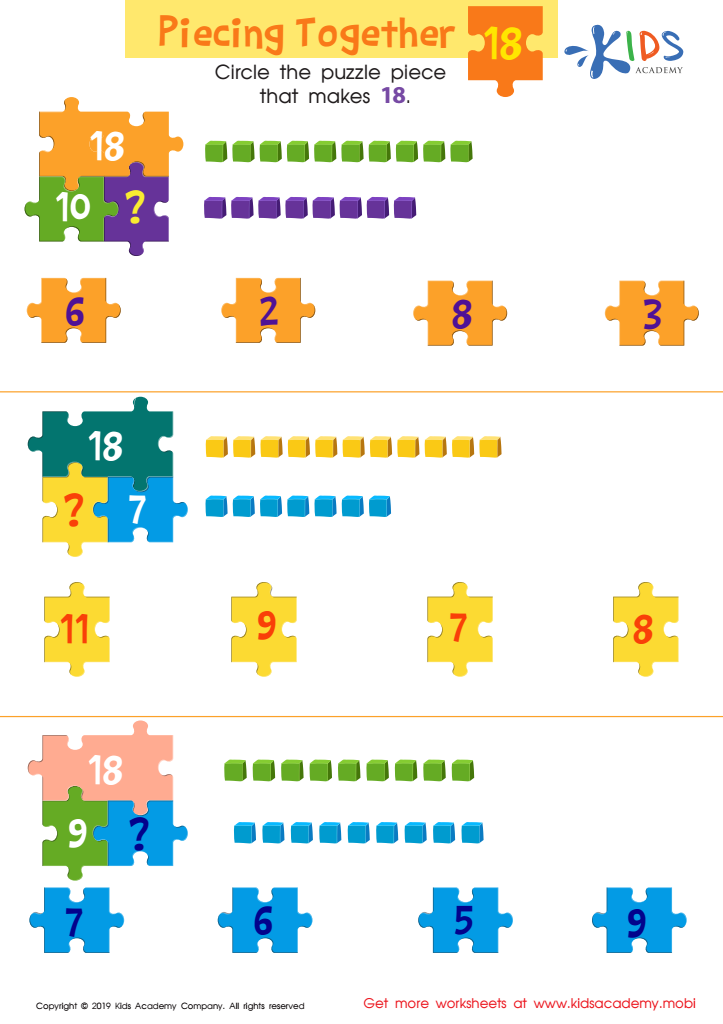
Piecing Together 18 Worksheet
Let your preschoolers learn and have fun with this colorful worksheet. Look at the picture with them and ask what they see. Help them solve the equations missing on each puzzle piece and then circle the one that will make the bottom puzzle piece numbers equal 16. Puzzles and bright colors make learning easy and enjoyable!
Piecing Together 18 Worksheet
Worksheet
Join Kids Academy for Free
Who is primarily going to use this learning content?








Parents and teachers should pay close attention to enhancing fine motor skills in children aged 4-6, particularly through activities like extra challenge addition and subtraction. Fine motor skills involve the coordination of small muscles in the hands and fingers, which are crucial for tasks such as writing, buttoning, and using scissors. By integrating mathematical challenges that require manipulating objects (such as counters or puzzles) or using structured worksheets, children develop these critical small muscle movements.
Developing fine motor skills at an early age also supports cognitive growth. Engaging in activities that blend motor skills with educational content, such as addition and subtraction, promotes problem-solving abilities, mathematical thinking, and concentration. These foundational skills have long-term benefits, bolstering a child's ability to succeed academically as they progress through school.
Moreover, incorporating fine motor skill exercises into math activities can make learning more interactive and engaging for young learners. This hands-on approach can enhance their enthusiasm and confidence, making them more inclined to participate and learn effectively. Parents and teachers are vital in providing opportunities for children to develop these skills, setting the groundwork for academic and everyday life competencies. By embedding these practices early, children are better prepared for the increased demands of school tasks and beyond.