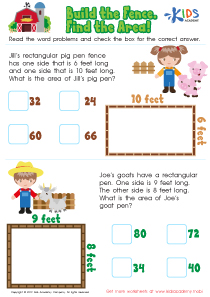
Shape Recognition Extra Challenge Matching Worksheets for Ages 4-6
3 filtered results
-
From - To
Boost your child's shape recognition skills with our engaging "Shape Recognition Extra Challenge Matching Worksheets," specially designed for ages 4-6. These worksheets offer fun, challenging activities that help children identify, match, and differentiate various shapes, enhancing their cognitive development. Each engaging exercise encourages critical thinking and fine motor skills while keeping learning enjoyable. Perfect for use in classrooms or at home, our extra challenge worksheets foster early math skills in a playful context. With vibrant illustrations and age-appropriate tasks, children will grasp the concept of shapes confidently. Download now and watch your young learners thrive in shape recognition!
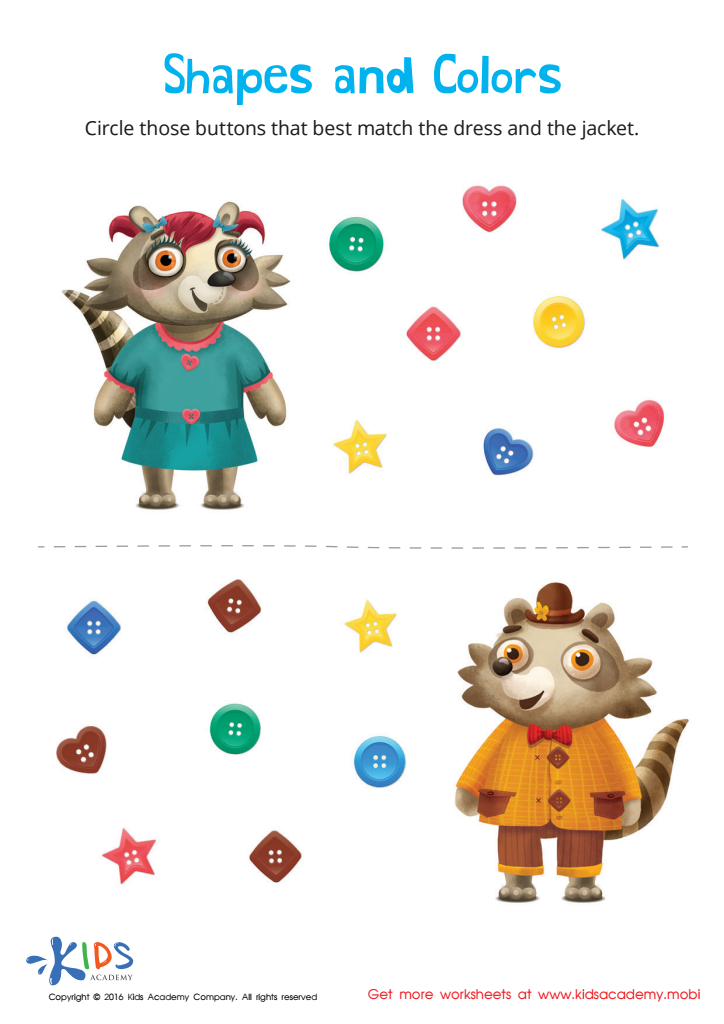
Matching: Shapes and Colors Worksheet
 Assign to My Students
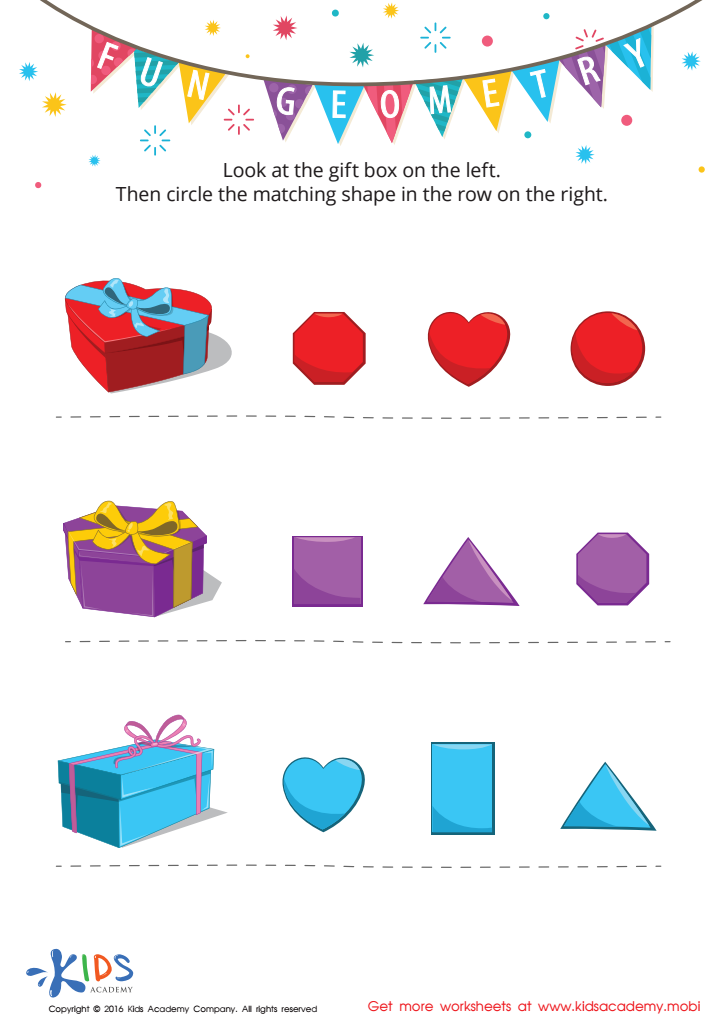
Fun Geometry Worksheet
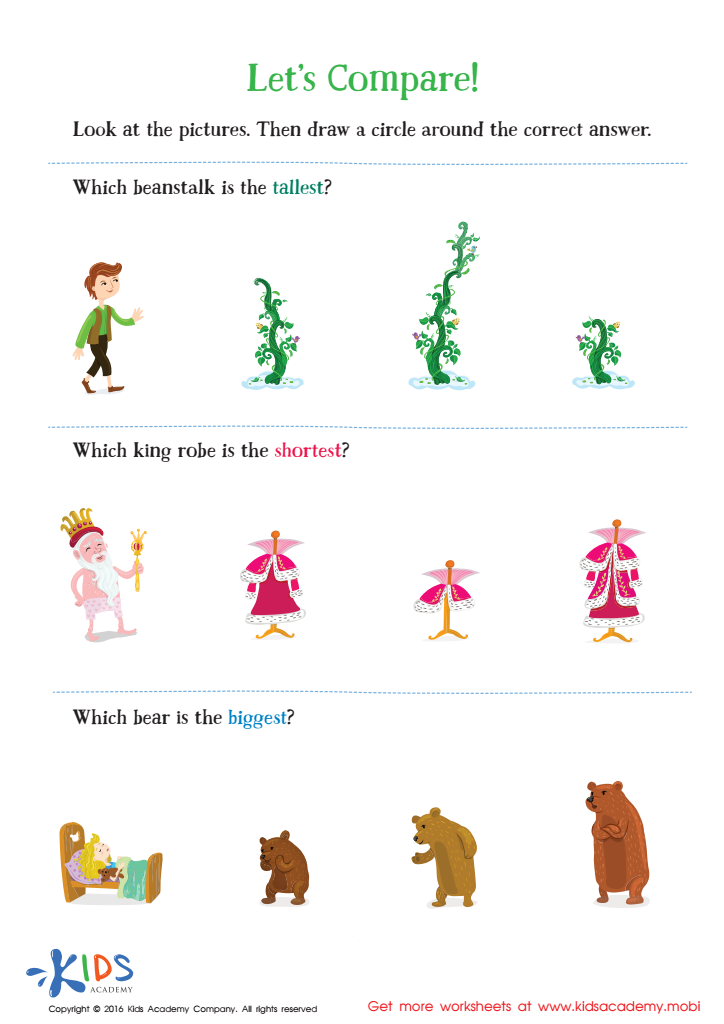
Fairy Tale Worksheet: Let's Compare








Shape Recognition Extra Challenge Matching for ages 4-6 is an essential activity for early learners that fosters critical cognitive and motor skills development. Parents and teachers should care about this activity because it enhances children's pattern recognition, which is foundational for mathematics and problem-solving later in life. By engaging in shape matching, children practice identifying, comparing, and categorizing shapes, helping them understand the world around them and encouraging observational skills.
Moreover, this activity promotes fine motor skills as children manipulate shapes, refining their hand-eye coordination and strengthening their dexterity, which is crucial for writing and other tasks. Socially, if done in groups, it fosters collaboration and communication among peers, teaching children to share ideas and work together.
Additionally, mastering shape recognition sets the groundwork for success in more complex concepts, such as geometry and spatial awareness. These skills are not only integral in their early education but also applicable in everyday life, from organizing objects to understanding maps. Overall, Shape Recognition Extra Challenge Matching creates a fun, engaging way for children to learn vital skills that will serve as building blocks for their academic journey. Investing in these early challenges lays a foundation for lifelong learning and problem-solving abilities.