Vocabulary expansion Extra Challenge Reading Worksheets for Ages 4-6
9 filtered results
Difficulty Level
Grade
Age
-
From - To
Subject
Activity
Standards
Boost your child's vocabulary with our "Vocabulary Expansion Extra Challenge Reading Worksheets" designed specifically for ages 4-6! These engaging and interactive worksheets encourage young learners to explore new words through fun activities and stories. Each worksheet focuses on enhancing comprehension and word recognition skills, making learning enjoyable. Ideal for reinforcing classroom lessons or enriching home study, our extra challenge sheets provide a perfect blend of education and amusement. Watch your child’s confidence grow as they master new vocabulary in a playful, simplistic format. Give your little ones the gift of language with our thoughtfully crafted reading resources today!
Favorites
With answer key
Interactive
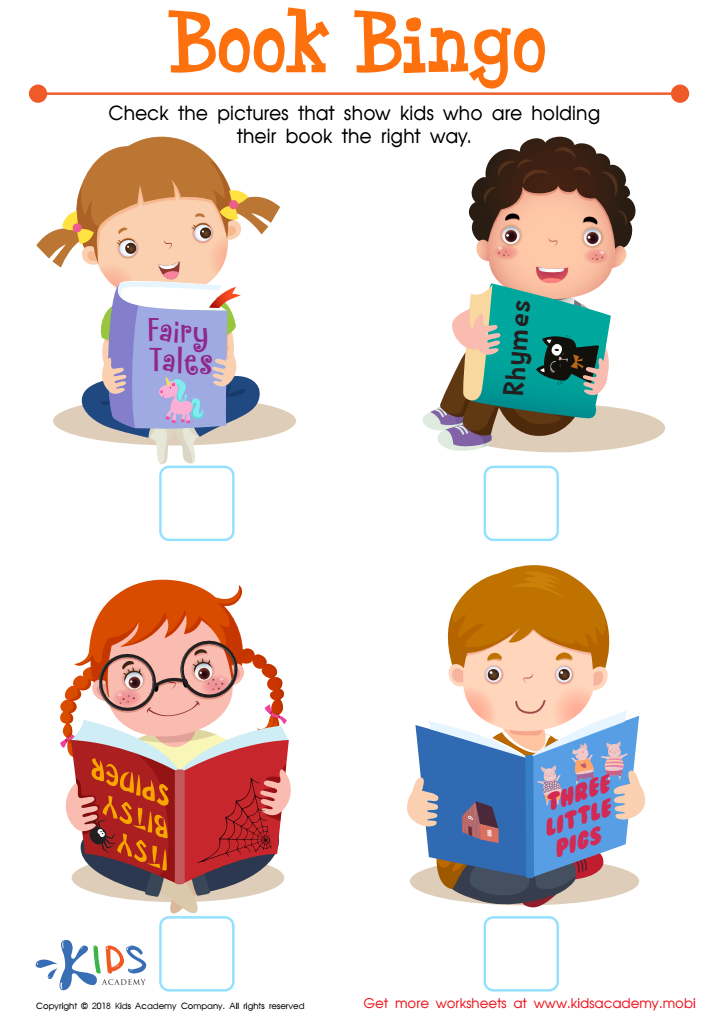
Book Bingo Worksheet
Help your kids spot which of the kids in the worksheet are reading correctly. Early instruction in reading helps ensure kids won't face problems later on, plus any impairments can be identified and corrected quickly. Can your child read? Have them check the pictures of kids holding books the right way.
 Assign to My Students
Book Bingo Worksheet
Worksheet
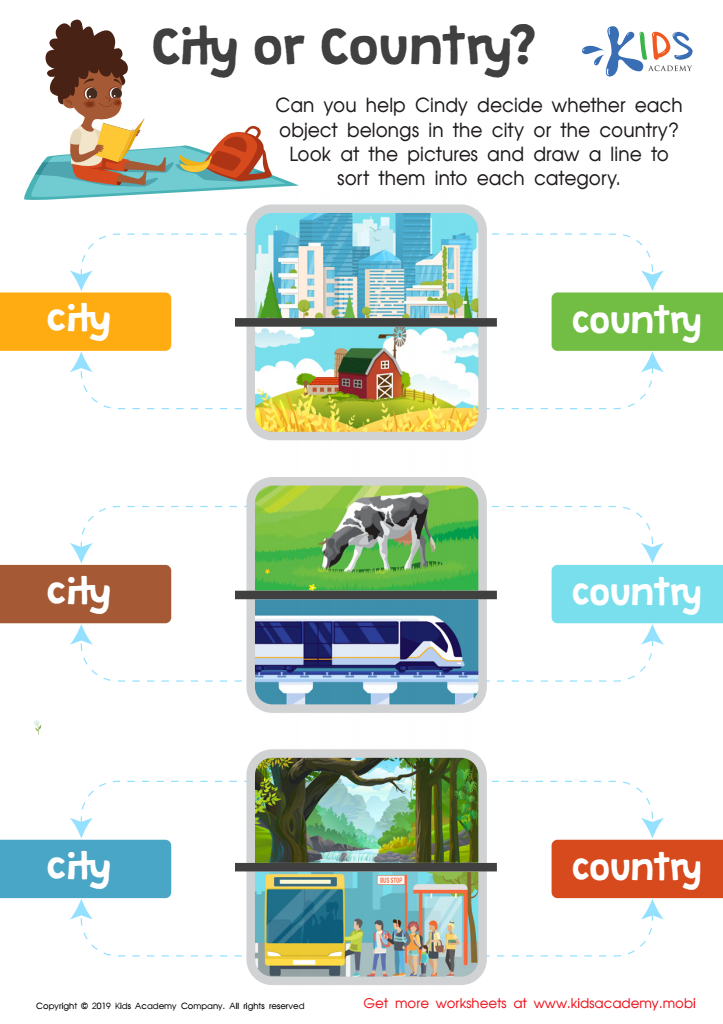
City or Country? Worksheet
Whether city or country, both have distinct attributes. Cities have skyscrapers, public transport, and many business people, whereas the countryside is rural and full of nature, often farms. Download this PDF to help your child and Cindy use traced lines to decide which picture fits city or country.
City or Country? Worksheet
Worksheet
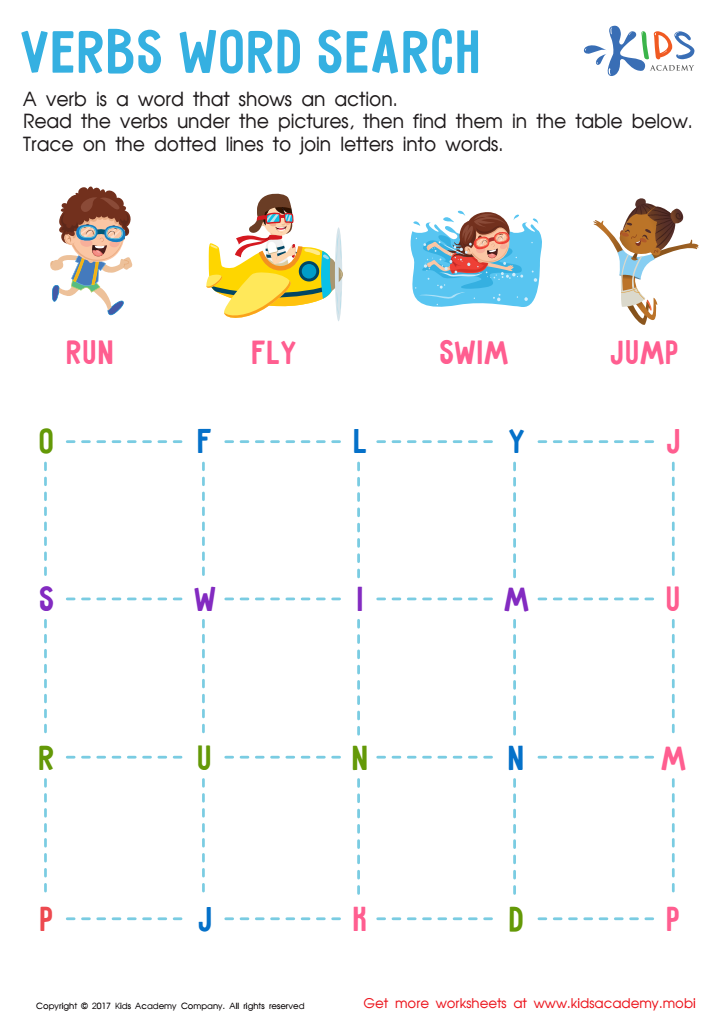
Verbs Word Search Worksheet
Ask your child if they understand the meaning of the word "verb". If not, explain that it's a word that shows an action. Give examples of familiar verbs. Then look at the pictures in the tracing sheet and read the words. Ask your child to follow the dotted lines to find the hidden words. Perfect tool to teach spot and use verbs!
Verbs Word Search Worksheet
Worksheet
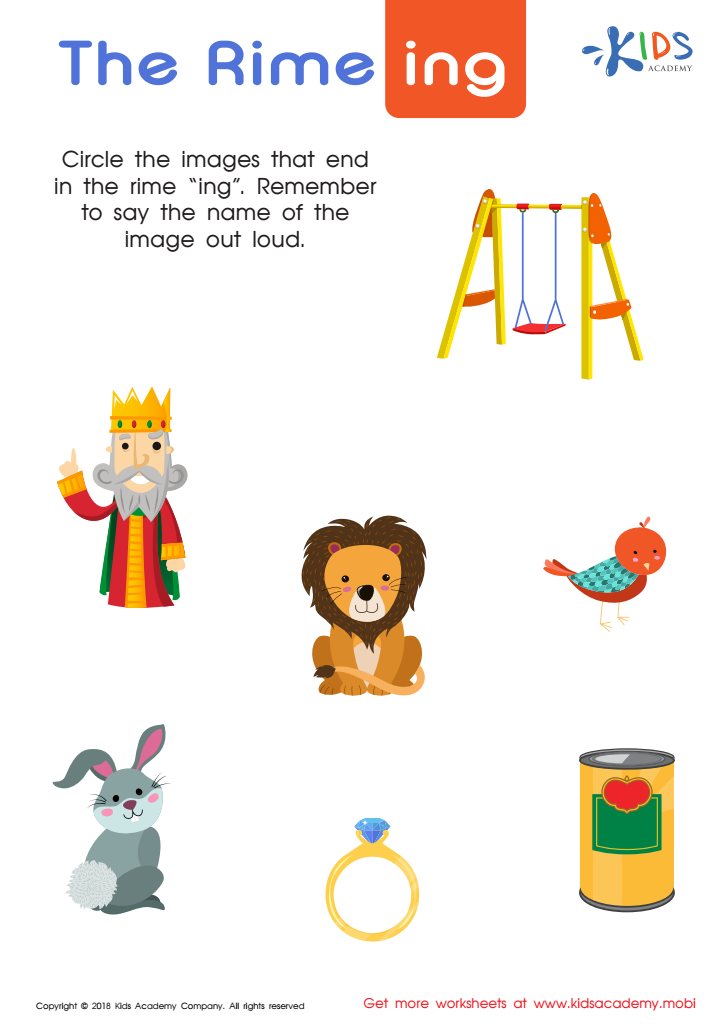
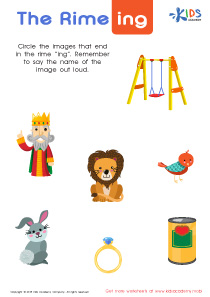
The Rime "ing" Worksheet
Teach children about word families and build their spelling and writing strategies with this colorful PDF worksheet. It features familiar pictures for children to name, encouraging them to circle those that end in "ing". This engaging activity will help develop reading skills in a fun way.
The Rime "ing" Worksheet
Worksheet
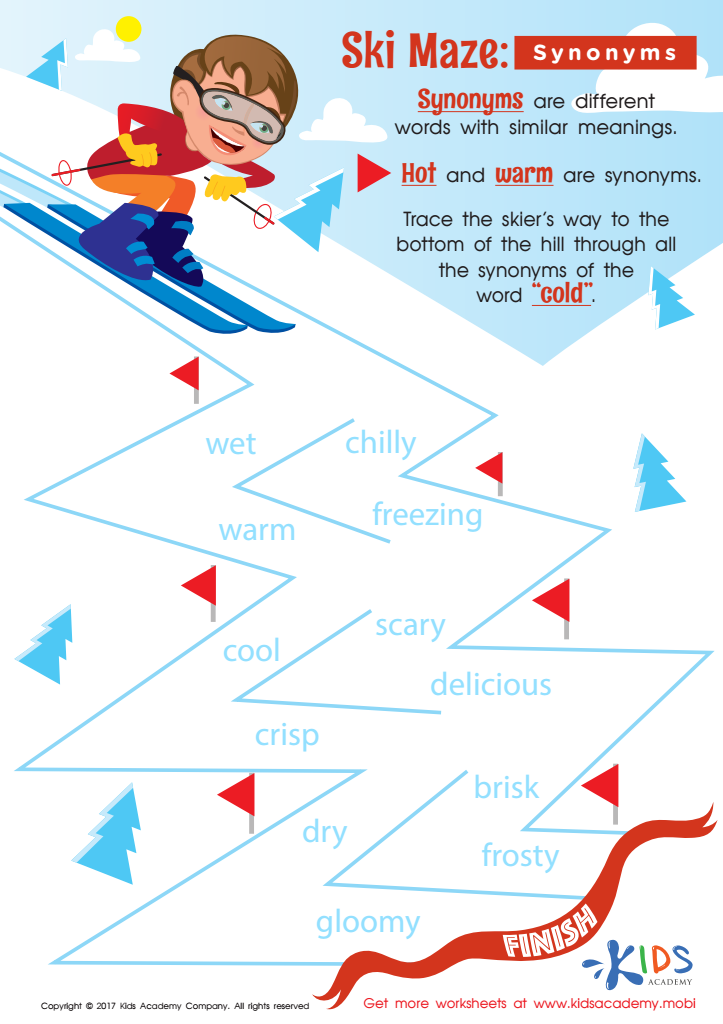
Free Printable Synonym Worksheet
Our free printable synonym worksheet for 2nd grade will help kids learn similar words to expand their vocabulary. Kids will have fun challenging themselves to find all the words that are synonyms for “cold”. Enhance their language and writing with this joyful worksheet!
Free Printable Synonym Worksheet
Worksheet
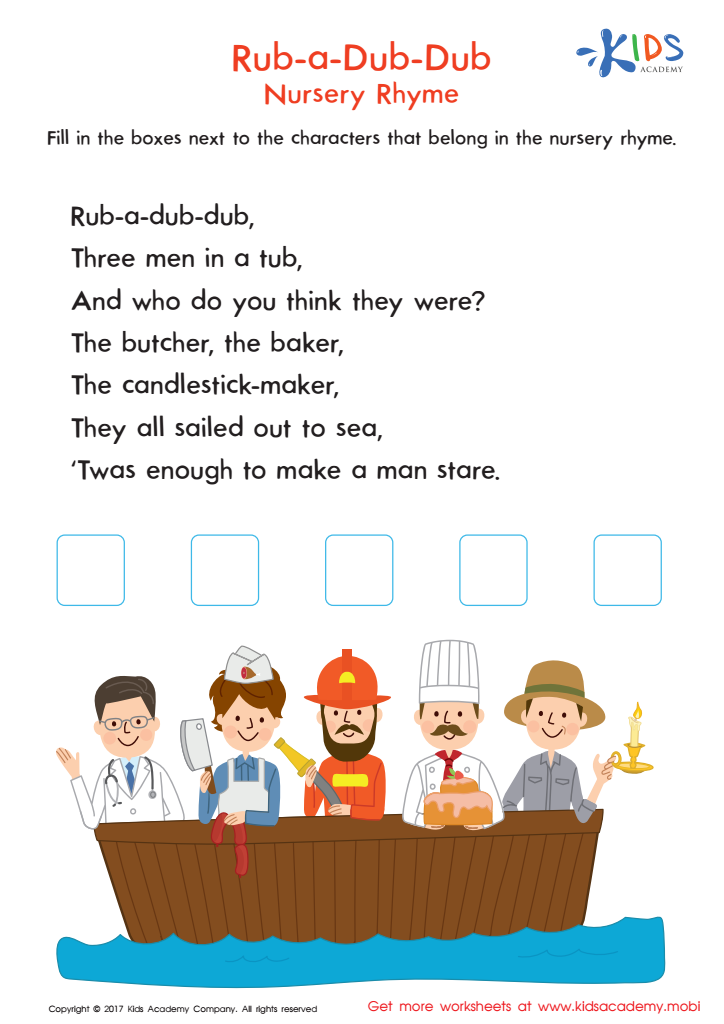
Rub a Dub Dub Printable
Delight your child and foster early reading skills with this printable nursery rhyme, Rub a Dub Dub! Let your little reader select the three men in the tub and practice important reading comprehension skills.
Rub a Dub Dub Printable
Worksheet
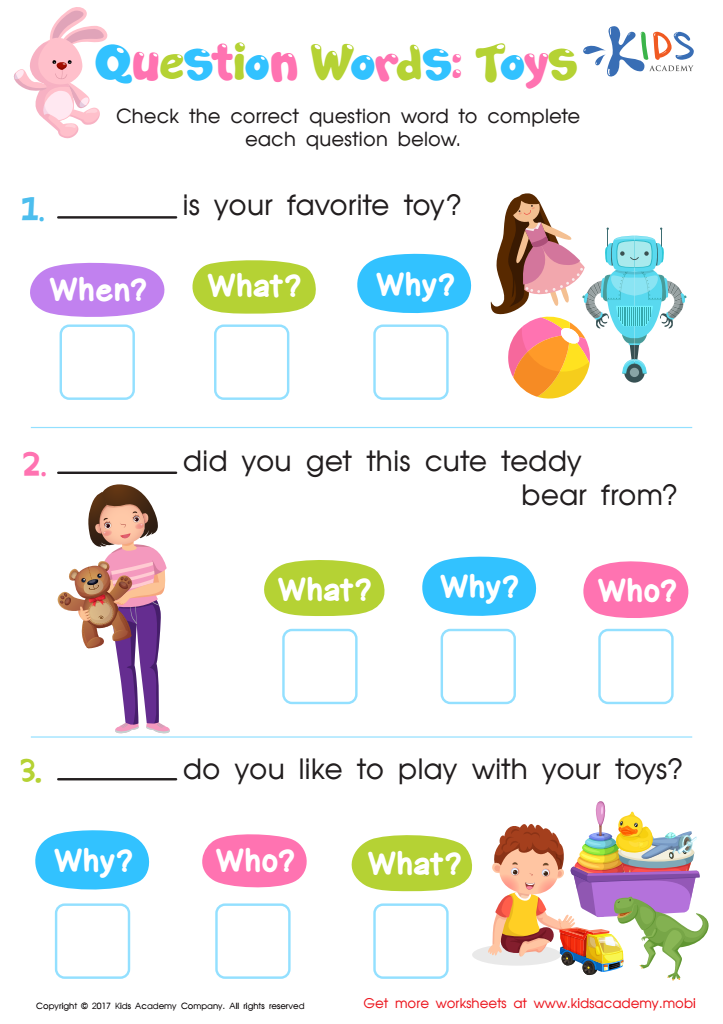
Question Words: Toys Worksheet
Let your kids enjoy learning to ask precise questions with this fun worksheet! Read each sentence fragment and look at the word bank, picking the correct word to complete the sentence. Check the box next to the correct word to use. It's that easy and lots of fun!
Question Words: Toys Worksheet
Worksheet
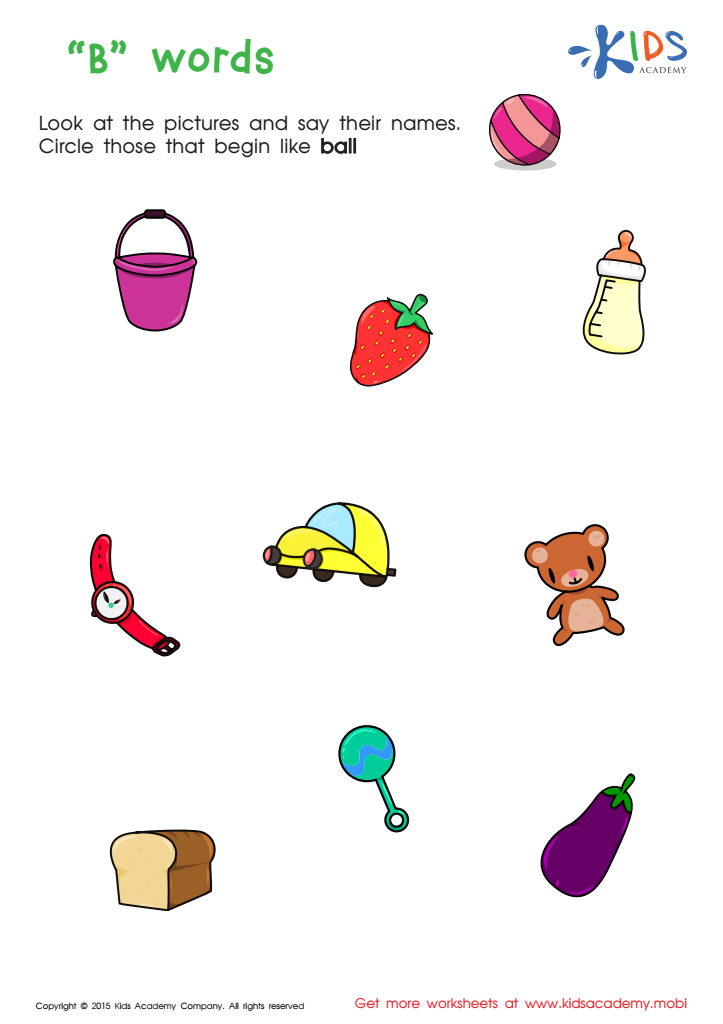
First Words Worksheet
Want to help your preschooler learn to read and write? Start with this 'B' words printable worksheet. It will help your child match pictures to the letters they know, sound out words, and build literacy. Once they understand the concept, they can start sounding out words and building reading skills.
First Words Worksheet
Worksheet
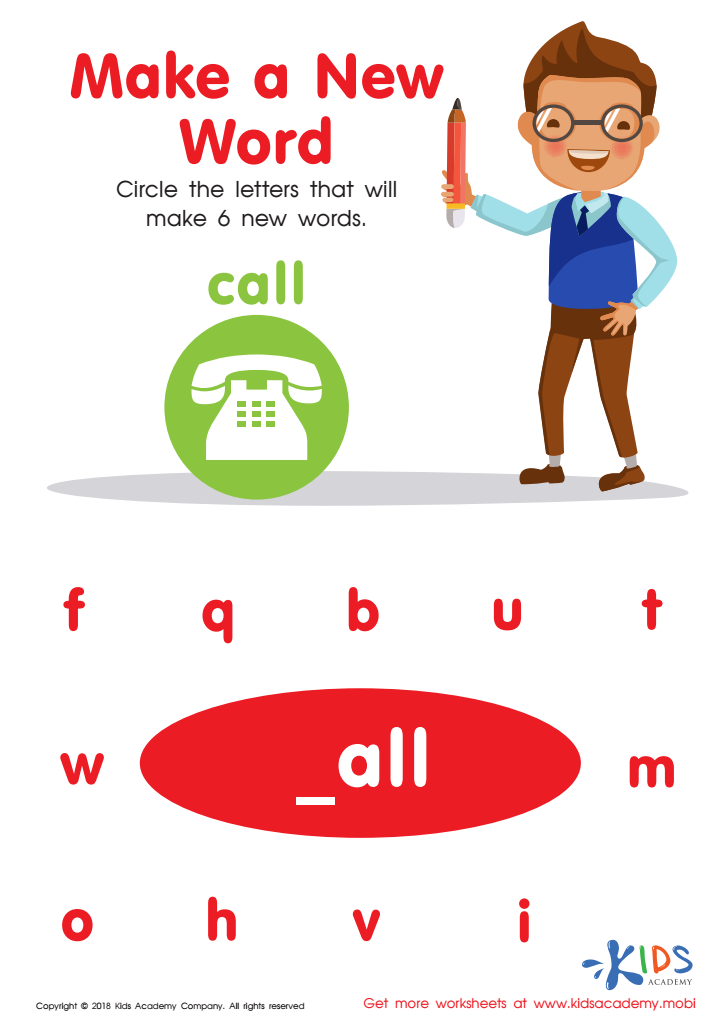
Make a New Word Worksheet
Young readers and writers can enhance their skills with this fun PDF worksheet. They'll trace letters to create new words and feel like super readers and writers after finding six words. They'll also practice building words with the "all" word family.
Make a New Word Worksheet
Worksheet
Join Kids Academy for Free
Who is primarily going to use this learning content?







Vocabulary expansion is critical for young learners aged 4-6, as it lays the foundation for reading, writing, and effective communication. Children in this age group are rapidly developing their language skills, making it essential to expose them to a rich vocabulary. Through the Extra Challenge Reading program, parents and teachers can enhance children's comprehension and expression. A diverse vocabulary enables children to articulate their thoughts and feelings more accurately, fostering better social interactions and emotional intelligence.
Moreover, research indicates that a strong vocabulary correlates with academic success. The skills cultivated through these reading experiences readied children for the complexities of later academic materials. Engaging with varied texts introduces new concepts and ideas, sparking curiosity and critical thinking.
Furthermore, discussing vocabulary elements—their meanings, uses, and contextual applications—encourages analytical skills and enriches understanding. This collaborative learning approach, where children, parents, and teachers actively engage with language, promotes positive attitudes toward education.
In summary, prioritizing vocabulary expansion through specialized reading programs equips young learners with the essential tools needed for lifelong learning, making it a pivotal focus for both parents and educators. It fosters not only academic success but also social and emotional development in early childhood.