Alphabet Recognition Extra Challenge ABC Order Worksheets for Ages 4-7
3 filtered results
-
From - To
Introducing our "Alphabet Recognition Extra Challenge ABC Order Worksheets for Ages 4-7," uniquely designed to elevate your child's alphabet mastery! These dynamic worksheets engage young learners by challenging them to sequence letters in alphabetical order, strengthening their recognition skills and improving cognitive abilities. Each activity promotes critical thinking through colorful and fun exercises perfect for keeping kids motivated. Ideal for preschool to first-grade students, these worksheets create a solid foundation for reading by developing a keen understanding of letter order. Unlock your child’s full potential with our exciting ABC order challenges! Dive in and watch them thrive.
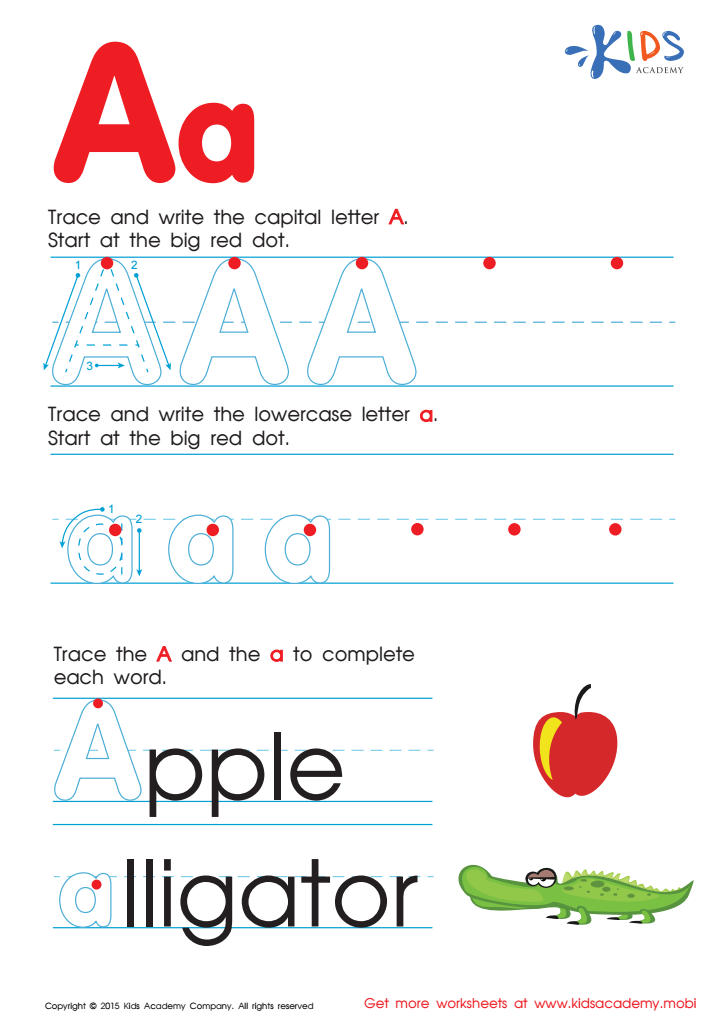
Letter A Tracing Page
 Assign to My Students



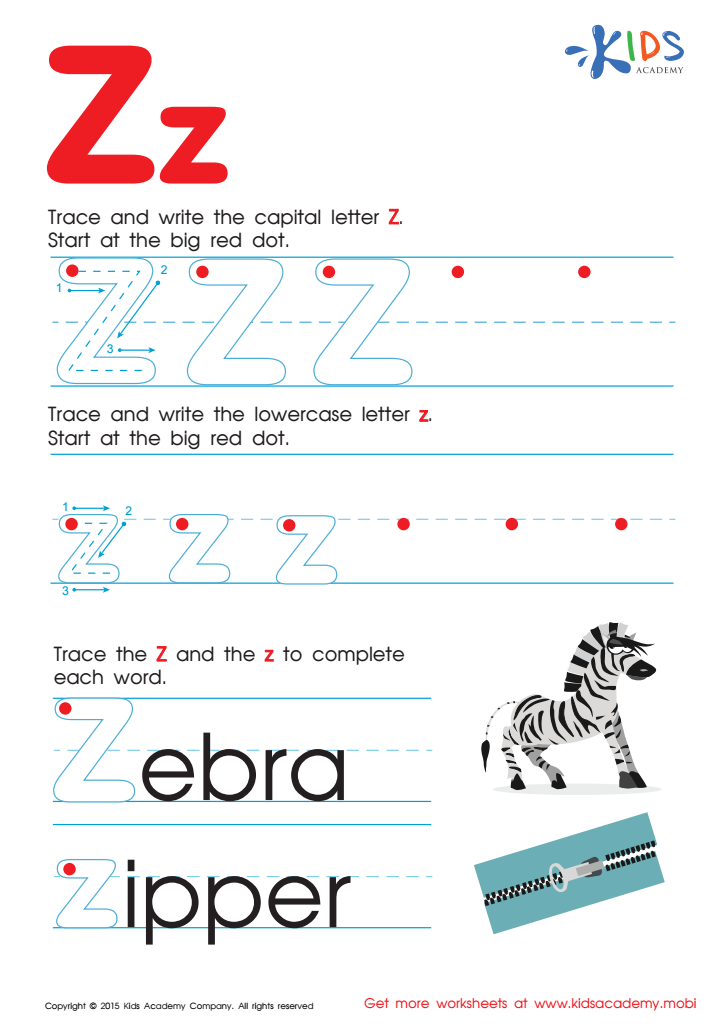
Letter Z Tracing Page
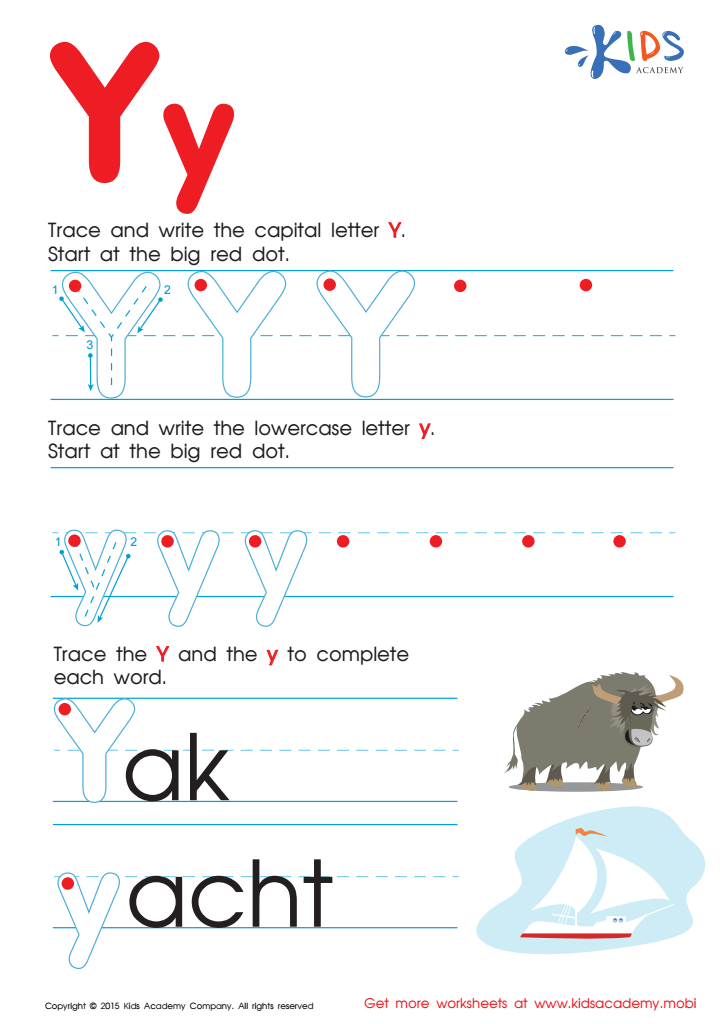
Letter Y Tracing Page








Alphabet Recognition Extra Challenge, such as putting the letters in ABC order, is fundamental for children aged 4-7 and parents or teachers should consider it a key activity for several reasons. Firstly, mastering the alphabet is the cornerstone of literacy. When children understand the sequence of letters, it facilitates their ability to recognize words, read, and spell, which are core components of language arts.
Moreover, ordering the alphabet hones cognitive abilities like memory, sorting, and problem-solving. These are critical thinking skills necessary not only for academic achievement but for everyday tasks. Alphabet recognition also supports phonemic awareness, the understanding that letters correspond to sounds, which is essential for learning to read.
Additionally, activities like these can be engaging and fun, making learning enjoyable and sparking a lifelong love of education. For parents and teachers, it provides a simple yet effective way to gauge a child’s development and identify early any areas that may need more focus or support.
Thus, investing time in Alphabet Recognition Extra Challenges ensures a robust educational foundation, stimulates intellectual growth, and cultivates a positive attitude toward learning, making it invaluable for children’s academic and personal development.








