Listening skills Extra Challenge Alphabet Worksheets for Ages 4-7
3 filtered results
-
From - To
Enhance your child's listening skills with our Extra Challenge Alphabet Worksheets, designed for ages 4-7. These engaging and educational worksheets help young learners refine their ability to hear, process, and respond to instructions while having fun with the alphabet. Each activity encourages active listening, critical for effective learning and communication. Through a variety of interactive exercises, children will develop a stronger grasp of letter recognition, phonics, and early literacy skills. Perfect for home or classroom use, our worksheets blend play with educational rigor, ensuring your child remains attentive and excited to learn. Start boosting their listening skills today!
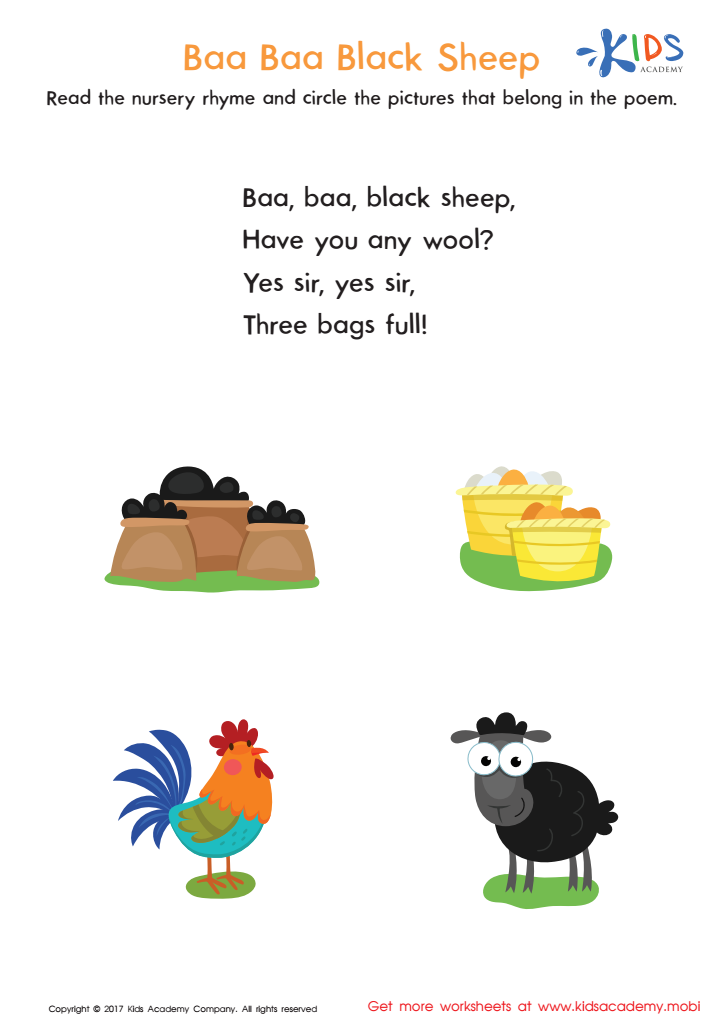
Baa Baa Black Sheep Printable
 Assign to My Students
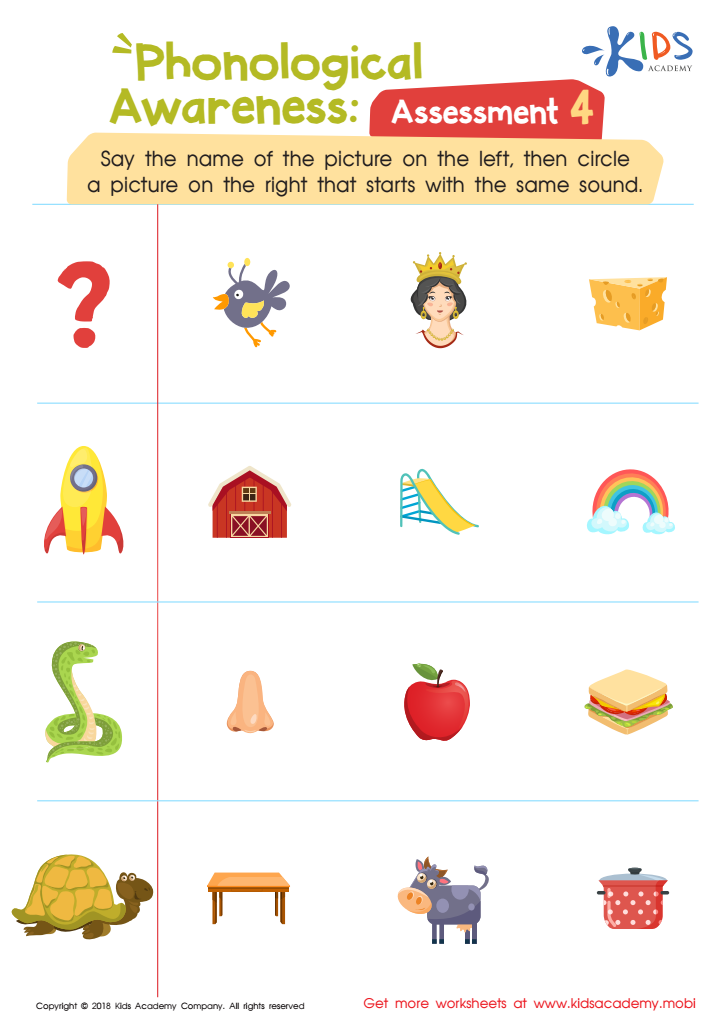
Phonological Awareness: Assessment 4 Worksheet
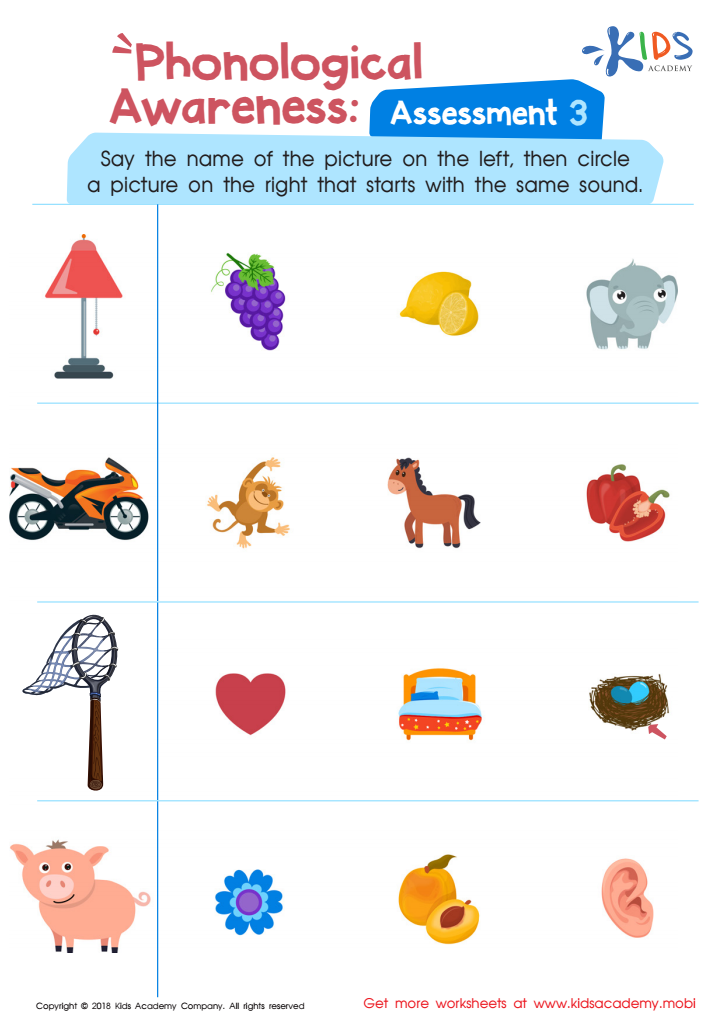
Phonological Awareness: Assessment 3 Worksheet








Listening skills are crucial in the early development of children ages 4-7, as they lay the foundation for effective communication and learning. The Listening Skills Extra Challenge Alphabet activity is an engaging way to enhance these skills. This activity goes beyond merely recognizing letters; it increases a child's ability to follow directions, pay attention, and process information.
Parents and teachers should care about this because honing listening skills at this age improves a child's ability to focus in the classroom, following spoken instructions attentively. This translates into better academic performance and smoother social interactions since good listeners are better equipped to understand and respond to peers and educators.
Furthermore, these challenges support literacy development. When a child learns to listen carefully to the sounds in letters and words, it scaffolds their reading and writing skills. Phonemic awareness, which is a crucial precursor to reading and spelling, draws heavily on a child's ability to listen and differentiate sounds.
Finally, the interactive aspect of the Listening Skills Extra Challenge Alphabet makes learning enjoyable and lessens anxiety associated with academic tasks, building a positive attitude toward education. This activity strengthens listening skills which, in turn, foster both educational success and effective communication skills — essential components of lifelong learning and interaction.