Cognitive Development Extra Challenge Phonics Worksheets for Ages 4-7
3 filtered results
-
From - To
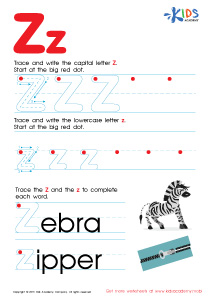
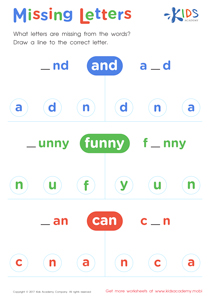
Enhance your child's learning experience with our "Cognitive Development Extra Challenge Phonics Worksheets" designed for ages 4-7. These engaging worksheets focus on key phonics skills while promoting critical thinking, problem-solving, and cognitive growth. Each activity presents fun challenges to reinforce letter recognition, sound association, and word formation, making learning enjoyable and effective. Perfect for homeschooling or supplemental practice, these worksheets encourage children to think independently as they decode words and engage with language. Support your child's cognitive development and prepare them for academic success with our carefully crafted phonics exercises tailored to their developmental stage. Explore the joy of learning today!
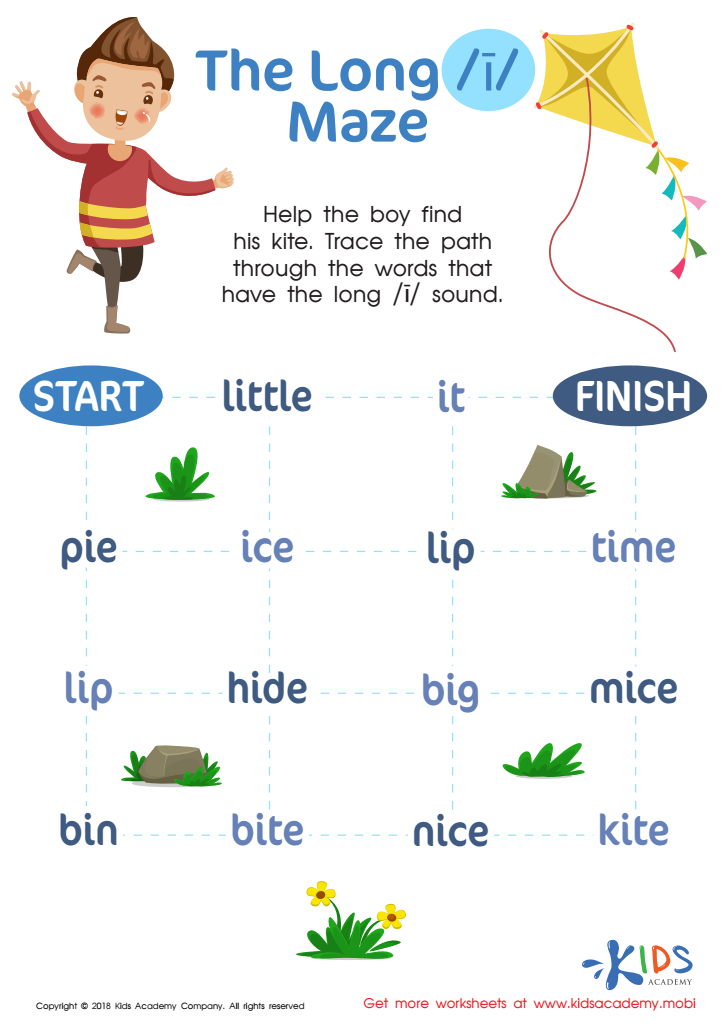
The Long I Maze Reading Worksheet
 Assign to My Students
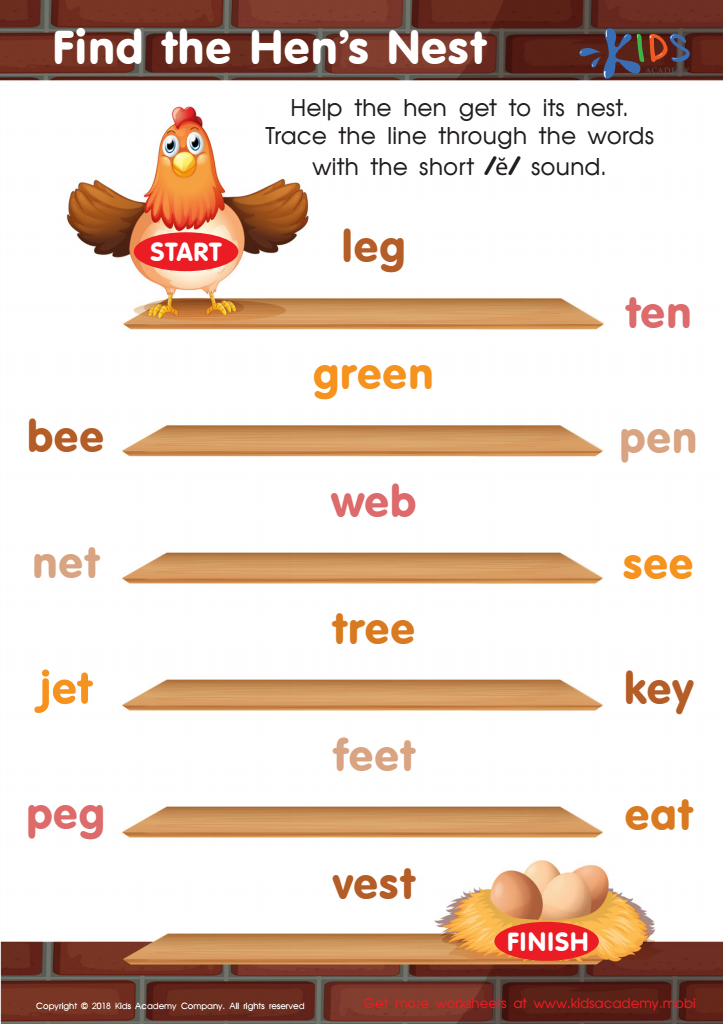
Find Hens Nest Reading Worksheet
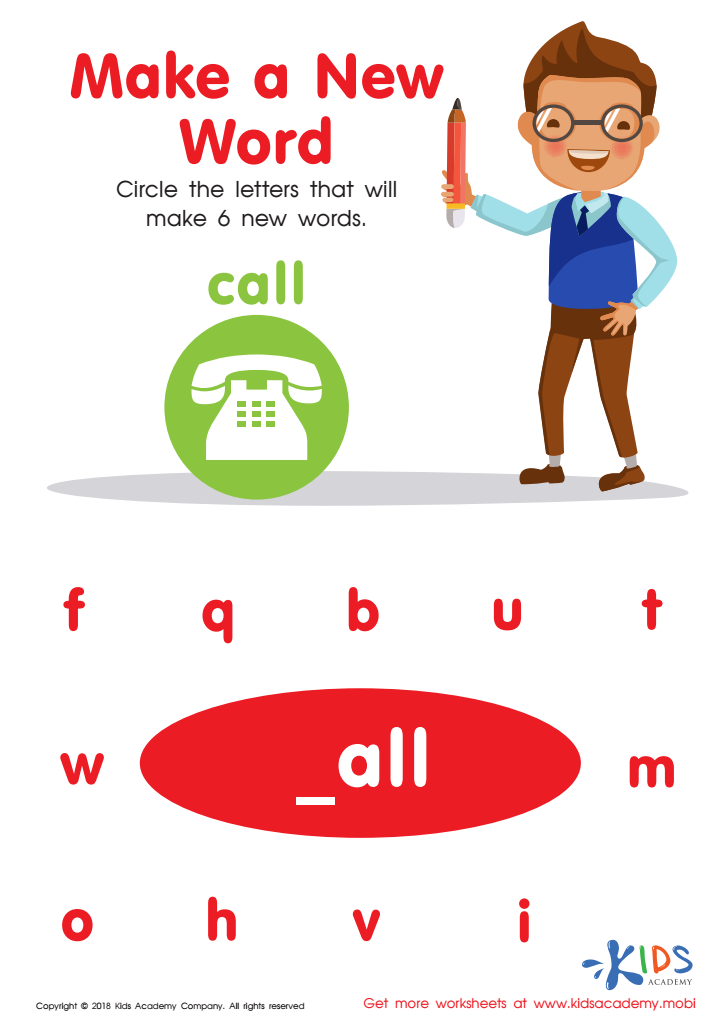
Make a New Word Worksheet








Cognitive Development Extra Challenge Phonics is essential for children aged 4-7, as it lays the foundation for literacy and overall cognitive growth. During these formative years, children’s brains are particularly receptive to learning new concepts. Engaging them in structured phonics activities develops their ability to decode words, a skill crucial for reading fluency. Mastering phonics not only enhances reading skills but also promotes vocabulary development, comprehension, and critical thinking.
Moreover, phonics supports cognitive development by encouraging problem-solving and reasoning abilities. Children learn to sound out words, recognize patterns, and apply rules, fostering independence and confidence in their learning capabilities. This engagement also enhances working memory as they navigate complex language structures.
Parents and teachers play a pivotal role in reinforcing these skills. By incorporating Extra Challenge Phonics into their educational routines, they can create a rich learning environment that stimulates curiosity and a love for reading. Ultimately, investing time in phonics empowers children to become successful readers and lifelong learners, setting them up for academic achievement and personal confidence. Therefore, understanding the significance of phonics is crucial for both parents and educators committed to nourishing the cognitive development of young learners.