Alphabet Recognition Extra Challenge Tracing Letters Worksheets for Ages 4-7
3 filtered results
-
From - To
Discover our "Alphabet Recognition Extra Challenge Tracing Letters Worksheets" designed specifically for ages 4-7! These engaging worksheets provide young learners with a fun and interactive way to master letter recognition through tracing exercises. With colorful illustrations and varied difficulty levels, children will enhance their fine motor skills and reinforce their understanding of both uppercase and lowercase letters. Ideal for use at home or in the classroom, these resources are perfect for advancing young learners' literacy skills. Encourage your child's confidence and excitement about learning while they embark on this alphabet adventure! Download now and watch them excel in letter recognition!
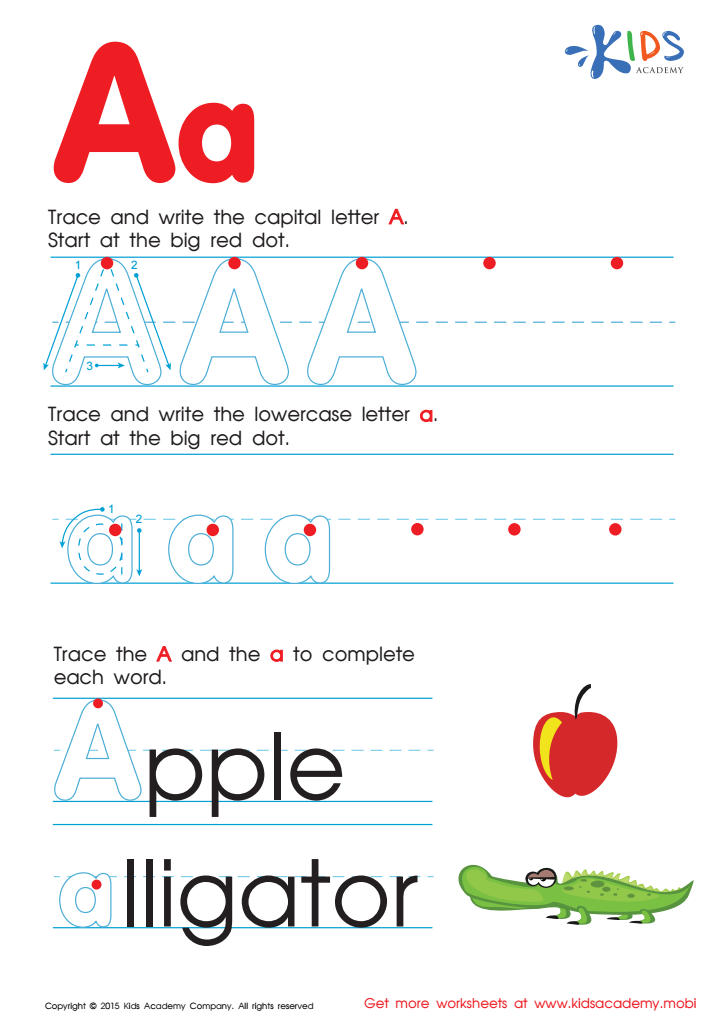
Letter A Tracing Page
 Assign to My Students
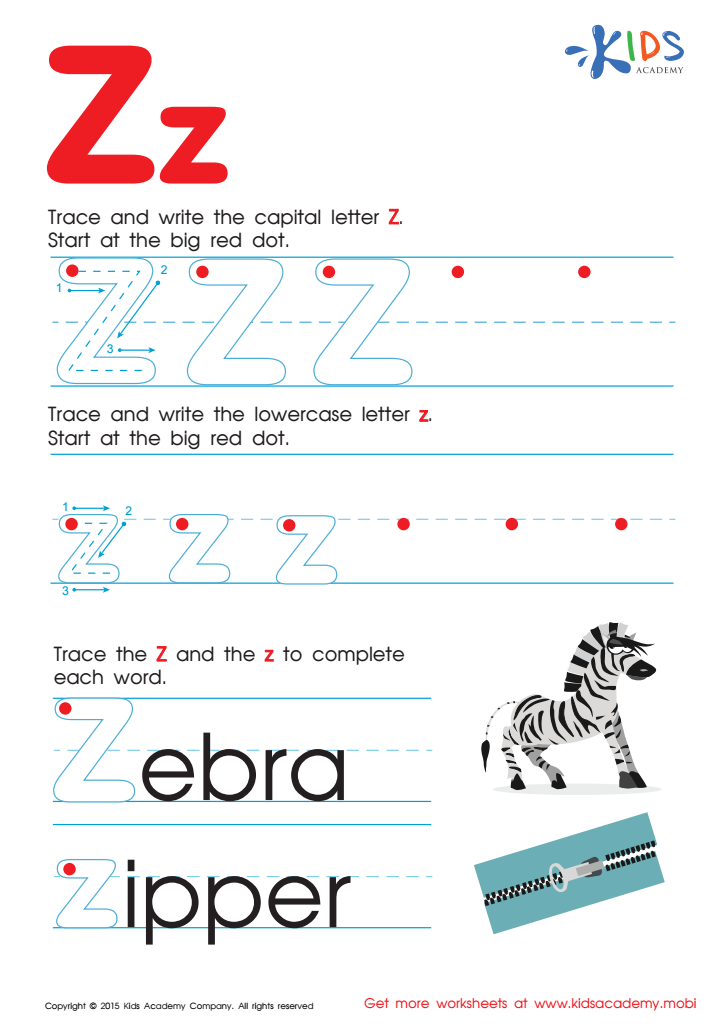
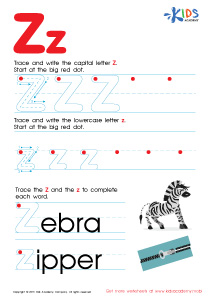
Letter Z Tracing Page
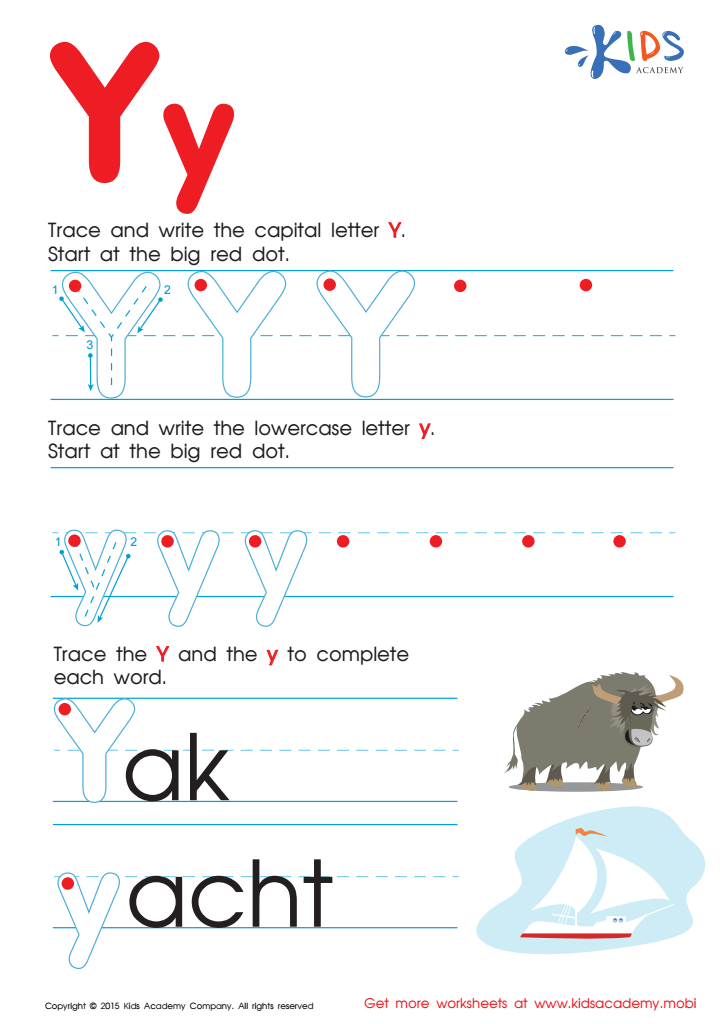
Letter Y Tracing Page








Alphabet recognition is a foundational skill for children aged 4-7, crucial for their reading and writing development. The "Extra Challenge: Tracing Letters" activity amplifies this by combining motor skills with cognitive learning, offering multiple benefits. First, tracing letters enhances fine motor skills, helping children develop the hand-eye coordination needed for proper writing. Parents and teachers should understand that these skills lay the groundwork for successfully forming letters and creating words as their literacy journey progresses.
Moreover, recognizing letters uniquely engages and reinforces memory association through tactile experiences. Allowing children to trace letters not only deepens their understanding of letter shapes but also reinforces phonetic sounds related to each letter, promoting early phonemic awareness.
Additionally, this Activity encourages focused attention and perseverance in young learners, which are vital traits for their overall cognitive development. Providing challenges fosters a growth mindset, teaching children that practice leads to improvement. Early experiences with tracing and letter recognition instill a sense of achievement, building confidence as they undertake complex reading tasks later on. Overall, this activity is a vital stepping stone in literacy that deserves careful consideration from parents and educators alike.