Boost your child's letter recognition skills with our Extra Challenge Tracing Letters Worksheets, specially designed for ages 4-7! These engaging worksheets offer a fun and interactive way for young learners to practice tracing both uppercase and lowercase letters. Each worksheet gradually increases in difficulty, helping to strengthen handwriting and improve letter familiarity. With colorful illustrations and creative activities, children will find joy in mastering their ABCs. Ideal for at-home learning or classroom activities, these worksheets are perfect for enhancing fine motor skills and building a strong foundation in literacy. Transform learning into an adventure with our tracing letter challenge today!

Check out this FREE Trial Lesson on Tracing Letters for age 4-7!

X

Favorites
With answer key
Interactive
  • 4-7
  • Letter recognition
  • Tracing Letters
  • Extra Challenge
Letter R worksheets
Letter R worksheets

Letter R Tracing Page

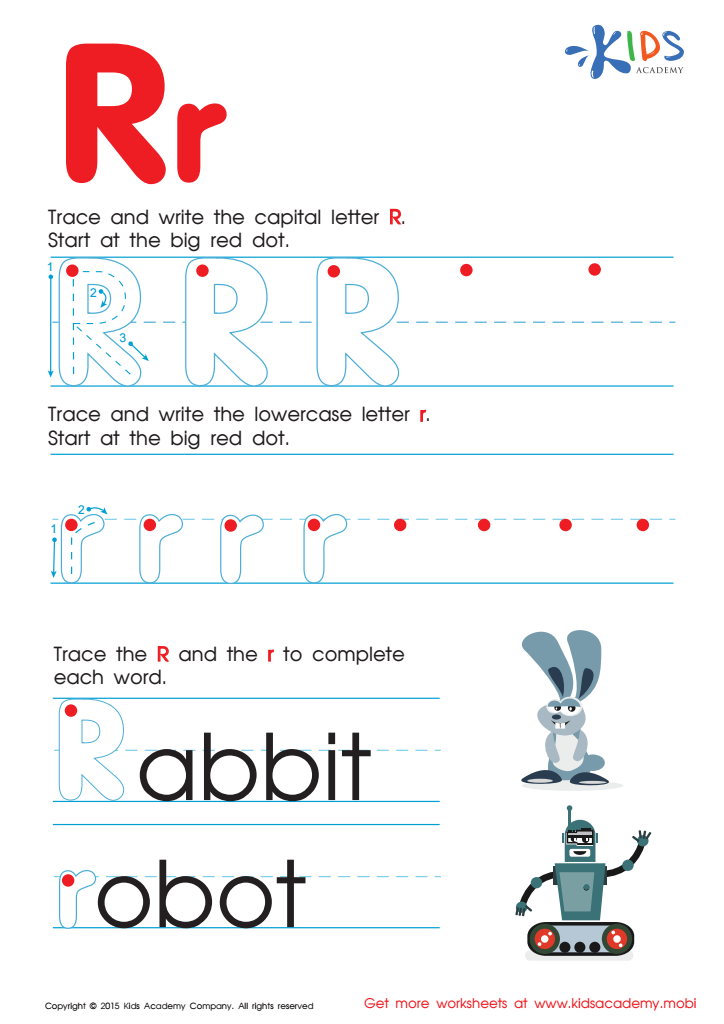
Trace and write the letter "R" with this worksheet for kindergarten. Start with the uppercase, then move on to the lowercase. Write the letters several times for practice. Then help complete the words for the rabbit and robot, spelling carefully. More ABC worksheets can be found at Kids Academy.
Letter R Tracing Page
Worksheet
Letter X worksheets
Letter X worksheets

Letter X Tracing Page

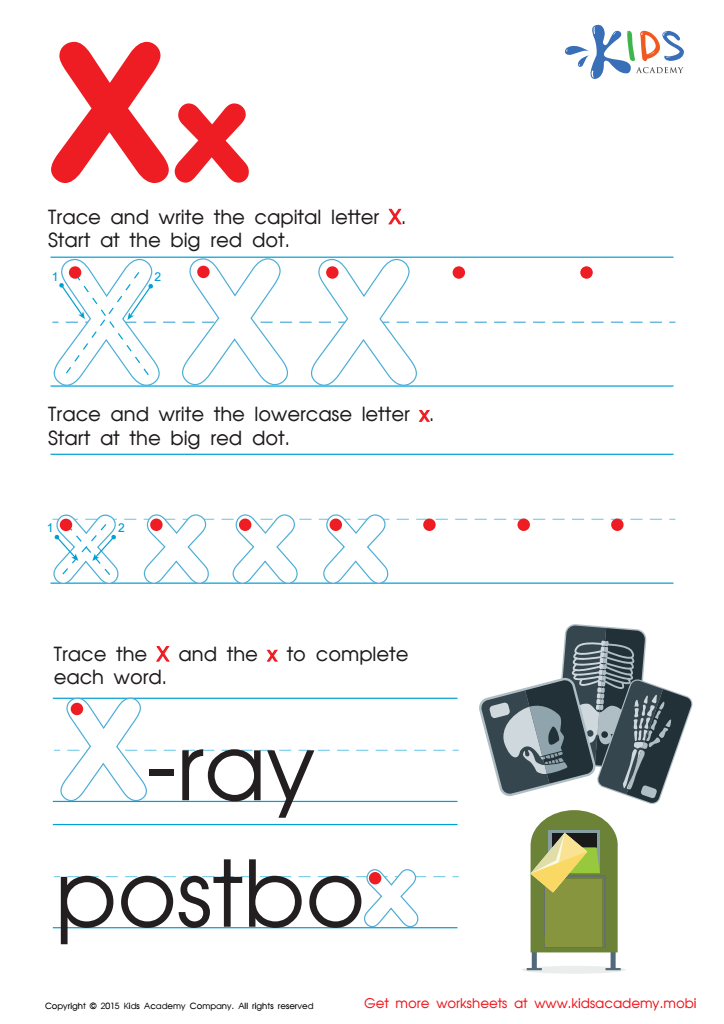
Trace the uppercase letter "X" to learn, then write it yourself and practice. Then do the same with the lowercase "x" before completing the words "X-ray" and "postbox". Enjoy our alphabet printables!
Letter X Tracing Page
Worksheet
Letter U worksheets
Letter U worksheets

Letter U Tracing Page

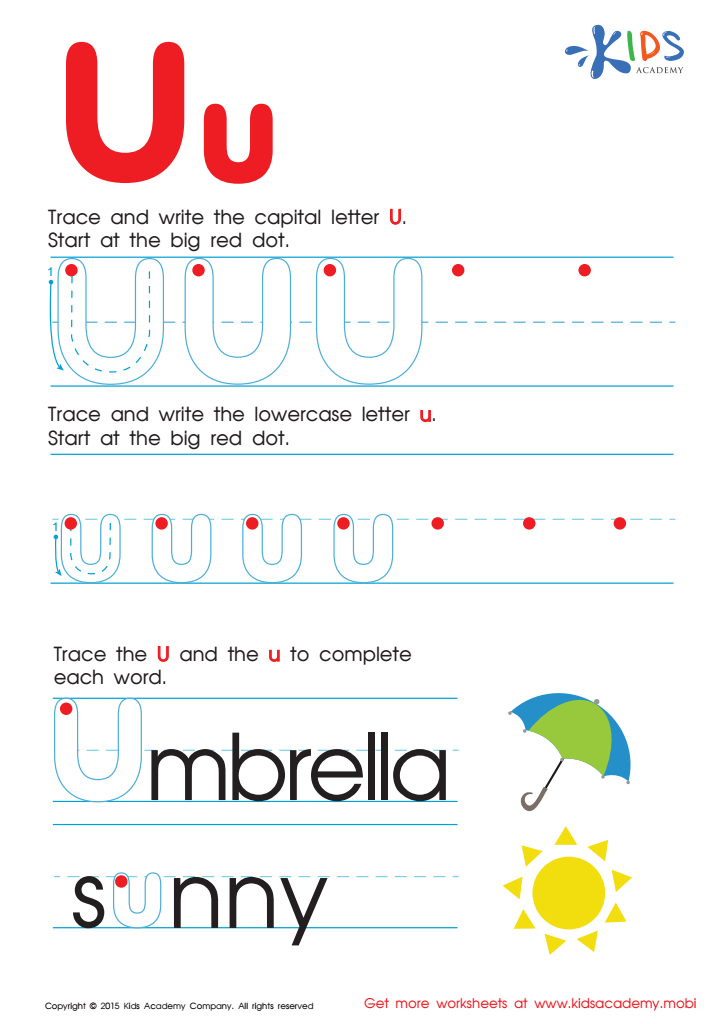
Ready to trace and write the letter "U"? Use our worksheet and practice tracing both uppercase and lowercase letters. Complete the words "umbrella" and "sunny" with a capital "U". Check our full collection of alphabet printables for more activities.
Letter U Tracing Page
Worksheet
Letter S worksheets
Letter S worksheets

Letter S Tracing Page

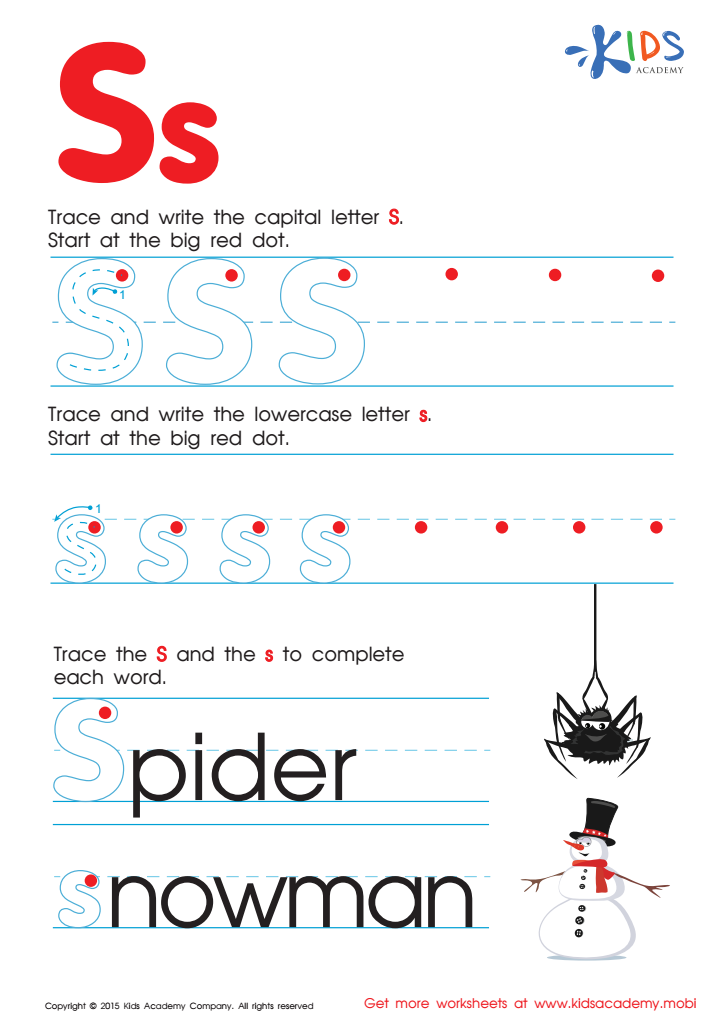
Trace and write the capital and lowercase "S" on this ABC worksheet for kindergarten. Start with the big red dot and be careful. When you finish, help the spider and snowman in the pictures restore their words with the capital and lowercase letters. Continue learning the alphabet with Kids Academy.
Letter S Tracing Page
Worksheet
Letter W worksheets
Letter W worksheets

Letter W Tracing Page

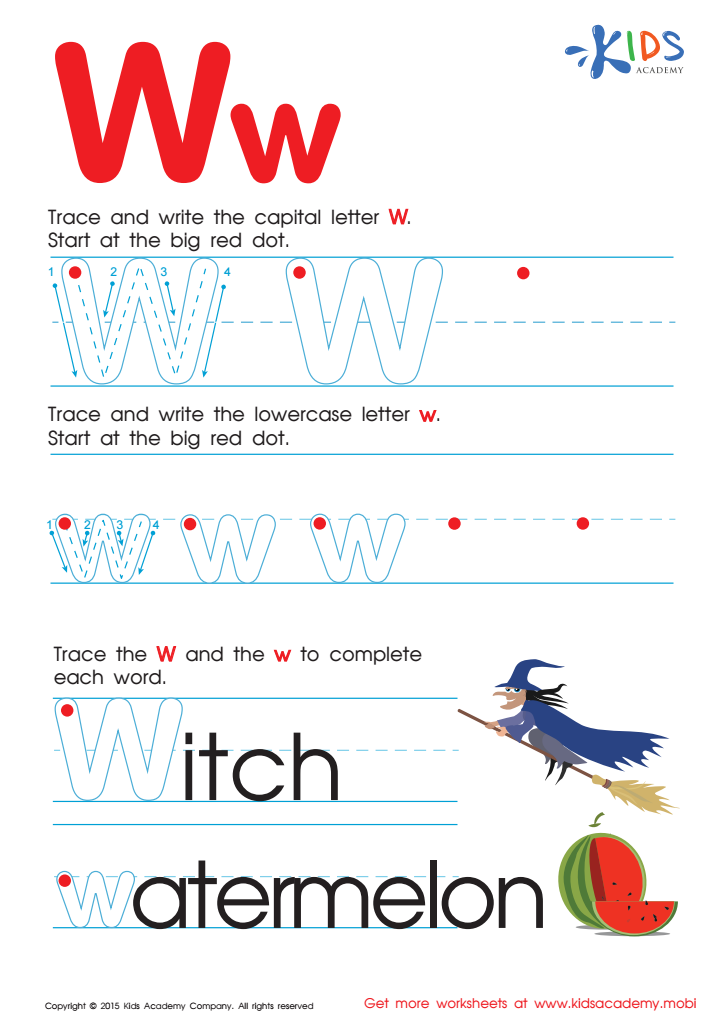
Trace and write the capital and lowercase letter W with this free letter tracing worksheet by Kids Academy. Complete the words "Witch" (capital) and "watermelon" (lowercase). Check out our other kindergarten alphabet worksheets!
Letter W Tracing Page
Worksheet
Letter V worksheets
Letter V worksheets

Letter V Tracing Page

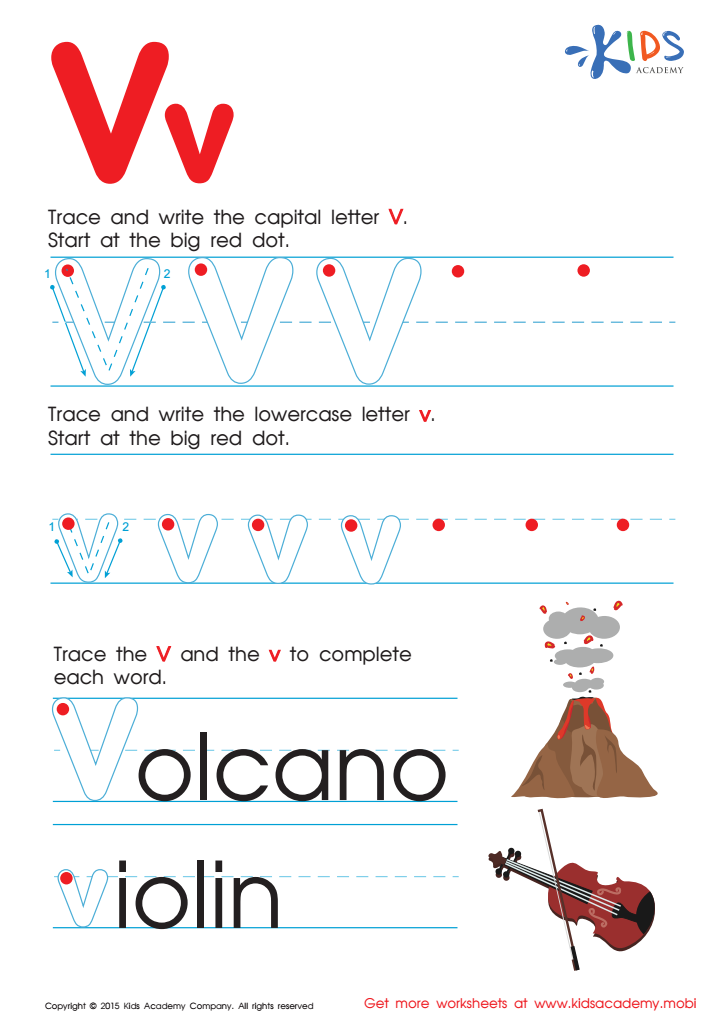
Trace the uppercase and lowercase letter "V" with our kindergarten tracing worksheet. Begin at the red dot and follow the lines. Write it several times. Complete the words "Volcano" and "violin". Get more alphabet activities at Kids Academy.
Letter V Tracing Page
Worksheet
Letter T worksheets
Letter T worksheets

Letter T Tracing Page

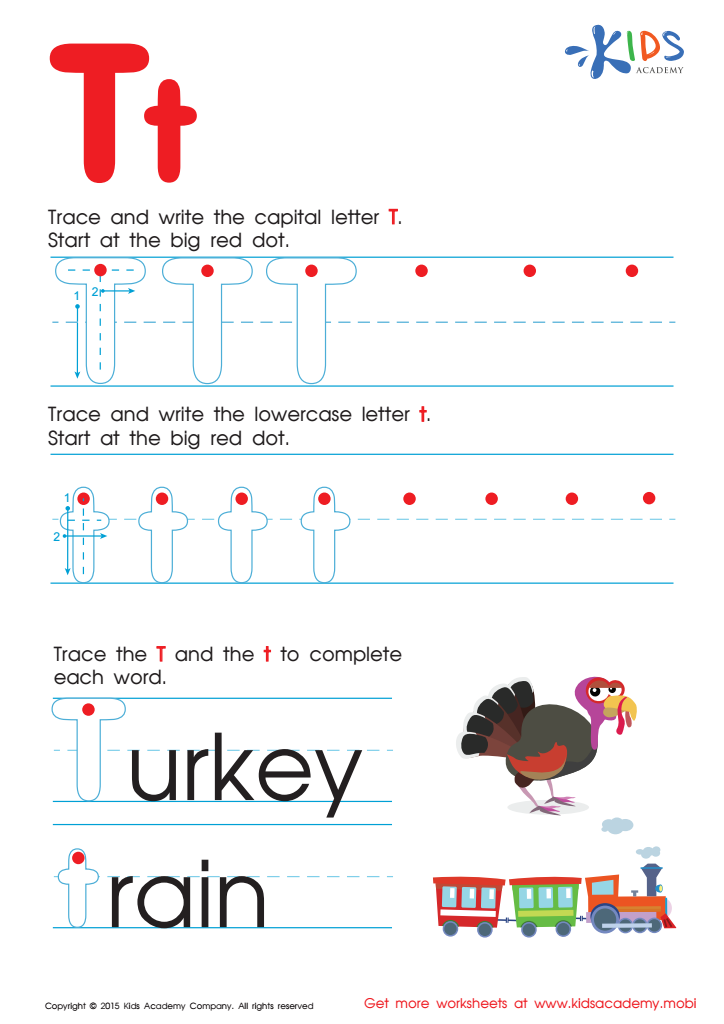
Trace letters, complete words, draw pictures and see your kids having fun! Kids Academy offers alphabet tracing worksheets to learn to write letters. Start with the big red dot, trace the letter, then write it. Practice uppercase and lowercase. Have fun completing words with a Turkey or a rain-train and draw pictures. Get more printable worksheets to make learning enjoyable.
Letter T Tracing Page
Worksheet


Letter recognition is a fundamental skill that lays the groundwork for reading and writing, making it essential for parents and teachers to focus on this for children aged 4-7. In the early years, children begin to develop phonemic awareness and an understanding of the relationship between letters and sounds, which are critical for literacy development.

Extra challenge activities, like tracing letters, enhance fine motor skills, improve hand-eye coordination, and instill confidence in young learners. Tracing allows children to practice the formation of letters, reinforcing memory and recognition. As they engage in repetitive tasks, they develop muscle memory that aids in handwriting later on.

Additionally, letter recognition contributes to enhancing vocabulary, spelling skills, and overall language awareness. By introducing these activities in a fun and engaging manner, parents and teachers can create a positive learning experience, making the process seem exciting rather than daunting.

Moreover, fostering letter recognition at this young age supports academic success across various subjects, as literacy skills are intertwined with all areas of learning. Therefore, investing time and energy in these early letters' tracing activities can have long-lasting effects on a child's educational journey.